5 Math Games My Kids Actually Beg to Play
Last Tuesday, I heard something that made me stop dead in my tracks while walking down the hallway. "Mrs. Santos, are we playing Fraction War today?" called out Miguel, practically bouncing on his toes. This is the same kid who used to fake stomach aches during math time.
Y'all, after 22 years in the classroom, I've learned that the secret to math success isn't fancy workbooks or expensive manipulatives. It's finding games that make kids forget they're doing math. When they're having fun, those walls come down and the learning just happens.
Here are five games that have my fourth graders literally begging for math time. I'm talking about real games that work with real kids, not Pinterest-perfect activities that look good but fall flat.
1. Number Talk Showdown
This one happened by accident, como siempre. I was trying to get my kids to explain their thinking during our number talks, but they were being shy. So I split them into teams and turned it into a friendly competition.
Here's how it works: I put a problem on the board like 24 x 15. Each team has two minutes to come up with as many different ways to solve it as possible. But here's the kicker - they have to be able to explain each method clearly to earn the point.
The magic happens when Sofia's team shows how they broke it into (20 x 15) + (4 x 15), and then Marcus's team builds on that idea with their own twist. They're teaching each other without realizing it.
What you need: Whiteboard, timer, problems that have multiple solution paths
Pro tip: Let the kids create the problems sometimes. They come up with the most deliciously tricky ones, and ownership makes them even more engaged.
2. Fraction War (The Game That Changed Everything)
Remember Miguel from my opening? Fraction War is what turned him from a math avoider into a math lover. It's simple, it's loud, and it works.
Take a regular deck of cards (remove face cards). Each player flips two cards. The first card is the numerator, the second is the denominator. Whoever has the larger fraction wins all the cards. But here's where it gets good - they have to prove their fraction is larger.
"I have 8/3 and you have 5/2. Let me show you why mine is bigger." Then they grab the fraction strips or draw pictures or convert to mixed numbers. They're doing all this complex fraction work just to win some cards.
What you need: Deck of cards, fraction strips or paper for drawing
Classroom management tip: This game gets loud. Embrace it. When kids are arguing about whether 3/4 is bigger than 7/9, that's the sound of learning happening.
3. The Human Number Line
My kids think this is recess, but really they're mastering integer operations. I use painter's tape to make a giant number line on the floor from -10 to 10. Kids become the "movers" and act out the problems.
"Start at 3, move negative 7 spaces. Where do you end up?" Suddenly, adding and subtracting integers isn't abstract anymore. It's physical. They can see it, feel it, and remember it.
The best part? My kinesthetic learners who usually struggle in math class become the stars. Jayden, who can barely sit still for five minutes, becomes the expert at explaining why 5 + (-8) = -3.
What you need: Painter's tape, space to move around
Florida teacher reality check: This works great in our tiny classrooms too. Just make a smaller number line or take it outside. We've got the weather for outdoor math most of the year anyway.
4. Estimation Station Showdown
I learned this one the hard way. My kids were terrible at estimation because they never practiced it in a fun way. Now we do Estimation Station once a week, and they've gotten scary good at it.
I fill jars with different items - paperclips, cotton balls, wrapped candies (porque motivation, right?). Teams rotate through stations and write down their estimates. But they can't just guess randomly. They have to explain their reasoning.
"I think there are about 47 cotton balls because I can see about 8 on the bottom layer, and there are maybe 6 layers, so 8 x 6 = 48, so close to 47." The math conversations that happen during this game are pure gold.
What you need: Clear containers, various small objects, recording sheets
Time-saving tip: Once you set up the stations, you can reuse them for weeks. Just change out one or two containers to keep it fresh.
5. Mystery Number Detective
This game turns my classroom into a math detective agency. I think of a number (or let a student think of one), and the class has to figure it out using yes/no questions. But the questions have to be mathematical.
"Is your number greater than 50?" "Does your number have 3 factors?" "Is your number a multiple of 4?" They're using all these math concepts - factors, multiples, place value, operations - just to solve the mystery.
The strategy discussions are where the real learning happens. "Wait, if we know it's between 20 and 30, and it's even, and it has exactly 4 factors, then it has to be..." Watching them reason through the clues gives me chills every time.
What you need: Just your brain and a whiteboard to track clues
Extension idea: Let kids create their own mystery numbers with clue cards. They love stumping their classmates.
Making the Magic Happen
Here's what I've learned about making math games work in the real world: Start small. Pick one game and use it until your kids know it inside and out. Then add another one.
Don't worry about the noise. When administrators walk by and hear kids arguing about whether 0.75 is the same as 3/4, they're hearing engagement, not chaos.
And please, don't feel like you have to make everything a game. These work because they're special. Use them strategically when energy is low or when you're introducing a tricky concept.
The truth is, our kids are capable of so much more than we sometimes give them credit for. When we wrap math in play and make it social, they show us what they can really do.
Try one of these games this week and let me know how it goes. I bet you'll hear some version of "Can we do math now?" before the week is over. And honestly, is there any sweeter sound than that?
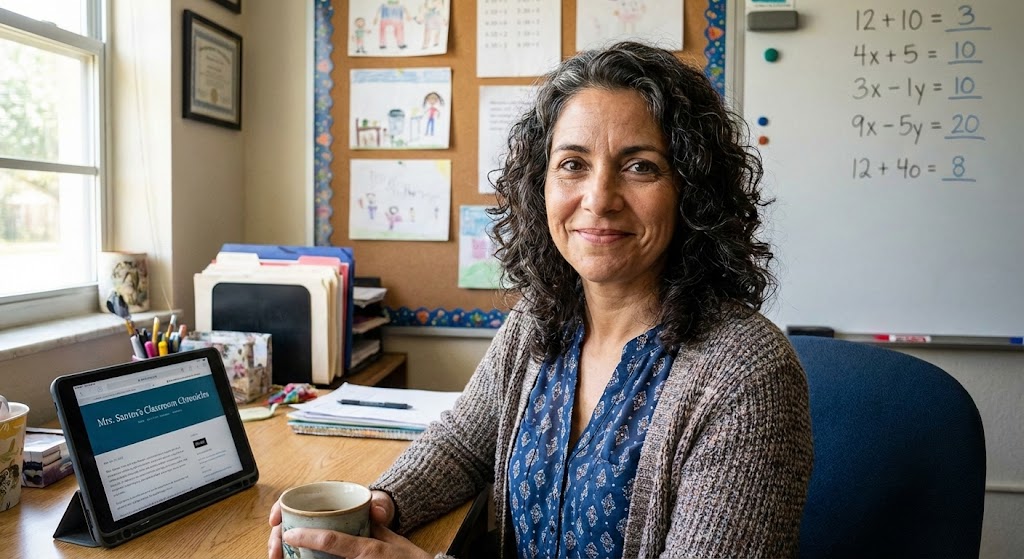
Maria Santos
Maria has been teaching 4th grade in Tampa, Florida for 22 years. Known as "the math whisperer" among her colleagues, she writes about the real challenges and victories of teaching in Florida's public schools.
When she's not grading papers or creating lesson plans, you can find Maria at her local teacher supply store (with coupons in hand) or sharing teaching tips over cafecito with her teacher friends.
View Full Profile →Related Articles
When Mid-Year Data Makes You Want to Hide Under Your Desk (But You Don't Have To)
Math teaching strategy: Last Tuesday, I got my mid-year FAST data back and my first thought was, "Ay...
Making Mid-Year Data Work for You (Instead of Against You)
Math teaching strategy: Last Tuesday, I walked into the copy room and found Jessica practically hype...
Ready to Improve Your FAST Scores?
Upload your class data and get personalized IXL success plans in seconds.
Try It Free