5 Math Games My Kids Actually Beg to Play (And How They Secretly Build Skills)
Last Tuesday, I heard something that made me stop dead in my tracks. Little Sofia was tugging on her mom's sleeve at pickup time saying, "Mami, can we play that number game at home? The one Señora Santos taught us?"
Y'all, in 22 years of teaching, I never thought I'd see the day when kids would beg their parents to do more math at home. But here we are.
I used to think math games were just fluff. Something to fill time on a Friday afternoon when everyone's brain had already checked out for the weekend. Boy, was I wrong. These games have become some of my most powerful teaching tools, and my students don't even realize they're doing serious mathematical thinking.
The Magic Behind Math Games That Actually Work
Here's what I've learned: kids will play anything if it feels like a real game, not a worksheet dressed up with dice. The games that work best in my classroom have three things in common. They're competitive enough to get kids excited, simple enough that I don't spend 20 minutes explaining rules, and sneaky enough that students are practicing skills without feeling like they're doing "work."
Trust me, I learned this the hard way. My first few years, I tried those overly complicated board games with 47 different rules and tiny pieces that disappeared faster than my sanity during FAST testing season. Disaster.
Game #1: Around the World Multiplication
This one's a classic for a reason, pero I've added my own twist that makes it even better.
Students stand in a circle, and I call out a multiplication problem. The first person to shout the correct answer moves to the next position. But here's my secret sauce: instead of eliminating kids who get it wrong (because who needs more reasons to feel bad at math?), they become the "math coaches" who can whisper hints to struggling students.
Last week, Marcus (not my son, my student Marcus) went from being terrified of his times tables to coaching three other kids through tricky problems. The confidence boost was incredible to watch.
Pro tip: Start with easier facts and work your way up. I keep different sets of fact cards ready so I can adjust the difficulty based on who's playing.
Game #2: Number Talk Showdown
This game has transformed how my kids think about numbers, and it takes zero prep time.
I write a number on the board (let's say 24) and give teams two minutes to come up with as many different ways to make that number as possible. Addition, subtraction, multiplication, division, fractions, whatever they can think of.
The team with the most correct ways wins, but here's where it gets good: we spend time sharing strategies. Kids start seeing that 24 can be 20 + 4, or 6 x 4, or 30 - 6, or even 48 ÷ 2.
The real magic: Students start understanding that numbers are flexible. They're not just memorizing facts anymore, they're building number sense.
Game #3: Estimation Station
My kids are obsessed with this one, and parents tell me their children are estimating everything at home now. (Sorry, parents!)
I fill a jar with something countable (beans, paper clips, mini erasers) and students write their estimates on sticky notes. We post them on a number line I've drawn on the whiteboard.
Then comes the fun part: students have to defend their estimates. "I think it's about 200 because I can see maybe 20 in this small section, and there are about 10 sections like that."
We count together at the end of the week, and whoever's closest gets to choose the next item for the jar.
Why it works: Kids are using multiplication, spatial reasoning, and logical thinking without even realizing it. Plus, they're getting comfortable with being wrong, which is huge in math.
Game #4: Math Scavenger Hunt
This game gets kids moving, which is essential when you're dealing with Florida heat and kids who've been sitting all morning.
I hide number cards around the classroom, and students have to find them and arrange themselves in order (smallest to largest, or whatever skill we're working on). But here's the twist: the numbers aren't always whole numbers.
Sometimes it's fractions, sometimes decimals, sometimes negative numbers. I've watched kids have heated discussions about whether 0.5 or 1/2 comes first (they're the same, but the conversations are golden).
Classroom management tip: I assign each student a specific area to search. No more chaos of 25 kids diving under the same desk.
Game #5: The Human Number Line
This is my secret weapon for teaching everything from basic addition to complex fractions.
Students become the numbers on a giant number line. I use masking tape on the floor to mark positions, and kids have to figure out where they belong based on the number card they're holding.
Start simple with whole numbers 1-20, then get fancy with fractions, decimals, or even negative numbers for your advanced kids.
The best part? When we're solving problems, students physically move to show the math. Adding 3? Take three steps right. Subtracting 5? Five steps left.
Real talk: This game saved my sanity when teaching fractions. Kids could finally see that 1/4 comes before 1/2 on the number line because they were literally standing there.
Making Games Work in Your Classroom
Here's what I wish someone had told me years ago: you don't need fancy materials or hours of prep time. Some of my most successful games use nothing but paper, pencils, and student energy.
Start with one game and really master it before adding others. I used to overwhelm myself trying to do something new every day. Now I rotate through these five games, and my students look forward to "game time" because they know what to expect.
Also, don't be afraid to let kids modify the rules. Some of my best game variations came from students saying, "What if we tried it this way instead?"
The Real Win
The most beautiful thing about these games isn't the skill practice (though that's amazing). It's watching kids who think they're "bad at math" discover they can actually do this stuff.
Last month, Isabella told me she hated math because numbers were stupid. Yesterday, she asked if she could take home the estimation jar to show her abuela.
That's the real magic, mijas. When we make math playful, we make it accessible. When we make it accessible, we make it joyful.
Try one of these games this week and let me know how it goes. I guarantee you'll have at least one student surprise you with what they can do when math feels like play instead of punishment.
Now go forth and make some mathematical magic happen in your classroom. Your kids are waiting to fall in love with numbers, they just don't know it yet.
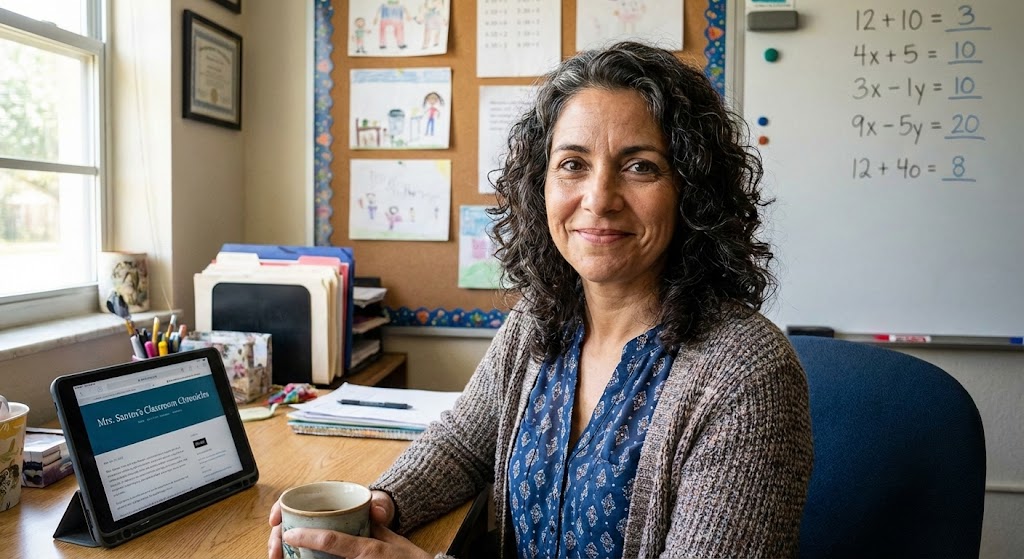
Maria Santos
Maria has been teaching 4th grade in Tampa, Florida for 22 years. Known as "the math whisperer" among her colleagues, she writes about the real challenges and victories of teaching in Florida's public schools.
When she's not grading papers or creating lesson plans, you can find Maria at her local teacher supply store (with coupons in hand) or sharing teaching tips over cafecito with her teacher friends.
View Full Profile →Related Articles
When Mid-Year Data Makes You Want to Hide Under Your Desk (But You Don't Have To)
Math teaching strategy: Last Tuesday, I got my mid-year FAST data back and my first thought was, "Ay...
Making Mid-Year Data Work for You (Instead of Against You)
Math teaching strategy: Last Tuesday, I walked into the copy room and found Jessica practically hype...
Ready to Improve Your FAST Scores?
Upload your class data and get personalized IXL success plans in seconds.
Try It Free