Making Word Problems Less Terrifying
Last Tuesday, I watched little Sofia physically recoil when she saw the word problem on page 47. Her shoulders tensed up, she pushed the book away, and declared "I can't do these!" before even reading the first sentence.
Sound familiar?
Word problems are like the Brussels sprouts of math class. Kids take one look and decide they hate them before giving them a real chance. But here's what I've learned in my 22 years of teaching: it's not that kids can't solve word problems. They're just intimidated by all those words mixed up with their numbers.
The Real Problem with Word Problems
Most of us were taught to look for "key words" in word problems. You know the drill: "altogether" means add, "left" means subtract, "each" means multiply. I taught this way for years until I realized I was creating little robots instead of problem solvers.
The truth? Those key words fail kids more often than they help. I learned this the hard way when Marcus (not my son, my student Marcus) confidently subtracted every time he saw "difference" and got a problem about age gaps completely wrong.
Kids don't need to hunt for magic words. They need to understand what's actually happening in the story.
Start with the Story, Not the Numbers
Here's what I do now, and it's changed everything in my classroom.
First, I cover up all the numbers. Yes, really. I use sticky notes or my hand, and we read the problem like it's a little story. We talk about what's happening: Who are the characters? What's going on? What do we want to find out?
Take this problem: "Carmen had 24 stickers. She gave some to her friends at lunch. Now she has 8 stickers left. How many stickers did she give away?"
With numbers covered, we focus on Carmen and her sticker situation. Kids can picture this. They've been Carmen. They understand generosity and having less stuff afterward.
Make It Visual and Personal
Once we understand the story, we act it out or draw it. I keep a bin of random objects (beans, blocks, toy cars, whatever) just for this purpose.
For Carmen's sticker problem, we might use small squares of paper as stickers. Kids love being Carmen and dramatically "giving away" stickers to classmates.
Sometimes I change the names in problems to match my students' names. Suddenly everyone pays attention when the word problem is about José's baseball cards or Aisha's art supplies.
The Three Questions That Change Everything
Before my kids even think about what operation to use, they answer these three questions:
- What do I know for sure?
- What am I trying to find?
- Does this situation make things bigger or smaller?
That third question is magic. Kids intuitively understand when quantities grow or shrink. They don't need to memorize that "gave away" means subtract when they can feel that Carmen has fewer stickers than she started with.
Build Up Their Confidence Slowly
I start the year with problems that have small, friendly numbers. Instead of "The cafeteria served 847 hamburgers," we begin with "The cafeteria served 5 hamburgers."
Same problem structure, same thinking required, but those big numbers aren't scaring anyone away from the math.
Once kids feel successful with the process, we gradually work up to more complex numbers. By December, Sofia (the same girl who pushed away her book in September) is tackling multi-step problems with confidence.
Connect to Their World
The best word problems come from our kids' lives. I create problems about our school lunch choices, the number of days until winter break, or how many minutes of recess we have.
When we studied fractions, I brought in a pizza (okay, it was cardboard, but work with me here) and created problems about sharing slices fairly among table groups. Suddenly fractions weren't abstract anymore.
Florida kids understand problems about hurricane supplies, beach trips, and how many days of sunshine we get. Use what they know.
Teach Them to Check Their Thinking
Here's something I wish I'd learned earlier: kids need to develop their "does this make sense?" radar.
After solving Carmen's sticker problem, we ask: "If Carmen gave away 16 stickers and started with 24, should she have 8 left? Let's check: 16 + 8 = 24. Sí, that works!"
I teach them to estimate first. If Carmen had about 25 stickers and gave away about 15, she should have about 10 left. When their answer is 8, they know they're in the right ballpark.
When They Get Stuck
Some days, even with all these strategies, kids still freeze up. That's when I sit next to them and say, "Tell me what's happening in this story like you're telling your little sister."
Nine times out of ten, they can explain the situation perfectly. Then I say, "Perfect! Now show me that with these blocks" or "Can you draw that?"
The math is usually easier than they think. It's the fear that gets in the way.
Real Talk About Practice
Word problems take practice, pero not the drill-and-kill kind. Kids need lots of opportunities to work through problems together, to explain their thinking, and yes, to make mistakes.
I've stopped grading every word problem. Instead, we solve them together, celebrate the thinking process, and learn from the ones that don't go as planned.
The Beautiful Moment
You'll know your kids are getting it when they stop asking "Is this addition or subtraction?" and start saying things like "Oh, this is about sharing, so everyone should get the same amount."
That's when Sofia raises her hand and says, "Mrs. Santos, this reminds me of when my abuela divided her flan among all the cousins at Sunday dinner."
That's when you know they're not just solving math problems anymore. They're thinking mathematically about their world.
And honestly? That's so much better than hunting for key words.
Keep showing them that math is everywhere, and that every word problem is just a little story waiting to be understood. They've got this, and so do you.
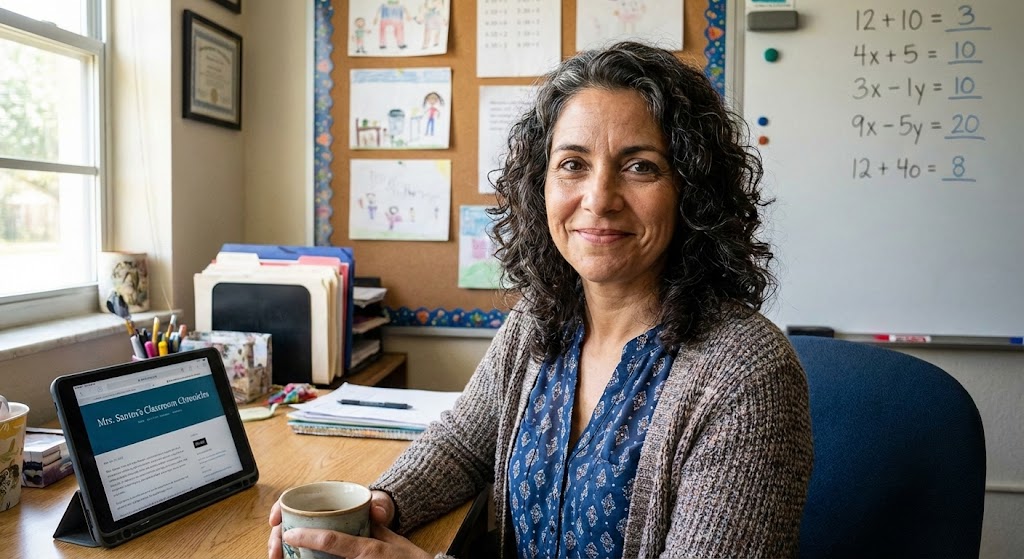
Maria Santos
Maria has been teaching 4th grade in Tampa, Florida for 22 years. Known as "the math whisperer" among her colleagues, she writes about the real challenges and victories of teaching in Florida's public schools.
When she's not grading papers or creating lesson plans, you can find Maria at her local teacher supply store (with coupons in hand) or sharing teaching tips over cafecito with her teacher friends.
View Full Profile →Related Articles
When Mid-Year Data Makes You Want to Hide Under Your Desk (But You Don't Have To)
Math teaching strategy: Last Tuesday, I got my mid-year FAST data back and my first thought was, "Ay...
Making Mid-Year Data Work for You (Instead of Against You)
Math teaching strategy: Last Tuesday, I walked into the copy room and found Jessica practically hype...
Ready to Improve Your FAST Scores?
Upload your class data and get personalized IXL success plans in seconds.
Try It Free