My Dollar Store Math Classroom Makeover (And Why I Wish I'd Done This Years Ago)
Picture this: It's my third year teaching, and I'm standing in the school supply catalog section of our faculty meeting, staring at a $47 price tag for a single set of base-ten blocks. Meanwhile, my classroom budget was approximately... well, let's just say I was buying pencils with my grocery money.
Fast forward to last month when my colleague Carmen dragged me to Dollar Tree during our lunch break. "Trust me," she said, "you're going to want to see this." Two hours and fifty dollars later, I walked out with enough math manipulatives to make my classroom look like a Montessori dream.
Y'all, I cannot believe I waited this long to discover the goldmine that is dollar store math supplies.
Why Dollar Store Manipulatives Actually Work
Before you roll your eyes and think "cheap junk," hear me out. Our students need hands-on learning, especially here in Florida where we're constantly prepping for FAST testing. But here's the thing: a plastic counter doesn't know if it cost 50 cents or five dollars. It still helps little Jayden understand subtraction.
I used to ration my "good" manipulatives like they were made of gold. Students had to share sets of three, and don't even get me started on what happened when someone lost a piece. The stress wasn't worth it.
Now? Every student has their own set of whatever we're using. Lost a counting bear? No problem, grab another one. Want to take some home for homework practice? Absolutely.
My Dollar Store Shopping List (The Good Stuff)
After multiple shopping trips (and a few duds), here's what actually works:
Foam dice - Perfect for probability lessons and fact practice. I bought 20 sets and use them constantly.
Playing cards - These are gold for number sense, patterns, and basic operations. Plus they're already familiar to most kids.
Small plastic cups - Sorting, measuring, and my personal favorite: shake-and-spill probability experiments.
Dry beans and pasta - Counting, grouping, and place value work. Just make sure to check your school's food allergy policies first.
Ice cube trays - The best ten frames you'll ever find. Seriously, why didn't anyone tell me this sooner?
Small notebooks - Math journals for a dollar each? Yes, please.
The Genius Finds That Surprised Me
Some of my best discoveries came from wandering the non-school aisles with my teacher brain turned on.
Shower curtain rings - These make fantastic pattern chains and are perfect for skip counting practice.
Small plastic containers with lids - Individual manipulative storage that actually closes properly. No more base-ten blocks scattered across the floor.
Foam stickers - Remove them from the backing and boom, instant counters in fun shapes. My kids go crazy for the little hamburgers and pizza slices.
Mini whiteboards - Okay, these aren't always a dollar, but when you find them, grab every single one. Individual practice boards change everything.
Making It Work in Your Classroom
Here's where I learned some lessons the hard way. You can't just dump dollar store supplies in bins and call it a day (though that was definitely my first attempt).
Sort and store immediately. I spent one weekend organizing everything into labeled containers. Trust me, this step saves your sanity later.
Create classroom sets. I put manipulatives for each lesson in separate bins. Fraction tiles, counting bears, and pattern blocks each have their own home.
Involve the kids in care. When students help count and sort at the end of activities, they're getting extra math practice without realizing it.
The Real Talk About Quality
Let's be honest - some dollar store items won't last as long as the expensive versions. My foam dice are starting to look a little rough after six months of fourth-grade enthusiasm.
But here's my perspective: I'd rather replace $10 worth of supplies twice a year than spend $50 once and stress about every single piece.
Plus, when you're not worried about the cost, you can actually let kids explore and experiment. Last week, Marcus (not my son, my student Marcus) asked if he could use the counting bears to build a tower while working on multiplication arrays. Old me would have said no because "those aren't for building." New me said absolutely, and he ended up discovering some amazing patterns about equal groups.
Beyond Math Class
These supplies work across subjects too. Those plastic cups? Perfect for science experiments. Playing cards? Great for literacy games. Small notebooks? Writing journals, observation logs, you name it.
I've started sharing my dollar store finds with other grade levels, and now half our team does monthly shopping trips together. It's become this weird bonding experience where we text each other photos of potential classroom gold.
Your Turn to Treasure Hunt
If you're feeling overwhelmed by tight budgets (and honestly, who isn't?), grab twenty dollars and hit your local dollar store. Don't overthink it. Just walk the aisles and ask yourself: "How could my kids use this for learning?"
You might surprise yourself with what you find.
The best part? When parents ask how they can help with classroom supplies, I can give them a specific list that won't break their budgets either. Everyone wins.
So tell me, what's the most creative classroom use you've found for a dollar store item? I'm always looking for new ideas, and my next shopping trip is this weekend. Carlos thinks I'm obsessed, but hey, at least it's a cheap obsession that helps my students learn.
Now if you'll excuse me, I need to go organize my new collection of tiny plastic dinosaurs. Don't ask me how I'm going to use them for math yet, pero I know I'll figure something out.
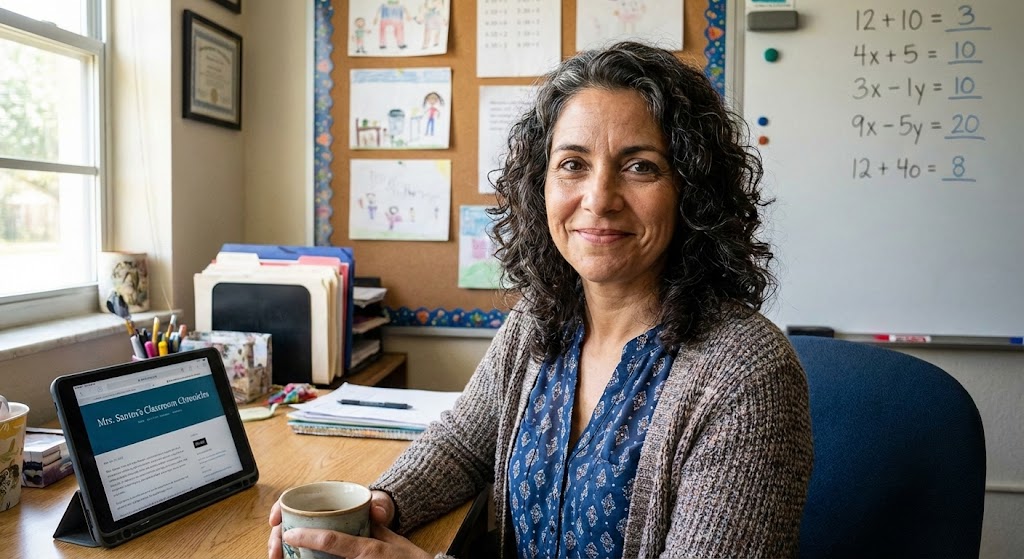
Maria Santos
Maria has been teaching 4th grade in Tampa, Florida for 22 years. Known as "the math whisperer" among her colleagues, she writes about the real challenges and victories of teaching in Florida's public schools.
When she's not grading papers or creating lesson plans, you can find Maria at her local teacher supply store (with coupons in hand) or sharing teaching tips over cafecito with her teacher friends.
View Full Profile →Related Articles
The Broke Teacher's Guide to Back to School Shopping (Without Losing Your Mind or Your Wallet)
Budget-friendly teaching tip: Let me tell you about August 2019. I walked into Walmart with a list, ...
Dollar Store Math Manipulatives That Actually Work (And Won't Break Your Heart When They Disappear)
Budget-friendly teaching tip: Last September, I spent forty-seven dollars of my own money on a beaut...
Ready to Improve Your FAST Scores?
Upload your class data and get personalized IXL success plans in seconds.
Try It Free