The Manipulative That Changed Everything for Me
I still remember the exact moment I realized I was doing everything wrong.
It was my third year teaching, and I was standing in front of twenty-four confused faces trying to explain why you "borrow" from the tens place during subtraction. Little Sofia raised her hand and asked, "But Mrs. Santos, where does the number go when you cross it out?"
I froze. I had no good answer because honestly, I didn't really understand it myself. I was just repeating what I'd learned in school, the same abstract rules that had confused me as a kid.
That night I called my mentor teacher, Mrs. Rodriguez, practically in tears. "Mija," she said, "you're trying to teach them to think like little computers instead of little humans. Get yourself some base-ten blocks and start over."
Why I Resisted Manipulatives at First
Let me be honest. I thought manipulatives were for the "slow" kids. Ay, dios mio, I cringe thinking about it now. I believed that smart kids should be able to do math in their heads, and using blocks or counters was somehow cheating.
Plus, manipulatives felt messy and chaotic. I was already struggling with classroom management, and the thought of twenty-four kids with tiny blocks seemed like a recipe for disaster.
I was so wrong.
The Base-Ten Block Breakthrough
The next day, I swallowed my pride and borrowed a class set of base-ten blocks from Mrs. Rodriguez. I decided to start completely over with place value, even though we were already in October.
Instead of telling my students that 47 means "four tens and seven ones," I had them build it. They physically held four ten-rods and seven unit cubes. Suddenly, place value wasn't some mysterious concept. It was right there in their hands.
When we got to subtraction with regrouping, magic happened. Instead of that confusing "borrowing" language, we could actually trade one ten-rod for ten unit cubes. The kids could see exactly where that "borrowed" number came from.
The Student Who Changed My Mind Forever
Three weeks into our manipulative experiment, something incredible happened with Marcus (not my son, but a student that year). Marcus had been labeled as having a learning disability in math. He rarely spoke up and usually just copied whatever his neighbor was doing.
But with the base-ten blocks, Marcus came alive. He started explaining his thinking to other students. He'd say things like, "See, you can't take eight from three, so you gotta break apart one of these tens into ten ones."
The kid who supposedly couldn't do math was teaching other kids. I realized the problem was never Marcus. The problem was how I'd been teaching.
Making the Transition from Concrete to Abstract
Here's what I learned about using base-ten blocks effectively. You can't just hand them out and hope for the best. There's a progression that works:
Start Concrete: Let kids build every number with the actual blocks. Yes, it takes longer. Do it anyway.
Move to Pictorial: Have students draw the blocks before they use numbers. I use simple rectangles for tens and dots for ones. This bridges the gap between touching and thinking.
Finally Abstract: Only after they've built it and drawn it do we move to just numbers. By then, they can picture the blocks in their minds.
Classroom Management Tips for Manipulatives
Let's talk about the elephant in the room. Yes, manipulatives can be chaotic if you don't have systems in place.
I learned to establish clear rules from day one. Each table gets one container of blocks. One person from each table is the "materials manager" for the week. When I say "blocks away," everything gets counted back into the container.
I also learned that the novelty wears off quickly. The first few times, kids want to build towers and houses. Let them explore for five minutes, then get to work. After a week, they treat the blocks like the tools they are.
Beyond Base-Ten Blocks
Once I saw the power of base-ten blocks, I started incorporating other manipulatives too. Fraction bars for fraction work. Algebra tiles for patterns and early algebra concepts. Even simple counting bears for word problems.
The key is matching the right manipulative to the concept you're teaching. Base-ten blocks are perfect for place value, addition, and subtraction. But they're not great for multiplication or division.
What About Test Prep?
I know what you're thinking. "Maria, this sounds great, pero what about FAST testing? Kids can't use blocks on the test."
Here's the thing. Students who truly understand math concepts perform better on tests than students who just memorize procedures. When my kids can visualize what's happening in a problem, they're more likely to catch their mistakes and choose the right strategy.
Yes, we practice without manipulatives too. But we build that understanding first with concrete materials.
The Parent Conversation
Some parents worry when they see their kids using "baby blocks" for math. I send home a note early in the year explaining our approach. I tell them that manipulatives aren't a crutch. They're a foundation.
I also invite parents to math night where I show them how the blocks work. Once they see their child explaining a concept clearly using the manipulatives, they usually become believers too.
Twenty Years Later
I'm still using base-ten blocks in my classroom. Not for every lesson, and not forever with each concept. But as the foundation for understanding place value and operations.
Last month, I watched little Emma explain to her mom during conferences how she solved a three-digit subtraction problem. She didn't have blocks with her, but she moved her hands like she was trading tens for ones. She had internalized the concept so deeply that she could visualize it.
That's the power of starting concrete.
Your Turn
If you've been hesitant about manipulatives, I get it. But I'm challenging you to try base-ten blocks for just one week. Pick one concept you're struggling to teach and approach it with the blocks first.
Start with place value. Have kids build numbers before they write them. Then move to addition and subtraction with regrouping. Watch what happens when they can actually see the math instead of just memorizing steps.
Your students will surprise you. And you might just surprise yourself too.
Trust me on this one. Sometimes the simplest tools create the biggest breakthroughs.
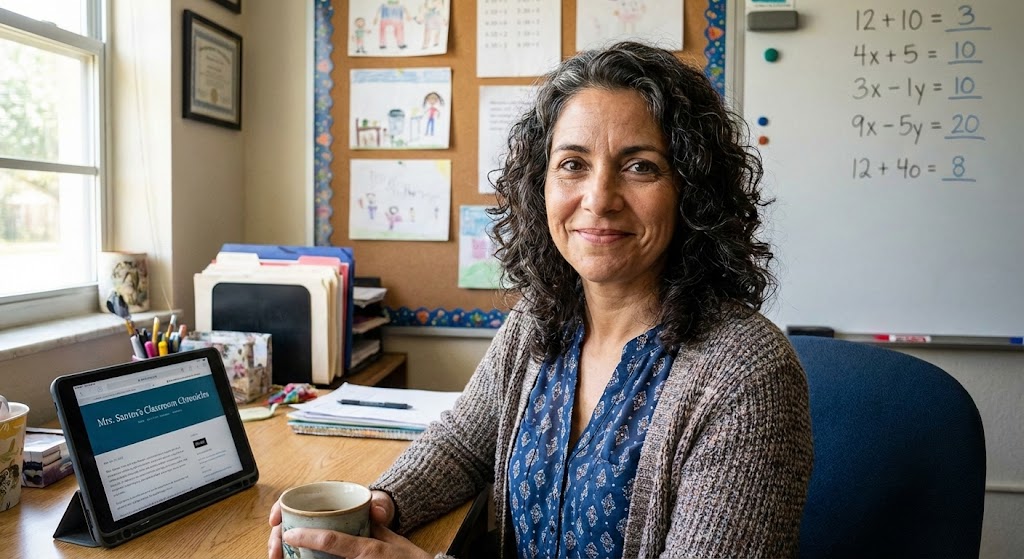
Maria Santos
Maria has been teaching 4th grade in Tampa, Florida for 22 years. Known as "the math whisperer" among her colleagues, she writes about the real challenges and victories of teaching in Florida's public schools.
When she's not grading papers or creating lesson plans, you can find Maria at her local teacher supply store (with coupons in hand) or sharing teaching tips over cafecito with her teacher friends.
View Full Profile →Related Articles
When Mid-Year Data Makes You Want to Hide Under Your Desk (But You Don't Have To)
Math teaching strategy: Last Tuesday, I got my mid-year FAST data back and my first thought was, "Ay...
Making Mid-Year Data Work for You (Instead of Against You)
Math teaching strategy: Last Tuesday, I walked into the copy room and found Jessica practically hype...
Ready to Improve Your FAST Scores?
Upload your class data and get personalized IXL success plans in seconds.
Try It Free