The Parent Email Template That Changed Everything
Picture this: It's 7:30 PM on a Tuesday, and I'm sitting at my kitchen table with a stack of ungraded papers, trying to craft an email to Miguel's mom about his behavior that day. Carlos is watching the news, occasionally glancing over at me muttering under my breath.
"Just tell her what happened," he says, like it's that simple.
If only it were that easy, mi amor.
I spent twenty minutes on that email, deleting and rewriting, trying to find the right tone. Too harsh and I'd put her on the defensive. Too soft and she might not take it seriously. I finally hit send at 8:15 PM, feeling like I'd just defused a bomb.
The response I got back the next morning made my stomach drop.
When Good Intentions Go Wrong
"Mrs. Santos, I can't believe you think my son is a troublemaker. He's never acted this way at home. Maybe you need to look at your classroom management instead of blaming the kids."
Ay, dios mío. That was NOT what I was trying to communicate.
Miguel's mom wasn't wrong to be upset. Looking back at my email, I realized I'd focused entirely on what Miguel had done wrong without acknowledging anything positive or explaining why I was reaching out. I'd made her feel attacked instead of invited into a partnership.
That uncomfortable exchange taught me something crucial: the way we communicate with parents can make or break our relationship with them. And since strong parent partnerships are essential for student success, I needed to get this right.
The Template That Changed My Parent Communication
After that disaster with Miguel's mom (we eventually worked things out, gracias a Dios), I developed a simple email template that's served me well for the past eight years. I'm sharing it with you because I wish someone had given me this roadmap when I was drowning in awkward parent conversations.
Here's the framework I use for any challenging parent communication:
1. Start with something positive 2. State the concern clearly and objectively 3. Share what you've already tried 4. Ask for their input and partnership 5. End with next steps and appreciation
Let me show you how this looks in practice.
The Template in Action
Subject Line: Partnership needed for [Student's name]'s success
Hi [Parent's name],
I hope this email finds you well. I wanted to reach out because [student's name] has been showing some real strengths in [specific positive behavior/skill]. Just yesterday, she helped a classmate with their math problem without being asked, which shows her kind heart.
I'm reaching out because I've noticed [specific behavior/concern] happening during [specific time/situation]. For example, [brief, objective description of what you observed].
I've tried [specific strategies you've used] to support [student's name] with this, and I'd love to get your perspective. Have you noticed anything similar at home? What strategies work well for you when this happens?
I believe that working together, we can help [student's name] be successful. Would you be available for a quick phone call this week to brainstorm some solutions? I'm free [give specific times].
Thank you for being such a supportive partner in [student's name]'s education. I'm looking forward to hearing from you.
Best regards, [Your name]
Why This Template Works
This approach works because it treats parents as partners, not adversaries. When I start with something positive, I'm showing that I see their child as a whole person, not just a problem to be solved.
Being specific about what I've observed keeps the conversation factual rather than judgmental. Instead of saying "Sofia is disruptive," I might write "During our math lesson yesterday, Sofia called out answers three times without raising her hand."
Sharing what I've already tried shows parents that I'm not just dumping the problem on them. I'm actively working to support their child and want their input to do it better.
Adapting for Different Situations
For academic concerns: Focus on specific skills and include data when possible. "During our recent assessments, I noticed that Jamie is still working on her multiplication facts. She knows her 2s and 5s really well, but the 7s and 8s are tricky for her."
For behavior issues: Stick to observable behaviors and avoid labels. Instead of "aggressive," describe what you saw: "During recess, I saw Alex push two different classmates when they didn't want to play his game."
For positive updates: Don't save this template just for problems! Use the same structure to share good news. Parents need to hear when things are going well, especially if you've had challenging conversations before.
The Follow-Up That Matters
Here's something I learned the hard way: sending the email is just the beginning. How you follow up determines whether you'll build a strong partnership or create more tension.
Always respond to parent emails within 24 hours, even if it's just to say you received their message and will call them tomorrow. We're all busy, pero parents are trusting us with their most precious gifts. They deserve to know we're listening.
When a parent offers suggestions, try them. Even if you're skeptical, give their ideas a genuine shot. Sarah's mom suggested letting her daughter squeeze a stress ball during lessons, and I'll admit I thought it would be distracting. Turns out, it helped Sarah focus better than anything I'd tried.
Building Bridges, Not Walls
The biggest shift in my thinking came when I stopped seeing difficult parent conversations as something to survive and started viewing them as opportunities to build stronger support for my students.
That mom who questioned my classroom management? She became one of my strongest parent volunteers once we learned to communicate better. Miguel's behavior improved dramatically when his mom and I worked together instead of talking past each other.
Your Turn to Try It
I challenge you to use this template for your next parent communication, whether it's about a concern or just to share something positive. Notice how different it feels to approach the conversation as a partnership from the very first sentence.
Keep a copy of this framework somewhere handy. I have mine taped inside my plan book because even after all these years, I sometimes need the reminder to start with the positive and ask for partnership instead of just reporting problems.
Remember, we're all on the same team here. Every parent wants their child to succeed, just like we do. Sometimes we just need better tools to have those important conversations.
What parent communication challenges are you facing right now? I'd love to hear how this template works for you, or what adaptations you make for your unique situation. We're stronger when we share what works.
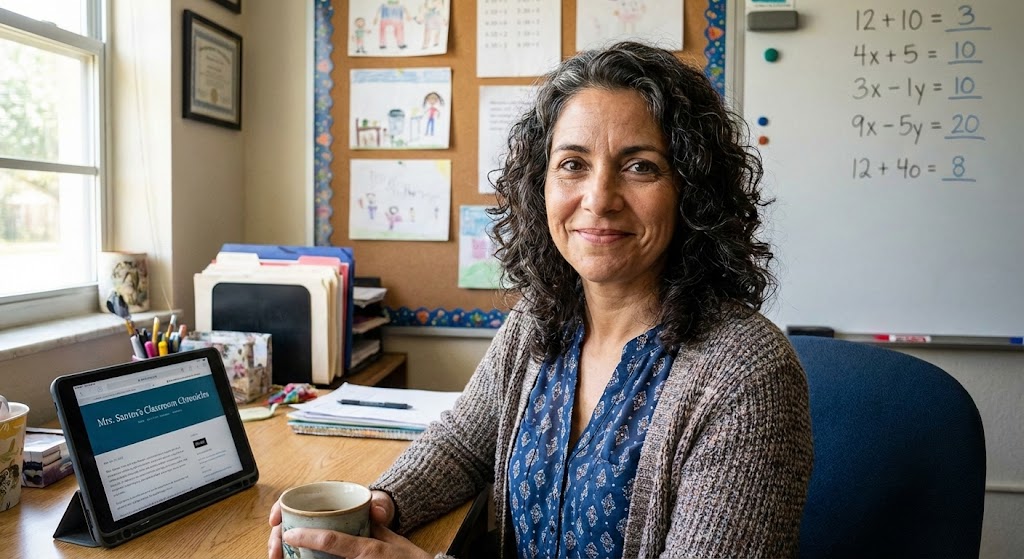
Maria Santos
Maria has been teaching 4th grade in Tampa, Florida for 22 years. Known as "the math whisperer" among her colleagues, she writes about the real challenges and victories of teaching in Florida's public schools.
When she's not grading papers or creating lesson plans, you can find Maria at her local teacher supply store (with coupons in hand) or sharing teaching tips over cafecito with her teacher friends.
View Full Profile →Related Articles
When Parents Say "My Child Would Never" (And What We Do Next)
Parent communication tip: Last Tuesday, I called Mrs. Rodriguez to discuss her son Miguel's behavior...
How to Talk to Parents About Test Scores Without Making Everyone Cry
Parent communication tip: Last week, I watched a parent's face crumple as I explained her daughter's...
Ready to Improve Your FAST Scores?
Upload your class data and get personalized IXL success plans in seconds.
Try It Free