When a Student Says "I'm Just Not a Math Person"
Last Tuesday, little Sophia looked up at me with tears in her eyes during our fractions lesson and said, "Mrs. Santos, I'm just not a math person. My mom says she wasn't either."
Ay, my heart broke a little. But honestly? I used to say the exact same thing.
Twenty-two years ago, fresh out of college, I would actually tell parents during conferences, "Well, some kids are just naturally good at reading, others at math." Can you believe that? I was literally telling families that their children had fixed abilities that couldn't grow.
I cringe thinking about all the kids I probably held back with that mindset.
The Myth That's Hurting Our Kids
Here's the thing we need to talk about: when we say "I'm not a math person" (or worse, when we let our students say it), we're basically telling kids that math ability is like eye color. You're born with it or you're not.
But that's complete nonsense, and the research backs me up on this.
Dr. Jo Boaler from Stanford has shown us that our brains literally grow new connections when we struggle with math problems. The struggle IS the learning. When Sophia told me she wasn't a math person, her brain was actually getting stronger from wrestling with those fractions.
The problem is, she didn't know that.
What I Do When I Hear Those Words
When a student tells me they're "not a math person," I don't brush it off or give them a pep talk. Instead, I get curious.
First, I ask them to tell me about a time when math felt hard but they figured it out anyway. Even if it takes a while, we find that moment. Maybe it was counting by 5s in second grade, or finally understanding what "equal" means.
Then I say something like, "So you WERE a math person that day, right?"
It sounds simple, pero it works. We start collecting evidence that their math story is more complicated than they thought.
Rewriting the Narrative in Real Time
I've started changing my language in small but powerful ways, and I want you to try this too:
Instead of "You're so smart!" I say "Your brain grew stronger because you kept trying."
Instead of "This is easy" I say "This might feel challenging at first."
Instead of "You got it right!" I say "Your strategy worked!"
These tiny shifts help kids see that math success comes from effort and strategy, not some magical math gene.
The Parent Conference Game-Changer
Here's something I learned the hard way: parents need to hear this message too.
During conferences, when a parent says "I was never good at math either," I gently push back. I'll say something like, "I bet you use math every day without thinking about it. You calculate tips, figure out if you have enough gas to get to work, compare prices at Publix."
Then I ask them to avoid saying they're "not math people" in front of their child. I explain that kids believe what we tell them about themselves, and we want them to believe they can grow.
Most parents get it once you explain it this way. They want their kids to succeed.
Making Math Feel Less Scary
One thing I've noticed in my 22 years is that math anxiety often comes from kids thinking they need to be fast. They see their classmates finish first and assume that means they're not good at math.
So I've started timing things differently. Instead of racing through problems, we take our time. I tell my kids, "Mathematicians think slowly and carefully. Speed comes later."
I also make mistakes on purpose. Last week, I "forgot" to flip my fraction when dividing and let the kids catch my error. When they corrected me, I made a big deal about how great it is that we can learn from mistakes.
Now when kids make errors, other students will say, "That's okay, Mrs. Santos makes mistakes too!"
The Power of Yet
This might be the simplest strategy I use, but it's also the most powerful.
When Marcus (not my son, my student Marcus) said he couldn't do long division, I handed him a sticky note with "YET" written on it.
"Put this at the end of your sentence," I told him.
"I can't do long division... yet."
He laughed, but something shifted. That little word opened up possibility.
Now I have a whole stack of "yet" sticky notes, and kids ask for them. They've started catching each other's fixed mindset talk and suggesting the yet treatment.
What This Looks Like in Practice
Let me paint you a picture of how this plays out in my classroom.
During our geometry unit last month, Isabella was struggling with identifying angles. In the past, she might have shut down and declared herself "not a math person."
Instead, she said, "I don't understand acute angles yet, but I'm going to try a different strategy."
She grabbed the angle manipulatives, traced some angles with her finger, and suddenly it clicked. The next day, she was helping other kids understand the difference between acute and obtuse.
That's the power of believing your brain can grow.
For My Fellow Teachers
I know this mindset shift isn't easy, especially when we're drowning in B.E.S.T. standards and FAST prep. But changing how we talk about math ability might be one of the most important things we do for our kids.
Start small. Pick one phrase you'll change this week. Maybe stop saying "good job" and start saying "you stuck with it." Or catch yourself before you say something is "easy."
Our words matter more than we realize.
The Ripple Effect
Here's what I've noticed since I started this growth mindset work: kids are taking more risks in math. They're willing to share wrong answers because they know mistakes help their brains grow. They're supporting each other instead of comparing themselves.
And honestly? They're learning more math too.
When kids believe they can get better at math, they actually do get better at math. It's not magic, it's just what happens when we stop putting limits on what's possible.
So the next time a student tells you they're "not a math person," remember: they're not stating a fact, they're asking for help rewriting their story.
Let's help them write a better one.
What phrases are you going to change in your classroom this week? I'd love to hear about it in the comments.
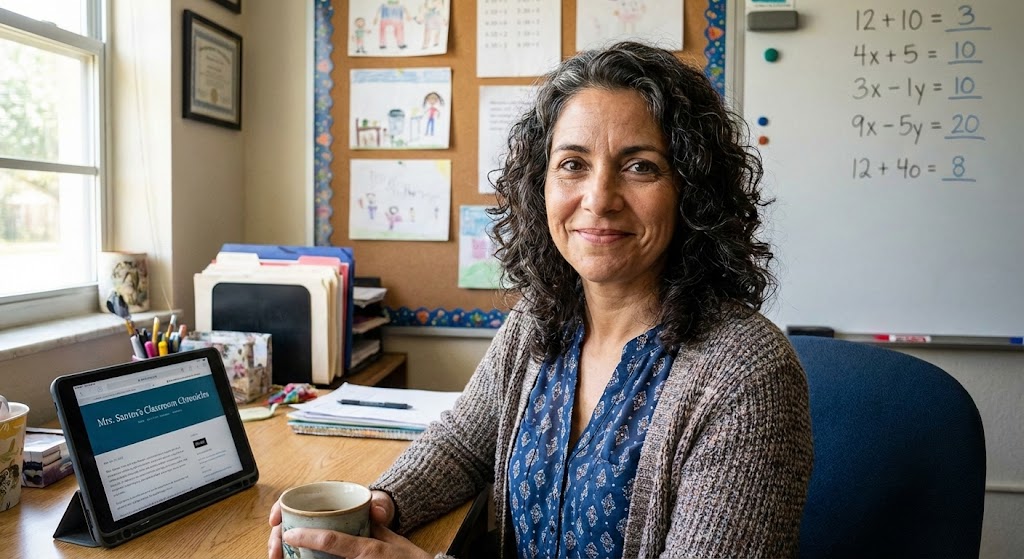
Maria Santos
Maria has been teaching 4th grade in Tampa, Florida for 22 years. Known as "the math whisperer" among her colleagues, she writes about the real challenges and victories of teaching in Florida's public schools.
When she's not grading papers or creating lesson plans, you can find Maria at her local teacher supply store (with coupons in hand) or sharing teaching tips over cafecito with her teacher friends.
View Full Profile →Related Articles
When Mid-Year Data Makes You Want to Hide Under Your Desk (But You Don't Have To)
Math teaching strategy: Last Tuesday, I got my mid-year FAST data back and my first thought was, "Ay...
Making Mid-Year Data Work for You (Instead of Against You)
Math teaching strategy: Last Tuesday, I walked into the copy room and found Jessica practically hype...
Ready to Improve Your FAST Scores?
Upload your class data and get personalized IXL success plans in seconds.
Try It Free