When "Word Problem" Becomes a Four-Letter Word in Your Classroom
Last Tuesday, I watched little Sofia's face go completely white when I announced we were starting word problems. This sweet kid who can multiply three-digit numbers in her head suddenly looked like I'd asked her to perform brain surgery.
"Mrs. Santos," she whispered, "I don't know what the story is asking me to do."
Ay, if I had a dollar for every time I've heard that over the years. Word problems are like kryptonite for so many of our kids. They see all those words and their math brains just shut down completely.
But here's what I've learned after two decades of watching students wrestle with story problems: it's not that they can't do the math. They just need us to teach them how to be math detectives.
Start with the Detective Mindset
I tell my students we're going to be like detectives solving a mystery. Every word problem has clues hidden inside, and our job is to find them.
The first thing we do is read the problem together, and I mean really read it. Not that rushed, "let me get through this so I can find the numbers" kind of reading. We read it like we're reading a good story.
Then I ask, "What's happening in this story?" Before we worry about numbers or operations, we need to understand the situation. Is someone buying something? Are we comparing heights? Is something growing over time?
This simple shift changes everything. Instead of panicking about math, they're just telling me about a story.
The Highlighter Strategy That Actually Works
I used to tell kids to "find the important information," but that's about as helpful as telling them to "just understand it better." What does important even mean to a 9-year-old?
Now we use a color-coding system that gives them concrete things to look for:
Yellow highlighter for the question. What is the problem actually asking? I make them find the question mark and highlight that whole sentence. Sometimes there are multiple questions, and we need to catch that.
Pink highlighter for the numbers and units. Every number gets highlighted, along with what it's measuring. "25 stickers" gets highlighted as a unit, not just the 25.
Blue highlighter for action words. Bought, sold, gave away, combined, shared equally. These words are huge clues about what operation we might need.
When Marcus (not my son, my student Marcus) first started using this system, he said, "Oh! The story is telling me what to do!" Exactly, mijo.
Draw It Out, Even When It Feels Silly
I cannot tell you how many times I've seen a student completely stuck on a word problem, then I ask them to draw a picture and suddenly they get it.
"But Mrs. Santos, I'm not good at drawing," they always say.
I show them my stick figures and terrible circles. We're not creating art here, we're creating understanding. A box can be a store. A circle can be a pizza. Lines can be students standing in line.
Sometimes I have them act it out too. If the problem is about sharing cookies equally among friends, we get up and pretend to be those friends. We use actual objects when we can.
Last month, we had a problem about birds landing on tree branches. I had the kids be the trees, and other kids were birds finding places to "land." They figured out the math because they could see it happening.
Teach Them to Talk Back to the Problem
This sounds weird, but I teach my students to have conversations with word problems. Out loud.
"Okay, problem, you're telling me that Maria has 24 stickers and she gives 8 to her sister. Now you want to know how many she has left. I think I need to subtract here."
When they verbalize their thinking, two things happen. First, they slow down and actually process what they're reading. Second, I can hear where their thinking goes off track.
Yesterday, I heard Jasmine say, "Wait, this problem is trying to trick me. It gave me three numbers but I only need two of them." She was absolutely right. Teaching them to question the problem makes them stronger mathematical thinkers.
Make the Abstract Concrete
Florida kids understand hurricanes, beach trips, and theme parks. So why are we giving them word problems about snow skiing and maple syrup farms?
I rewrite problems to match their world. Instead of "Jenny bought apples at a farm stand," it's "Carlos bought mangoes at the Westshore farmers market." Instead of problems about sledding, we talk about water slides.
But it goes deeper than just changing the setting. I use situations they actually encounter. Problems about splitting the cost of school supplies among friends. Figuring out how many weeks of allowance they need to buy something they want. Calculating how many more points they need to reach their AR goal.
When the math connects to their real life, they stop seeing it as some abstract puzzle and start seeing it as a useful tool.
The Power of "Almost Right"
Here's something I learned the hard way: when a student gets a word problem wrong, they're usually not completely wrong. They're almost right, and that "almost" is where the learning happens.
Maybe they identified the right operation but made a computation error. Maybe they found all the right information but answered a different question than what was asked. Maybe they did perfect math but misunderstood what the story was telling them.
I've started celebrating these "almost right" moments because they show me exactly where to help. "Mira, you did the hardest part! You figured out this was a multiplication problem. Now let's double-check your computation together."
This approach has cut down on the tears and meltdowns dramatically. Kids stop seeing mistakes as failures and start seeing them as information.
Building Confidence One Problem at a Time
The truth is, most of our students can handle word problems just fine once they believe they can handle them. But that confidence has to be built carefully, one success at a time.
I start with problems that are just slightly challenging, not overwhelming. I give them tools that actually work. I celebrate their thinking, not just their answers.
And I remind them constantly that mathematicians don't just compute, they solve problems. They're not just students struggling with word problems, they're mathematicians figuring things out.
Some days it works better than others, pero that's teaching, right? Tomorrow I'll try again with Sofia and all the other kids who think word problems are scary. Because they're not scary at all. They're just stories waiting to be solved.
What strategies have worked in your classroom? I'm always looking for new ways to help our kids see themselves as the capable problem solvers they already are.
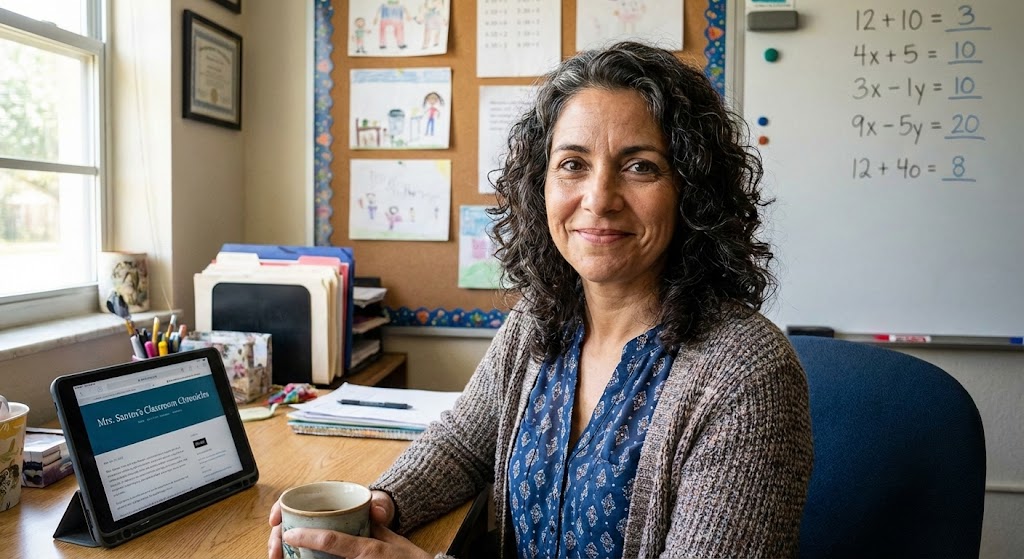
Maria Santos
Maria has been teaching 4th grade in Tampa, Florida for 22 years. Known as "the math whisperer" among her colleagues, she writes about the real challenges and victories of teaching in Florida's public schools.
When she's not grading papers or creating lesson plans, you can find Maria at her local teacher supply store (with coupons in hand) or sharing teaching tips over cafecito with her teacher friends.
View Full Profile →Related Articles
When Mid-Year Data Makes You Want to Hide Under Your Desk (But You Don't Have To)
Math teaching strategy: Last Tuesday, I got my mid-year FAST data back and my first thought was, "Ay...
Making Mid-Year Data Work for You (Instead of Against You)
Math teaching strategy: Last Tuesday, I walked into the copy room and found Jessica practically hype...
Ready to Improve Your FAST Scores?
Upload your class data and get personalized IXL success plans in seconds.
Try It Free