Why I Start Every Math Class Wrong on Purpose
Last Tuesday, I walked into my classroom and wrote "47 x 23" on the board. Then I proceeded to solve it completely wrong.
I multiplied 47 x 3 first, got 141, wrote it down. Then I multiplied 47 x 20, got 940, and wrote that directly under the 141. Finally, I added them up and announced proudly, "1,081!"
Half my kids were frantically waving their hands. "Mrs. Santos, that's not right!" Sofia called out. "You didn't line it up!"
And that, mis amigos, is exactly what I wanted.
The Day I Discovered My Teaching Was Too Perfect
Three years ago, I thought I was killing it in math. I had beautiful anchor charts, perfectly organized examples, and step-by-step procedures that were clearer than my abuela's caldo recipe. My lessons were so polished they could've been in a textbook.
The problem? My kids weren't learning.
They could follow my steps when I was right there, pero the moment they had to think for themselves, everything fell apart. During our FAST prep, I realized they had memorized my procedures without understanding the why behind them.
That's when I started getting things wrong on purpose.
Why Wrong Answers Are Right for Learning
When we show kids perfect examples every time, we rob them of something crucial: the chance to think critically about math. They become passive receivers instead of active problem solvers.
But when I make a "mistake," suddenly everyone's a detective. They're analyzing my work, comparing it to what they know, and most importantly, they're talking about math.
Last week, during a fraction lesson, I wrote 3/4 + 1/2 = 4/6 on the board. The discussion that followed was better than any textbook explanation I could've given. Kids were drawing pictures, using manipulatives, and explaining why you can't just add numerators and denominators.
Marcus (not my son, my student Marcus) said, "Mrs. Santos, you can't just smoosh the tops and bottoms together. That's like saying one pizza slice plus one pizza slice equals two tiny pizza slices from a different pizza!"
Ay, dios mío, that kid explained it better than I ever could.
How to Be Wrong the Right Way
Being wrong on purpose isn't just about making random mistakes. There's strategy behind it.
Choose Common Mistakes
I don't make bizarre errors that no one would actually make. Instead, I recreate the mistakes I see my students making. When I "forget" to regroup in subtraction or "accidentally" add exponents instead of multiplying them, I'm addressing real misconceptions.
Make It Believable
I don't announce that I'm making mistakes. I act like I'm genuinely solving the problem. Sometimes I'll even defend my wrong answer initially. "What do you mean this isn't right? I followed all the steps!"
Create Safe Spaces for Disagreement
This only works if kids feel comfortable correcting their teacher. I've spent years building a classroom culture where mistakes are learning opportunities, not failures. We celebrate wrong answers because they show us where our thinking needs to grow.
The Magic Moment When It Clicks
There's this beautiful moment that happens when kids catch my "mistake." Their faces light up, they sit up straighter, and suddenly they're explaining math concepts with confidence I've never heard before.
Last month, during a division lesson, I "forgot" to check my answer. I had solved 144 ÷ 12 = 11, and moved on to the next problem.
Isabella raised her hand tentatively. "Mrs. Santos? I think... I think you made a mistake."
"Really? Show me."
She walked to the board and multiplied 11 x 12. When she got 132 instead of 144, her whole face changed. "It should be 12! Because 12 x 12 = 144!"
That moment when she realized she could check division with multiplication? That's the kind of understanding you can't get from perfect examples.
Making It Work in Your Classroom
Start small. Pick one concept your kids struggle with and identify the most common mistake they make. Then make that exact mistake during your next lesson.
Watch their reactions. Some kids will catch it immediately. Others might need hints. "Hmm, let me check this by..." and then pause, giving them space to jump in.
Don't feel like you have to be wrong in every lesson. I probably do this once or twice a week, when it fits naturally. The goal isn't to confuse kids, but to activate their thinking.
When Data Drives the Wrong Answers
After our last FAST testing, I used FastIXL to see exactly which skills my kids needed to work on. It showed me that place value was still shaky for several students, so I knew exactly what kind of "mistakes" to make during our review sessions.
When you know where kids are struggling, you can be strategic about which errors to model.
The Real Learning Happens in the Discussion
The mistake itself isn't the magic. The conversation afterward is where learning happens.
When kids explain why something is wrong, they have to articulate their mathematical reasoning. They're not just following steps anymore; they're thinking about relationships, patterns, and logic.
I've learned more about my students' thinking from these discussions than from any assessment. I hear their misconceptions, their partial understandings, and their brilliant insights.
Building Confidence Through Correction
There's something powerful about a fourth grader correcting their teacher. It builds mathematical confidence in a way that getting problems right on worksheets never could.
When Jayden explained why my long division was wrong last week, he stood a little taller. He realized he actually understood division better than he thought. That confidence carried over into independent work time, where he tackled problems he would've avoided before.
It's Not About Being Perfect
We put so much pressure on ourselves to have flawless lessons, perfect explanations, and zero confusion. But maybe that's not what our kids need.
Maybe they need to see that math is about thinking, not just following rules. Maybe they need practice questioning, analyzing, and explaining. Maybe they need to know that even teachers make mistakes, and that's okay.
Your Turn to Be Wrong
I challenge you to try this once this week. Pick a concept, make a strategic mistake, and see what happens.
Trust your kids. They're smarter than we sometimes give them credit for, and they're often our best teachers.
After 22 years in this classroom, I've learned that the best lessons aren't the ones where everything goes perfectly. They're the ones where kids surprise you with their thinking, challenge your methods, and walk away feeling like mathematicians.
So go ahead. Be wrong on purpose. Your kids will thank you for it.
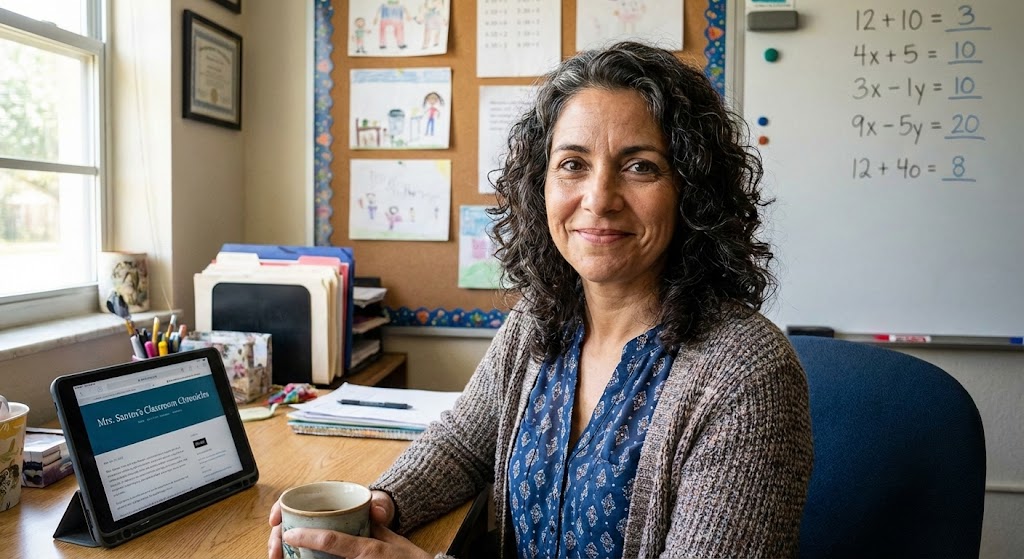
Maria Santos
Maria has been teaching 4th grade in Tampa, Florida for 22 years. Known as "the math whisperer" among her colleagues, she writes about the real challenges and victories of teaching in Florida's public schools.
When she's not grading papers or creating lesson plans, you can find Maria at her local teacher supply store (with coupons in hand) or sharing teaching tips over cafecito with her teacher friends.
View Full Profile →Related Articles
When Mid-Year Data Makes You Want to Hide Under Your Desk (But You Don't Have To)
Math teaching strategy: Last Tuesday, I got my mid-year FAST data back and my first thought was, "Ay...
Making Mid-Year Data Work for You (Instead of Against You)
Math teaching strategy: Last Tuesday, I walked into the copy room and found Jessica practically hype...
Ready to Improve Your FAST Scores?
Upload your class data and get personalized IXL success plans in seconds.
Try It Free