Dollar Store Gold: Building Your Math Manipulative Collection Without Breaking the Bank
Last month, my principal walked into my classroom during math centers and stopped dead in her tracks. "Maria Elena, where did you get all these manipulatives? Did you win the lottery or something?"
I had to laugh. My kids were scattered around the room, completely absorbed in their math work. Some were using colorful counting bears, others had pattern blocks spread across their desks, and a group in the corner was building fraction walls with foam rectangles. It looked like I'd raided the Lakeshore catalog.
The truth? Almost everything came from the dollar store. And I mean everything.
Why Dollar Store Math Manipulatives Make Sense
Let me be real with you. We teach at Title I schools where our supply budgets are tighter than my jeans after the holidays. When the district gives us $50 for the entire year and expects miracles, we have to get creative.
But here's what I've learned after 22 years: kids don't care if their manipulatives came from Educational Insights or Dollar Tree. What matters is that they have enough materials to actually manipulate, explore, and make sense of math concepts.
Remember, manipulatives are supposed to be handled, dropped, occasionally lost, and yes, sometimes chewed on by that one kid we all have. Expensive manipulatives that we're afraid to let kids actually use defeat the whole purpose.
My Dollar Store Shopping List
Every few months, I hit up the Dollar Tree near my house with a mission. Here's what I hunt for:
Counting and Number Sense
- Plastic animals or dinosaurs: Perfect for counting, sorting, and basic operations. My kids love story problems about dinosaur families way more than abstract numbers.
- Foam stickers: Buy sheets of dots, stars, or shapes. Kids can stick them on paper to show their thinking.
- Playing cards: Remove the face cards and you've got number cards for games, ordering activities, and fact practice.
- Dice: I buy every pack I see. Having 30 dice means every kid can participate in probability activities.
Place Value and Base Ten
- Craft sticks: Bundle them with rubber bands for tens. Individual sticks are ones. Boom, base ten blocks for a fraction of the cost.
- Straws: Same concept, different material. Some kids respond better to straws than sticks.
- Small cups or containers: Perfect for sorting and organizing by place value.
Fractions and Decimals
- Paper plates: Cut them into fraction pieces. Write the fractions on each piece with a Sharpie.
- Foam rectangles or circles: Cut these into fraction strips or pie pieces.
- Measuring cups: Great for exploring equivalent fractions and decimals through hands-on measurement.
Making Them Last (Because You're Going to Want To)
The biggest challenge with dollar store finds isn't quality, it's organization. Trust me, I learned this the hard way when I spent an entire prep period crawling around my floor looking for tiny plastic bears.
I use clear shoe boxes (also from the dollar store, naturally) to organize everything. Each box gets a label with both words and pictures. My fourth graders can clean up independently, and I can see when supplies are running low.
For items that might break easily, I buy extras and store them in my closet. When little Jayden accidentally steps on a foam fraction piece, I'm not stressed. I just grab another one.
Beyond the Obvious: Creative Dollar Store Finds
Sometimes the best manipulatives aren't in the school supply aisle. I've found amazing math tools in unexpected places:
Kitchen section: Measuring spoons and cups, timers, small bowls for sorting Party supplies: Number candles for place value, colorful plates and cups for patterns Craft section: Buttons for counting, yarn for geometry, foam sheets for making custom manipulatives Cleaning supplies: Spray bottles (empty) filled with water for measurement activities
Making the Connection to Standards
Here's where I get a little nerdy, pero stick with me. When FAST scores come back, I use a tool called FastIXL to see exactly which skills my kids need to work on. Then I can grab the right manipulatives to support those specific concepts.
For example, if the data shows my kids are struggling with fraction comparison, out come my paper plate fractions and foam strips. If it's multiplication facts, we're playing games with my dollar store dice and cards.
The beauty is that I have enough materials for everyone to participate, not just watch me demonstrate at the front of the room.
What About Quality?
Look, I'm not going to pretend that dollar store manipulatives are the same quality as the expensive ones. They're not. But for most activities, they work just fine.
The plastic animals might not be perfectly detailed, but they still represent quantities. The foam shapes might not be perfectly cut, but kids can still explore area and perimeter. The dice might be a little light, but they still show random numbers.
And honestly? Sometimes the imperfections lead to great math conversations. When Maria (yes, another Maria in my class) noticed that her foam circle wasn't perfectly round, we ended up having an amazing discussion about what makes a circle a circle.
Storage and Organization Tips
I cannot stress this enough: have a plan for storage before you go shopping. I've made the mistake of buying amazing manipulatives and then losing half of them because I didn't think through organization.
My system is simple: - Clear containers so kids can see what's inside - Labels with pictures and words - One manipulative type per container - Small containers inside bigger ones for tiny pieces
I also keep a "broken/missing pieces" box. When something breaks or goes missing, it goes in there. Sometimes I can fix it, sometimes I use the pieces for other activities.
The Real Win: Student Engagement
Here's what matters most: my kids are excited about math. When I pull out the dinosaur counters, hands shoot up. When we're using playing cards for fact practice, even my reluctant mathematicians want to participate.
Last week, during our fraction unit, I overheard Sofia explaining to Marcus why three-fourths was bigger than two-thirds using our paper plate fractions. She was teaching him, using the manipulatives to make her thinking visible.
That moment? That's worth way more than the three dollars I spent on paper plates.
Start Small, Dream Big
You don't need to transform your entire math program overnight. Start with one concept you're teaching next week. What manipulatives would help your kids understand it better? Can you find something at the dollar store that would work?
Maybe grab some dice for probability, or plastic spoons for measurement, or foam shapes for geometry. Try it out. See how your kids respond.
I bet you'll be surprised at how much learning can happen with a few dollars' worth of supplies and a lot of creativity.
Remember, we're not just teaching math concepts. We're showing our kids that learning can be hands-on, engaging, and yes, even fun. And if we can do that while staying within our tiny budgets, even better.
What dollar store finds have worked in your classroom? I'm always looking for new ideas, and I know our teacher community has the best creative solutions. Share your wins in the comments, because we're all in this together.
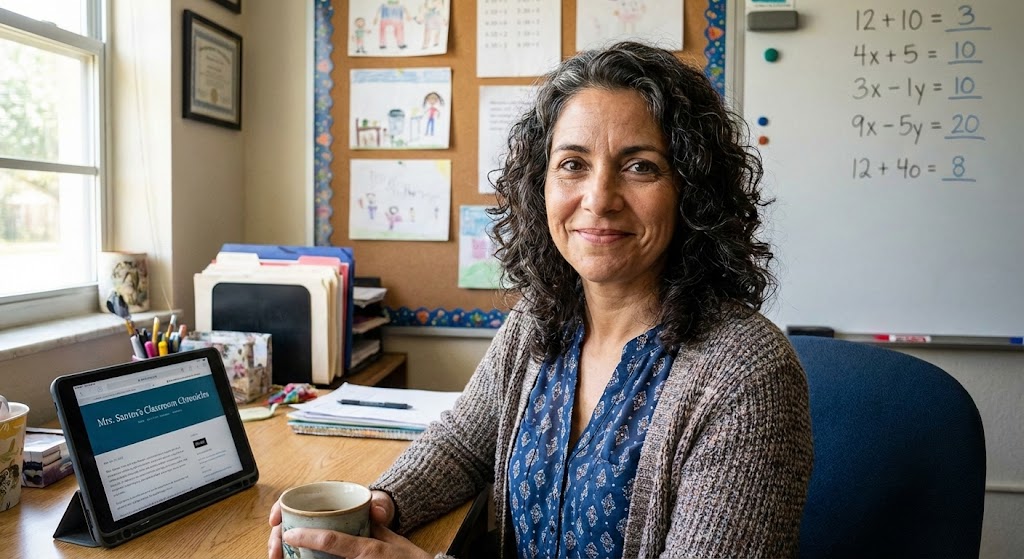
Maria Santos
Maria has been teaching 4th grade in Tampa, Florida for 22 years. Known as "the math whisperer" among her colleagues, she writes about the real challenges and victories of teaching in Florida's public schools.
When she's not grading papers or creating lesson plans, you can find Maria at her local teacher supply store (with coupons in hand) or sharing teaching tips over cafecito with her teacher friends.
View Full Profile →Related Articles
The Broke Teacher's Guide to Back to School Shopping (Without Losing Your Mind or Your Wallet)
Budget-friendly teaching tip: Let me tell you about August 2019. I walked into Walmart with a list, ...
Dollar Store Math Manipulatives That Actually Work (And Won't Break Your Heart When They Disappear)
Budget-friendly teaching tip: Last September, I spent forty-seven dollars of my own money on a beaut...
Ready to Improve Your FAST Scores?
Upload your class data and get personalized IXL success plans in seconds.
Try It Free