Spring Break Guilt: Why This Teacher Is Finally Learning to Actually Rest
Last Tuesday, while my students were buzzing about their spring break plans, little Sofia raised her hand and asked, "Señora Santos, what are you going to do for spring break?"
Without thinking, I rattled off my usual list: "Well, I need to reorganize my classroom library, update my bulletin boards, plan our post-FAST review activities, and maybe get started on end-of-year assessments."
Sofia looked at me with those wise nine-year-old eyes and said, "That doesn't sound very fun."
Ay, dios mio. Out of the mouths of babes, right?
The Teacher's Spring Break Dilemma
Here's the thing we don't talk about enough in our profession: we're terrible at taking actual breaks. I've spent 22 spring breaks telling myself I'll "just do a little bit" of school work. Just reorganize this corner. Just plan next week. Just, just, just.
And you know what I have to show for all those "productive" breaks? Burnout that hits harder every May, and a family that's learned not to expect my full attention even during our supposed time off.
Carlos has been telling me for years, "Maria, you can't pour from an empty cup." But did I listen? Por favor. I'm a teacher. We don't do empty cups. We do coffee-stained mugs that we keep refilling until we crash.
The Myth of the "Lazy" Teacher Break
Let's address the elephant in the room first. We've all heard the comments. "Must be nice to get all that time off." "Teachers have it so easy with all those breaks."
I used to let those comments fuel my spring break work marathons. I'd think, "I'll show them how hard I work. I'll use every single day to better my classroom."
But here's what I've learned after two decades in Title I schools: working through every break doesn't make us better teachers. It makes us exhausted teachers. And exhausted teachers can't give their best to kids who need us most.
What Happens When We Don't Rest
Three years ago, I had what I now call my "March Meltdown." I'd worked through winter break, Presidents Day weekend, and was planning to work through spring break. I was going to completely revamp my math centers, reorganize my entire classroom, and create new intervention materials.
By the Wednesday before spring break, I was crying in my car in the school parking lot because I couldn't find my keys. They were in my hand.
That's when I realized something had to change. We can't run on empty forever, no matter how much we love our kids.
The Permission Slip You Need to Give Yourself
This year, I'm trying something radical. I'm giving myself permission to have a real break. Not a "teacher break" where I sneak in lesson planning between family activities. A real, actual, do-nothing-school-related break.
Here's my official permission slip to myself (and to you):
It's okay to not think about school for nine whole days. It's okay to read a book that has nothing to do with education. It's okay to sleep past 6 AM without feeling guilty. It's okay to say no to that colleague who wants to meet up to "just quickly" plan the next unit.
But What If I Fall Behind?
I hear you. The anxiety is real. What if we come back and feel scattered? What if other teachers used their break to get ahead? What if, what if, what if?
Here's what I've learned: the work will always be there. Always. There will always be something to organize, plan, or improve. But our mental health? Our ability to be present for our students? That's finite.
I'd rather come back to school refreshed and ready to handle whatever chaos awaits than return already depleted from a "productive" break.
Setting Boundaries That Actually Work
If you're like me and the idea of doing zero school work makes you break out in hives, here are some compromises that might help:
The One-Hour Rule: Give yourself one hour on one day of break to do something school-related if you absolutely must. Set a timer. When it goes off, you're done.
The Emergency Only Policy: Only do school work if there's a genuine emergency. And no, reorganizing your pencil cups doesn't count as an emergency.
The Sunday Setup: If you need some structure to feel ready for Monday, give yourself Sunday evening to mentally prepare. But keep it to basics: check your plans for Monday, set out clothes, prep your coffee. That's it.
What I'm Doing Instead
This spring break, I'm focusing on things that actually recharge me. I'm reading the novel that's been sitting on my nightstand since Christmas. I'm taking walks without thinking about how I could turn them into a math lesson about distance and time.
I'm having actual conversations with my family that don't involve me grading papers while half-listening. I'm sleeping in, porque why not? I'm remembering who Maria is when she's not Señora Santos.
And you know what? I'm already feeling more excited about seeing my kids when we get back.
The Ripple Effect of Rest
Here's something interesting I've noticed in my few attempts at real breaks: when I come back rested, my students benefit. I'm more patient with Miguel when he's having a tough day. I'm more creative with my lessons. I'm more present during those precious teaching moments.
Our students deserve teachers who are running on more than fumes and determination. They deserve teachers who model healthy boundaries and self-care.
Your Assignment for This Break
I'm giving you homework, but it's the best kind: do nothing school-related for at least half of your break. If you're feeling rebellious, go for the whole thing.
Rest. Really rest. Your bulletin boards will survive another week looking less than perfect. Your lesson plans can wait until you're back in your classroom.
Trust me on this one. After 22 years of doing it the hard way, I'm finally learning that sometimes the most productive thing we can do is absolutely nothing at all.
Now if you'll excuse me, I have some serious couch time to catch up on. See you after the break, and remember: we're better teachers when we're rested teachers.
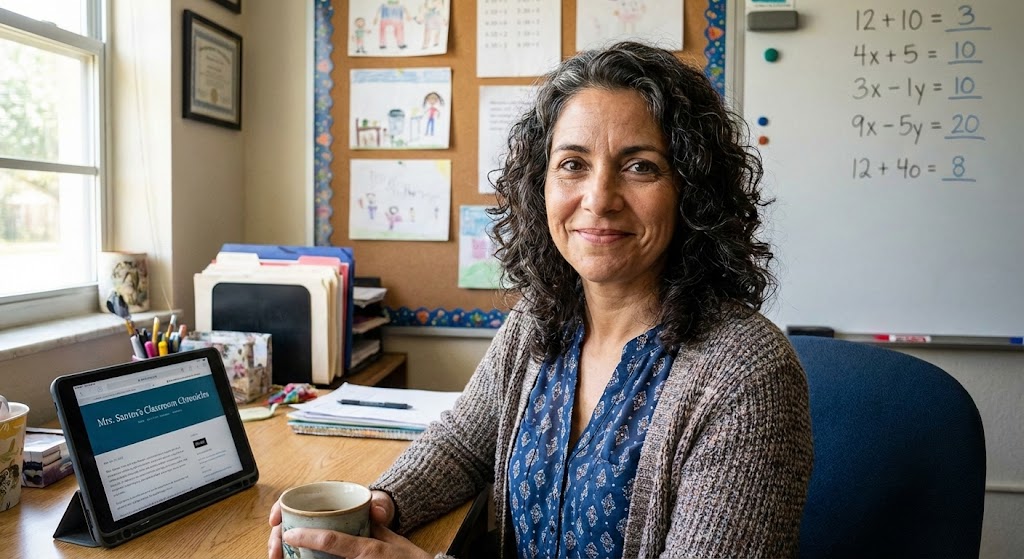
Maria Santos
Maria has been teaching 4th grade in Tampa, Florida for 22 years. Known as "the math whisperer" among her colleagues, she writes about the real challenges and victories of teaching in Florida's public schools.
When she's not grading papers or creating lesson plans, you can find Maria at her local teacher supply store (with coupons in hand) or sharing teaching tips over cafecito with her teacher friends.
View Full Profile →Related Articles
How I Finally Stopped Taking Work Home Every Night (And You Can Too)
Teacher advice: Last Tuesday, Carlos looked at me across the dinner table and said, "Mija, is that a...
The End-of-Year Honest Look in the Mirror Every Teacher Needs to Take
Teacher advice: Last June, I was cleaning out my desk and found a sticky note I had written to mysel...
Ready to Improve Your FAST Scores?
Upload your class data and get personalized IXL success plans in seconds.
Try It Free