The First Week Back: How I Learned to Stop Panicking and Love August
Last Monday, I walked into my classroom at 6:30 AM with my usual first-day-of-school stomach knots. You'd think after 22 years I'd have this figured out, pero no. There I was, rearranging my pencil cups for the third time and second-guessing everything.
Then I remembered my first year. Ay, dios mio. I had color-coded everything, laminated half the rainforest, and created the most elaborate classroom rules poster known to mankind. By Wednesday, half my kids were crying, I was exhausted, and my beautiful systems were falling apart faster than my bulletin boards in August humidity.
That's when I learned the truth: the first week isn't about having everything perfect. It's about building the foundation for everything that comes after.
Start with Connection, Not Curriculum
Here's what I wish someone had told me back in 2002: your students don't care about your amazing bulletin boards or your perfectly organized library. They want to know if you see them, if you like them, and if they're safe with you.
This year, I spent the first morning doing what I call "detective work." Instead of jumping into introductions, I had each student draw a picture of their favorite place. Then we did a gallery walk, and I asked questions. "Miguel, is this your abuela's kitchen? Tell me about those curtains." "Sophia, this beach looks peaceful. Do you go there to think?"
Within an hour, I knew that Jayden's parents just divorced, that Amara speaks three languages at home, and that little Carlos (yes, named after my husband) has been worried about fourth grade math since June.
That connection work? It's not fluff. It's the foundation everything else builds on.
The Power of Predictable Routines
My second year, I tried to wing it with procedures. Big mistake. By October, my classroom felt like a three-ring circus, and not the fun kind.
Now I know: kids crave predictability, especially our students who might not have much of it at home. But here's the key - you don't need to teach every routine on day one. Pick your big three and nail those first.
My non-negotiables are: - How we enter the classroom (quietly, put backpacks away, start the morning warm-up) - How we ask for help (try three before me: yourself, a resource, a friend) - How we line up (by table groups, hands to ourselves, voices off)
I practice these routines like we're rehearsing for Broadway. We do it, we talk about why it matters, we do it again. By Friday, these routines are muscle memory.
The bathroom procedure? That can wait until week two. The pencil sharpening system? Week three. Don't overwhelm yourself or them.
Set Expectations, Not Just Rules
I used to have a poster with 15 classroom rules. Fifteen! My kids couldn't remember them, I couldn't enforce them consistently, and honestly, half of them were just me trying to prevent every possible problem I could imagine.
Now I keep it simple with three big expectations:
- Be kind
- Be responsible
- Be a learner
But here's the magic: we spend time unpacking what these actually look like. "What does being responsible sound like during math time?" "How do we show kindness when someone makes a mistake?"
We create anchor charts together. We role-play scenarios. When little Emma throws her pencil in frustration during week three, I don't need to point to rule number 8. I just ask, "How can we be kind to our classroom materials?"
The Art of Controlled Chaos
My first week used to be rigid. Every minute planned, every transition scripted. I was so focused on control that I forgot about joy.
Now I build in what I call "controlled chaos" moments. We do a marshmallow tower challenge. We play a getting-to-know-you scavenger hunt. We have a dance break when the energy gets too heavy.
These aren't time-wasters. They're relationship builders and stress relievers. When Aiden sees me laughing because my marshmallow tower fell over too, he learns that mistakes are okay in our room. When Maria realizes she and I both love bachata music, she starts to trust me a little more.
Assessment Without the Stress
Yes, we need to figure out where our kids are academically. But formal assessments in week one? That's a recipe for anxiety all around.
Instead, I do sneaky assessments. We play math games where I'm really checking number sense. We do interactive read-alouds where I'm listening to their thinking. We write "letters to our future selves" where I'm checking their writing skills.
The kids think we're just having fun. I'm gathering the data I need without anyone breaking into a cold sweat.
When Things Go Wrong (And They Will)
Tuesday of this year, my carefully planned morning routine fell apart when the fire alarm went off during our first-ever morning meeting. We spent 20 minutes on the hot blacktop, came back sweaty and discombobulated, and I had to completely pivot.
Old me would have panicked. Current me? I turned it into a teaching moment about flexibility and rolled with it. We talked about how sometimes plans change, and that's okay. We practiced our routine again the next day.
Your first week won't be perfect. Mine never is, even after all these years. The goal isn't perfection - it's connection, safety, and laying groundwork for the beautiful chaos that is a year of learning together.
The Real Success Metric
You'll know you've had a successful first week when your kids are excited to come back on Monday. Not because everything went smoothly, but because they felt seen, safe, and valued in your space.
This Friday, I watched my new fourth graders pack up with smiles. Jayden asked if he could help me straighten the library. Sophia told me she's excited about our science unit. Little Carlos said, "Ms. Santos, I think I'm going to like math this year."
That's when you know you've done the first week right.
Remember, we're not trying to create perfect students in five days. We're building a community that will grow and learn together for the next nine months. Start with connection, add structure slowly, and trust the process.
You've got this, and your kids are lucky to have you.
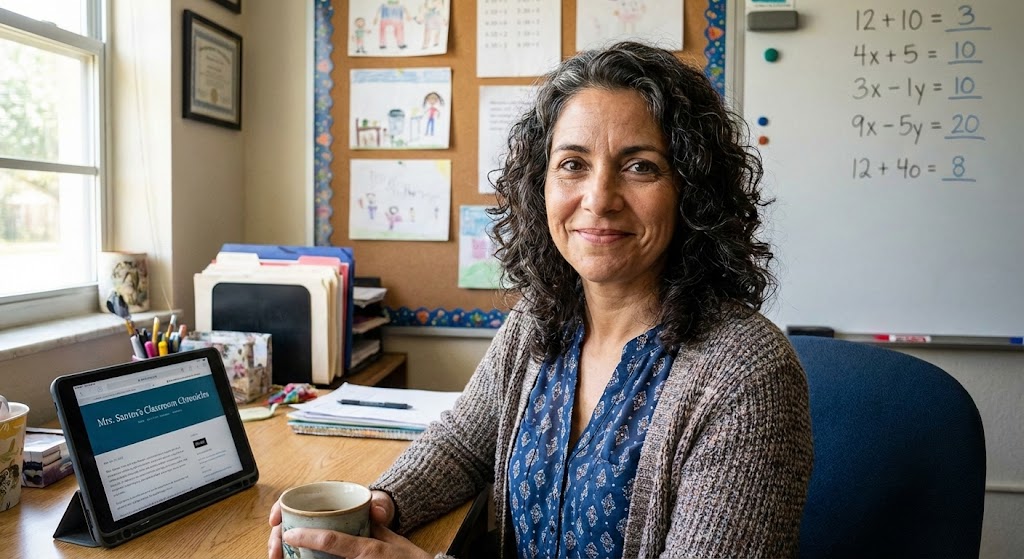
Maria Santos
Maria has been teaching 4th grade in Tampa, Florida for 22 years. Known as "the math whisperer" among her colleagues, she writes about the real challenges and victories of teaching in Florida's public schools.
When she's not grading papers or creating lesson plans, you can find Maria at her local teacher supply store (with coupons in hand) or sharing teaching tips over cafecito with her teacher friends.
View Full Profile →Related Articles
The One Transition Trick That Finally Stopped My Classroom Chaos
Classroom management tip: Last Tuesday, I watched a veteran teacher at my school lose ten full minut...
When Everyone's Brain is Already at the Beach (Including Yours)
Classroom management tip: Last Tuesday, I caught myself staring out the window during math, watching...
Ready to Improve Your FAST Scores?
Upload your class data and get personalized IXL success plans in seconds.
Try It Free