The First Week: Setting Up for Success
Last week, I watched a brand new teacher across the hall trying to teach a math lesson on day two while half her class was still asking where to turn in their homework and the other half didn't know where to sharpen their pencils. Ay, it broke my heart because I saw myself 22 years ago, thinking I could jump straight into academics before laying the groundwork.
Here's what I've learned the hard way: the first week isn't about curriculum. It's about creating the foundation that will make or break your entire year.
Start with the Heart
Before we talk procedures and rules, let's talk about connection. Our kids, especially here in Florida's Title I schools, need to know we see them as more than test scores.
I always start day one with what I call "The Story Circle." We sit on the carpet (yes, even my fourth graders love this), and I tell them about my summer. Not the Pinterest-perfect version, but the real one. How I burned the frijoles negros at our family barbecue. How my son Marcus taught me to skateboard and I fell flat on my face.
Then each student shares one thing about their summer. No judgment, no corrections, just listening. Last year, little Sofia told us she spent July helping her abuela sell mangoes on the corner because "business was slow." That moment told me more about Sofia than any data sheet ever could.
This isn't wasted time. This is investment time.
Procedures, Procedures, Procedures
Here's where I messed up for my first five years: I thought kids would just figure out classroom systems through osmosis. Spoiler alert: they don't.
Now I teach every single procedure like it's the most important lesson of the year. Because honestly? It might be.
The Bathroom System
We practice the whole thing. How to use the hand signal, where to write your name, what to do if someone's already gone. I even have them practice walking quietly to the bathroom and back. My colleague Rosa used to laugh at me until she saw how smoothly my class ran by October.
The Supply Station
Everything has a home, and every home has a label. In English and Spanish, because why make it harder than it needs to be? We practice getting supplies, using them, and putting them back.
Pro tip: Use shower caddies from the dollar store for each table's supplies. Game changer.
The Turn-In System
Color-coded bins for everything. Math homework goes in the blue bin, reading logs in the red bin, parent notes in the yellow bin. We practice this until they can do it with their eyes closed.
The Magic of Modeling
Remember, these are nine and ten-year-olds. They need to see it, practice it, and mess it up a few times before it sticks.
I model everything. And I mean everything. How to walk in line (yes, really). How to get my attention when they need help. How to disagree respectfully. How to clean up after an art project.
My favorite is modeling "productive struggle" during math. I'll work through a problem and get stuck, then show them how I think through it. "Hmm, this isn't working. Let me try a different strategy." This sets the tone that mistakes are learning opportunities, not failures.
Building Community from Day One
By Wednesday, I want my kids to feel like they belong to something special. We create our class mission statement together. Not some fancy thing I found on Pinterest, but their words about what they want our classroom to feel like.
This year they decided they wanted our room to be "a place where everyone can learn without being scared to mess up." Perfect.
We also establish our class jobs. I have way more jobs than I actually need because every kid deserves to contribute. We have a line leader, a supply monitor, a plant waterer, even a "encouragement engineer" whose job is to notice when classmates are being kind.
The Parent Connection
Don't wait for Back to School Night. Send that welcome message home on day one. I keep it simple and warm:
"Dear families, your child had a wonderful first day! They are going to love fourth grade. I'm excited to partner with you this year. Please save my email and don't hesitate to reach out with any questions. We're going to do great things together!"
I send it in English and Spanish, and I mean every word.
Dealing with Testing Anxiety Early
Let's be real, we're in Florida. FAST testing looms over everything we do. But I've learned not to let that pressure steal the joy from those first precious days.
Instead, I plant seeds of confidence. "This year, you're going to discover you're braver and smarter than you think. We're going to learn amazing things together, and I'm going to make sure you're ready for anything."
Notice I said "ready for anything," not "ready for the test." Our kids need to know they're more than their scores.
When Things Go Wrong (And They Will)
By Friday of the first week, you'll have at least three procedures that aren't working. That's normal. That's not failure.
Last year, my brilliant bathroom system fell apart because I forgot to account for the fact that the boys' bathroom lock was broken. We had to pivot and create a buddy system. The kids actually liked it better.
Be flexible. Be honest with your students when something isn't working. They'll respect you more for it, and they'll help you problem-solve.
The Friday Reflection
Every first week ends the same way in my classroom. We sit in our circle again and I ask two questions:
"What's one thing you learned about our classroom this week?" "What's one thing you're excited about for next week?"
Their answers tell me everything I need to know about how we're doing.
Remember This
Mija, if you're reading this during your planning period, frantically trying to figure out next week, take a breath. You don't have to be perfect. You just have to be present.
Those first five days aren't about creating the perfect classroom management system. They're about creating a place where kids want to learn, where they feel safe to take risks, and where they know someone believes in them.
The procedures will get smoother. The routines will become second nature. But the feeling you create in those first days? That's what they'll remember long after they've forgotten how to find the area of a rectangle.
You've got this. We've all got this. And come Monday morning, 22 new little hearts are going to walk into your room trusting you to make their year amazing.
Don't let them down. But more importantly, don't let yourself down by expecting perfection from the start.
The magic happens in the mess, not in the manual.
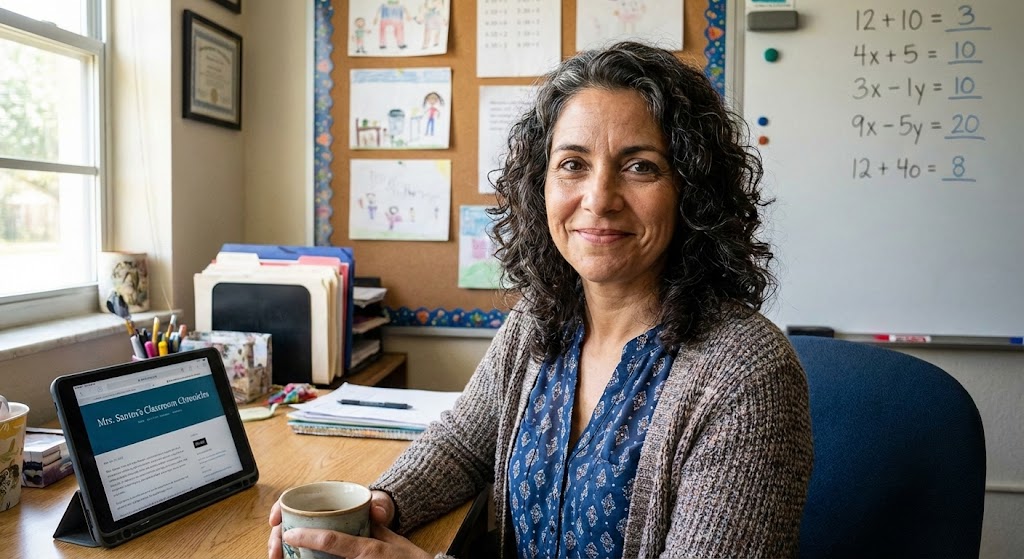
Maria Santos
Maria has been teaching 4th grade in Tampa, Florida for 22 years. Known as "the math whisperer" among her colleagues, she writes about the real challenges and victories of teaching in Florida's public schools.
When she's not grading papers or creating lesson plans, you can find Maria at her local teacher supply store (with coupons in hand) or sharing teaching tips over cafecito with her teacher friends.
View Full Profile →Related Articles
The One Transition Trick That Finally Stopped My Classroom Chaos
Classroom management tip: Last Tuesday, I watched a veteran teacher at my school lose ten full minut...
When Everyone's Brain is Already at the Beach (Including Yours)
Classroom management tip: Last Tuesday, I caught myself staring out the window during math, watching...
Ready to Improve Your FAST Scores?
Upload your class data and get personalized IXL success plans in seconds.
Try It Free