The Five Procedures That Will Save Your Sanity (And Why I Wish I'd Known This 22 Years Ago)
Picture this: It's my third year teaching, and I spent the entire first week of school making adorable name tags, teaching my students the classroom song I wrote over the summer, and creating the most Instagram-worthy bulletin boards you've ever seen. By October, my classroom looked like a tornado hit it, and I was crying in my car during lunch.
Want to know what I wasn't teaching that first week? The boring stuff. The procedures that actually keep a classroom running.
Ay, if I could go back and shake my younger self! I was so worried about being the "fun" teacher that I forgot to be the "functional" teacher first. Now, after 22 years of trial and error (mostly error, let's be honest), I know better.
Here are the five procedures I teach before anything else, and why they're worth every minute of that precious first week.
Procedure #1: The Silent Signal System
This one changed my life, no exaggeration.
I used to raise my voice constantly. By 3 PM, I sounded like I'd been gargling gravel, and my students had learned to tune me out completely. Then my mentor teacher, Mrs. Rodriguez, showed me the power of a raised hand.
Here's how it works: When I raise my hand, students stop what they're doing, raise their hand, and look at me. No talking, no finishing their sentence, no "just one more second." The room goes silent in about five seconds.
We practice this at least ten times that first day. I make it a game. "Let's see if we can do it in three seconds!" They love the challenge, and I love my voice lasting past noon.
The key is consistency. Every single time you need attention, use the signal. Don't cheat and just start talking because you're in a hurry. Trust me, I learned this the hard way.
Procedure #2: How to Ask for Help Without Chaos
Remember when you were a new teacher and half your class had their hands up at any given moment? And somehow they all needed help with different things at the exact same time?
I teach my students the "Try Three Before Me" rule. Before raising their hand, they need to: 1. Reread the directions 2. Ask a table partner 3. Check our classroom reference charts
This cuts down on the "How do you spell 'the'?" questions that used to drive me to drink way too much coffee.
I also teach them how to keep working while they wait. If they're stuck on problem #3, they skip it and move to #4. Revolutionary, I know, but you'd be surprised how many kids think they have to stop everything and wait.
Procedure #3: The Paper Flow System
This one saves me hours every week, and it prevents the dreaded "I turned it in but you lost it" conversation.
Each table has a basket. When students finish work, it goes in the basket. When I collect work, I grab the baskets and dump them into my "To Grade" bin. No walking around collecting papers, no chasing down stragglers, no lost assignments floating around my desk.
For returning papers, I have student helpers (more on that in a minute) sort them back into the table baskets. Students know to check their basket first thing each morning.
Simple? Yes. Life-changing? Also yes.
Procedure #4: Bathroom and Water Breaks That Don't Interrupt Learning
I used to stop teaching every time a student needed the bathroom. My lessons had more interruptions than a telenovela.
Now I use a simple hand signal system. One finger means bathroom, two fingers means water fountain, three fingers means nurse. I nod yes or no without stopping my lesson. If it's not a good time (like during a test or important instruction), I hold up five fingers to mean "wait five minutes."
I also have a clipboard by the door where they sign out and in. This keeps track of who's where, and it prevents the mysterious disappearances that used to happen.
The rule is simple: if I'm teaching and you can wait, you wait. If it's an emergency, you go. They figure out the difference pretty quickly.
Procedure #5: Technology and Data Tracking
Here's where I wish I'd been smarter earlier in my career. I used to waste so much time trying to figure out what each student needed after getting our FAST scores back. Now I have systems in place from day one.
I teach students how to log into all our digital platforms during that first week. We practice usernames and passwords until they can do it in their sleep. No more "I forgot my password" eating into math time.
I also set up my data tracking early. When those FAST scores come in (usually by late September), I'm ready. My colleague Yolanda showed me this tool called FastIXL that converts the FAST data into specific IXL skills for each student, and it's been a game-changer for targeting instruction.
The key is having students understand that we track their progress to help them grow, not to judge them. I explain it like this: "If you were learning to ride a bike, wouldn't you want me to notice if you were wobbling so I could help you balance?"
Why These Matter More Than Cute Decorations
Look, I love a beautiful classroom as much as the next teacher. But here's what I've learned: students don't learn better because your border matches your bulletin board theme. They learn better when they feel safe, know what's expected, and can focus on learning instead of figuring out how the classroom works.
These procedures give students structure, and structure gives them freedom. When they know how to get help, how to move around the room, and what to do with their work, they can focus on the actual learning.
Plus, and this is important for us, these procedures save our sanity. When your classroom runs smoothly, you can actually teach instead of managing chaos.
The Reality Check
Will your students master these procedures in one week? Probably not. Marcus (not my son, my student Marcus) still forgets to use our silent signal sometimes, and we're in November. That's okay.
The goal isn't perfection. The goal is having systems in place that you can reinforce consistently. Every time you practice these procedures, they get stronger.
And here's the truth nobody tells you: your students want these procedures. They want to know how things work. They want structure. They might test your boundaries, pero they're actually relieved when you hold firm.
Start Tomorrow
If you're reading this and school has already started, don't panic. It's never too late to implement good procedures. Just be honest with your students: "I realized we need to practice how to do this better."
Choose one procedure and focus on it for a week. Once it's solid, add another one.
And remember, we're all figuring this out as we go. The difference between a first-year teacher and a veteran isn't that we have it all figured out. It's that we've learned which battles are worth fighting and which systems actually work.
Your future self will thank you for taking the time to teach these procedures now. Trust me on this one.
What procedures have saved your sanity? I'd love to hear what's working in your classroom. We're all in this together, and sharing what works makes us all better teachers.
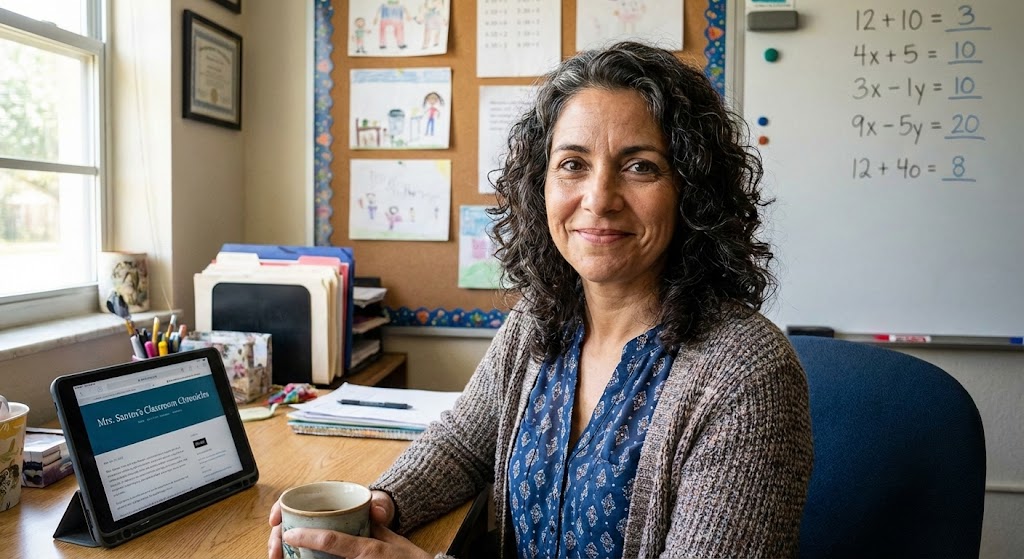
Maria Santos
Maria has been teaching 4th grade in Tampa, Florida for 22 years. Known as "the math whisperer" among her colleagues, she writes about the real challenges and victories of teaching in Florida's public schools.
When she's not grading papers or creating lesson plans, you can find Maria at her local teacher supply store (with coupons in hand) or sharing teaching tips over cafecito with her teacher friends.
View Full Profile →Related Articles
The One Transition Trick That Finally Stopped My Classroom Chaos
Classroom management tip: Last Tuesday, I watched a veteran teacher at my school lose ten full minut...
When Everyone's Brain is Already at the Beach (Including Yours)
Classroom management tip: Last Tuesday, I caught myself staring out the window during math, watching...
Ready to Improve Your FAST Scores?
Upload your class data and get personalized IXL success plans in seconds.
Try It Free