The Veteran Teacher Slump is Real (And How I Clawed My Way Out of Mine)
I was standing in my empty classroom last October, staring at the bulletin board I'd put up in August, when it hit me like a rogue dodgeball to the face: I didn't want to be there anymore.
Twenty-two years of teaching, and suddenly I felt like I was sleepwalking through my days. The lessons that used to excite me felt stale. The kids I usually adored seemed louder and needier. Even my beloved math manipulatives looked dusty and boring.
Ay, dios mio. I was in a full-blown veteran teacher slump.
It Happens to the Best of Us
If you're reading this and nodding along, let me tell you something: you're not broken, and you're definitely not alone.
The veteran teacher slump is that sneaky beast that creeps up after you've mastered classroom management, survived multiple curriculum changes, and can teach a lesson in your sleep (literally, I once taught equivalent fractions while fighting the flu and barely remember it).
It's different from burnout. Burnout feels like you're drowning. The slump feels like you're floating, but going nowhere.
I realized I'd been coasting on autopilot for months. Same lessons, same routines, same everything. No wonder I felt dead inside.
The Warning Signs I Ignored
Looking back, the signs were everywhere. I just didn't want to see them.
I stopped decorating my classroom with the same enthusiasm. Those Pinterest-worthy bulletin boards? Forget it. I slapped up some construction paper and called it a day.
Professional development sessions that used to spark ideas now felt like torture. I'd sit in the back, grade papers, and count the minutes until I could escape.
Worst of all, I caught myself snapping at sweet little Jayden when he asked for help with long division for the third time. That's when I knew something had to change.
The Comparison Trap Made It Worse
Social media didn't help, mija. Seeing all those first-year teachers posting their perfectly organized classrooms and innovative lesson plans made me feel ancient and irrelevant.
Here I was with over two decades of experience, and some 23-year-old with a Cricut machine was making me question everything I knew about teaching.
I started wondering if I'd become one of those teachers. You know the ones. Counting down the years until retirement, complaining about "kids these days," resistant to any change.
The thought terrified me.
My Rock Bottom Moment
The breaking point came during parent conferences in November. Mrs. Rodriguez asked me what I was doing differently this year to challenge her daughter Sofia, who was ahead in math.
I opened my mouth to answer and realized I had nothing. Nothing new, nothing exciting, nothing that showed I was still growing as an educator.
I mumbled something about enrichment activities and felt like a fraud.
That night, I went home and told Carlos I was thinking about leaving teaching. He nearly choked on his café cubano.
"Maria, you ARE teaching," he said. "It's who you are, not just what you do."
He was right, pero I'd lost sight of that somewhere along the way.
The Slow Climb Back Up
Recovery from a veteran teacher slump isn't about a complete overhaul. It's about rediscovering why you fell in love with teaching in the first place.
I started small. Really small.
First, I changed one thing about my classroom setup. I moved my reading corner to catch the morning light better. Tiny change, but it felt like progress.
Then I reached out to Yolanda, the second-grade teacher down the hall who always seemed energized. I asked her what kept her excited about teaching.
"I learn something new every month," she told me. "Not because I have to, but because I want to."
That conversation changed everything.
Finding My Spark Again
I signed up for a math workshop I actually wanted to attend, not one mandated by the district. It focused on using real-world problems to teach fractions.
Walking into that session, I felt nervous butterflies for the first time in years. Good nervous, like when I was a new teacher trying something for the first time.
The presenter shared an activity where students plan a pizza party to learn about fractions. Simple concept, but presented in a way I'd never considered.
I couldn't wait to try it with my kids.
Small Changes, Big Impact
Back in my classroom, I started implementing one new idea each week. Nothing overwhelming, just small tweaks that reignited my curiosity.
I introduced "Math Talk Tuesdays" where students had to explain their thinking out loud. The discussions that followed blew me away.
I started a classroom blog where students could share their learning. Watching them get excited about posting their work reminded me why I love this age group.
I even rearranged my desk to face the students instead of the board. Such a simple change, but it transformed how I interacted with my class.
Reconnecting with My Why
The real breakthrough came when I remembered my nickname: "the math whisperer."
I'd earned that title because I could reach the kids who thought they were "bad at math." That was my superpower, and I'd been taking it for granted.
So I started focusing on those moments again. Really celebrating when Marcus finally understood multiplication. Taking extra time to build confidence in students who'd been defeated by numbers.
Those breakthrough moments, the ones that made me become a teacher in the first place, started happening more frequently.
Creating New Traditions
By January, I felt like myself again. But I knew I needed systems to prevent another slump.
I started a "Try Something New" jar filled with teaching ideas I wanted to explore. Once a month, I'd pull one out and give it a shot.
I also began collaborating more with younger teachers, not to compete with them, but to learn from their fresh perspectives while sharing my experience.
The energy exchange worked both ways. They got classroom management tips, I got reminded that learning never stops.
The Slump Isn't a Failure
Here's what I want every veteran teacher to know: hitting a slump doesn't mean you're a bad teacher or that you've lost your touch.
It means you're human.
After years of giving everything to our students, sometimes we forget to feed our own professional souls. We get so good at the basics that we stop challenging ourselves.
The slump is actually a sign that you're ready for growth. Your brain is telling you it's time to level up.
Moving Forward with Purpose
These days, I'm more intentional about my professional growth. I don't wait for the district to tell me what to learn. I seek out opportunities that genuinely interest me.
I've also learned to be gentler with myself during the tough days. Not every lesson has to be Pinterest-worthy. Not every day has to be magical.
But I make sure that every month, I try something that scares me a little bit. That's where the growth happens.
If you're in a slump right now, know that it's temporary. You haven't lost your teaching mojo, it's just buried under years of routine and responsibility.
Start small. Change one thing. Talk to one colleague. Try one new approach.
Your students need the passionate educator you used to be, and they're waiting to meet the even better teacher you're becoming.
Trust me, the climb out is worth it.
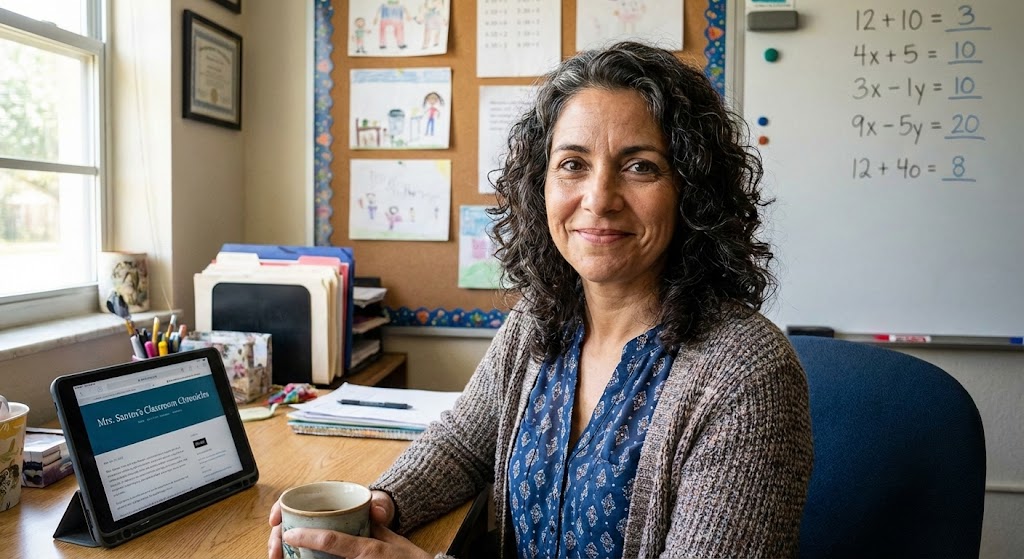
Maria Santos
Maria has been teaching 4th grade in Tampa, Florida for 22 years. Known as "the math whisperer" among her colleagues, she writes about the real challenges and victories of teaching in Florida's public schools.
When she's not grading papers or creating lesson plans, you can find Maria at her local teacher supply store (with coupons in hand) or sharing teaching tips over cafecito with her teacher friends.
View Full Profile →Related Articles
How I Finally Stopped Taking Work Home Every Night (And You Can Too)
Teacher advice: Last Tuesday, Carlos looked at me across the dinner table and said, "Mija, is that a...
The End-of-Year Honest Look in the Mirror Every Teacher Needs to Take
Teacher advice: Last June, I was cleaning out my desk and found a sticky note I had written to mysel...
Ready to Improve Your FAST Scores?
Upload your class data and get personalized IXL success plans in seconds.
Try It Free