When September Reality Hits: Surviving the Honeymoon Phase Crash
It was 2:47 PM on a Tuesday in mid-September when little Jayden decided to launch his pencil across the room like a missile. Not at anyone, mind you, just because he was "testing the aerodynamics." Meanwhile, Sofia was having a full meltdown because someone looked at her wrong during math centers, and Marcus (not my son, different Marcus) was doing some kind of interpretive dance instead of lining up for dismissal.
I stood there thinking, "Didn't we just spend three weeks learning procedures?"
The Honeymoon Phase is Over, Mijas
If you're reading this while hiding in your car during lunch, wondering where your beautifully planned classroom management system went, you're not alone. September reality hits us all like a Tampa thunderstorm, sudden and soaking wet.
Those first few weeks of school? Pure magic. Kids following directions, raising their hands, walking in straight lines like little angels. We start thinking, "Maybe I've finally got this teaching thing figured out."
Then September hits full force. The novelty wears off. Kids get comfortable. And suddenly, your classroom feels less like the organized learning environment you planned and more like... well, like a room full of nine-year-olds who've decided rules are more like suggestions.
Why This Happens (And Why It's Actually Normal)
Here's what I wish someone had told me in my first year: this crash is completely normal. In fact, it's a sign that your students are settling in and feeling safe enough to show you who they really are.
Think about it. For the first few weeks, kids are on their best behavior because everything is new and a little scary. They don't know you yet. They don't know what you'll tolerate. They're testing the waters with their toes.
By September, they've cannonballed right into the deep end.
Your students aren't being defiant (okay, some might be, but most aren't). They're just being kids who've gotten comfortable. The question is: what do we do about it?
Time for the September Reset
Last year, I was complaining to Carlos about how my classroom procedures had gone out the window. He looked at me like I was speaking another language and said, "So teach them again."
Men, I swear. But you know what? He was right.
Here's your September survival plan:
Start Fresh on Monday
Pick a Monday (any Monday will do) and announce it's "New Beginning Monday." Don't make it punitive. Make it exciting.
"Class, we've been learning so much about each other and getting comfortable in our classroom family. Now we're ready to level up our procedures so we can have even more fun learning together."
Re-teach One Thing at a Time
Don't try to fix everything at once. You'll lose your mind, and they'll tune out faster than you can say "B.E.S.T. standards."
Monday: How we enter the classroom
Tuesday: Hand signals and attention getters
Wednesday: Transitions between activities
Thursday: Voice levels and work time expectations
Friday: How we line up and leave
Make it interactive. Have them practice. Yes, even getting up from their desks and sitting back down. Multiple times. It feels silly, but it works.
Involve Them in Problem-Solving
Instead of just laying down the law, ask them what's not working. Kids are surprisingly honest about classroom issues.
"Friends, I've noticed our math centers are getting a little chaotic. What do you think is happening?"
They'll tell you exactly what the problems are. Then ask, "How can we fix this together?"
When they help create the solutions, they're more likely to follow them.
The Power of Positive Momentum
Here's something I learned the hard way: catching kids doing things right is more powerful than constantly correcting what they're doing wrong.
For one week, make it your mission to find every single student doing something correctly. Call it out specifically.
"Isabella, I love how you transitioned to your reading spot quietly." "David, thank you for raising your hand and waiting to be called on." "Table 3, you're using perfect voice levels during partner work."
I know, I know. It feels like you're stating the obvious. But kids crave that positive attention, and other students start modeling the behavior you're praising.
When You Need to Get Firm
Sometimes, though, you need to channel your inner Cuban grandmother. You know the voice I'm talking about.
There's a difference between being mean and being firm. Kids actually feel safer when they know you have clear, consistent boundaries.
If someone keeps testing limits after you've re-taught procedures, have a quiet conversation with them. "Mijo, I see you're having trouble remembering our classroom agreements. What's going on? How can I help you be successful?"
Most of the time, there's something else going on. Maybe they're hungry. Maybe something's happening at home. Maybe they just need a little extra attention.
Remember Your Why
On those days when you feel like you're herding cats in a hurricane (very possible here in Florida), remember why you're doing this.
We're not just teaching math and reading. We're teaching kids how to be part of a community. How to respect others. How to follow through on commitments. How to recover when they mess up.
These life skills matter more than any test score.
You've Got This
Last week, Jayden (the pencil launcher) helped Sofia when she was struggling with her math worksheet. Without being asked. Marcus stopped his interpretive dancing and actually became my line leader helper.
Kids want structure. They want to succeed. They want to make you proud.
Sometimes they just need us to remember that learning how to be a good student is a process, not a destination.
So take a deep breath. Grab your cafecito. And remember that every master teacher has stood in their classroom in September wondering if they've lost their touch.
You haven't. You're just in the messy middle of building something beautiful.
How are you handling your September reality check? Drop a comment and let's support each other through this together. We're all in this crazy, wonderful profession as a team.
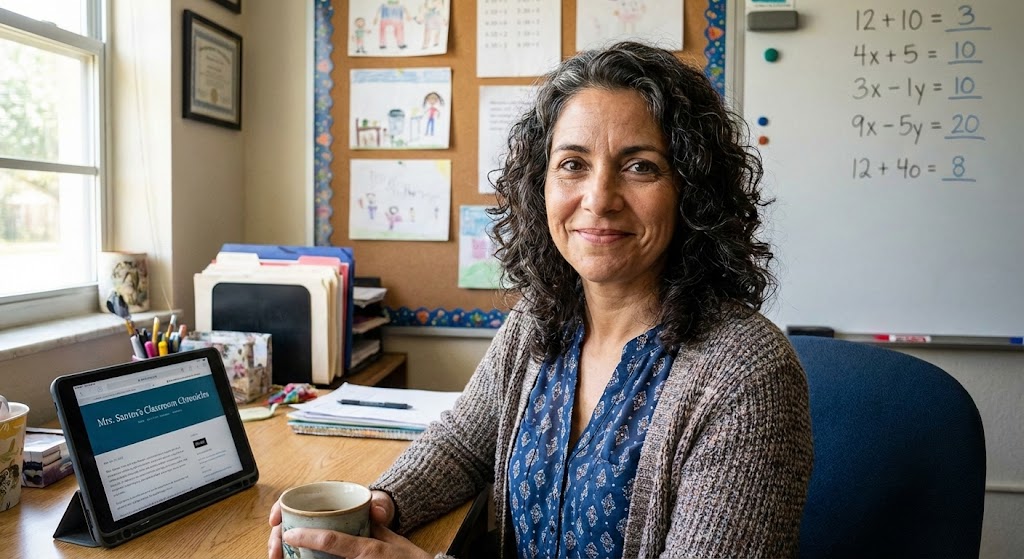
Maria Santos
Maria has been teaching 4th grade in Tampa, Florida for 22 years. Known as "the math whisperer" among her colleagues, she writes about the real challenges and victories of teaching in Florida's public schools.
When she's not grading papers or creating lesson plans, you can find Maria at her local teacher supply store (with coupons in hand) or sharing teaching tips over cafecito with her teacher friends.
View Full Profile →Related Articles
My Transition Trick That Actually Works (And Why I Wish I'd Figured It Out 15 Years Ago)
Classroom management tip: Last Tuesday, I watched a first-year teacher practically melt down in the ...
My Transition Trick That Actually Works (And Why I Wish I'd Known It 20 Years Ago)
Classroom management tip: Last Tuesday, I watched a first-year teacher practically melt down in the ...
Ready to Improve Your FAST Scores?
Upload your class data and get personalized IXL success plans in seconds.
Try It Free