When September Reality Hits: The Honeymoon's Over, Now What?
You know that moment when you realize your beautiful August plans are about as realistic as expecting Florida weather to be predictable? Yeah, that hit me last Tuesday when little Jayden decided my carefully crafted morning routine was the perfect time to have a meltdown about his pencil being "too yellow."
Twenty-two years in, and September still humbles me every single time.
The Great September Wake-Up Call
We spend August setting up our Pinterest-perfect classrooms, laminating everything in sight, and dreaming of students who follow directions the first time. Then September reality walks through our door.
Some kids aren't ready for independence. Others are bored out of their minds. That quiet one in the corner? Turns out they're not shy, they just don't speak English yet. And don't even get me started on the discovery that three of your students have never used scissors properly.
Ay, the optimism of August Maria. Bless her heart.
When Perfect Plans Meet Imperfect Reality
Here's what I've learned: September isn't about sticking to your original plan. It's about being brave enough to throw it out the window when it's not working.
Last week, I had this elaborate center rotation system planned. Color-coded, timed to the minute, with cute little signals and everything. Day one was a disaster. Kids were confused, I was stressed, and poor Emma spent the entire math block trying to figure out where the blue group was supposed to go.
So you know what I did? I scrapped it. Right there on the spot.
The Art of the September Pivot
Instead of beating myself up (okay, I did that for about ten minutes in the supply closet), I remembered something my mentor told me years ago: "Mija, the best teachers aren't the ones who never mess up. They're the ones who mess up and fix it fast."
Here's my September survival strategy:
Week 1: Observe and take notes. I keep a little notebook and jot down what's actually happening, not what I hoped would happen. Which transitions are rough? When do kids seem lost? What's working better than expected?
Week 2: Make small adjustments. Not a complete overhaul, just tweaks. Maybe that bathroom procedure needs an extra step. Perhaps reading time works better after lunch than before.
Week 3: Try one new thing. By now, you've got a better read on your class. This is when I might introduce that center rotation again, but simpler this time.
Embracing the Beautiful Mess
You want to know a secret? Some of my best teaching moments have come from September disasters.
That year when my elaborate homework system crashed and burned? Led me to discover that quick morning check-ins worked way better for my kids. The time my classroom management plan fell apart? Taught me that this particular group needed more movement breaks, not fewer.
Our students aren't trying to ruin our plans, pero sometimes it feels that way, doesn't it? They're just showing us who they really are. And honestly, that's exactly what we need to know.
Practical September Fixes That Actually Work
Start smaller than you think you need to. Remember, you can always add complexity later. It's much harder to simplify once chaos has taken hold.
Build in flexibility from day one. I used to plan my days down to the minute. Now I plan in chunks with buffer time. Game changer.
Create simple backup plans. When your main activity isn't working, you need something ready to go. I keep a basket of "emergency activities" that require zero prep but still hit our learning targets.
Check in with your kids constantly. "How's everyone feeling about this?" is my most-used phrase in September. Their faces tell you everything you need to know.
The Power of Admitting You're Human
Here's something I wish someone had told me in my early years: it's okay to tell your students when something isn't working.
"You know what, friends? This activity is confusing, isn't it? Let's try something different."
Kids respect honesty. They also feel relieved when they realize their teacher is human and makes mistakes too. Some of my strongest classroom communities have been built on these moments of shared problem-solving.
Finding Your September Rhythm
Every class has its own personality, and September is when that personality starts to show. Maybe this year's group needs more structure. Maybe they thrive on choice. Perhaps they're social butterflies who learn better when they can talk through problems together.
I've had classes that needed complete silence to focus and others that worked best with background music. Groups that loved competition and others that shut down at the first hint of pressure. There's no one-size-fits-all solution, and that's what makes teaching both challenging and beautiful.
When You Want to Hide in the Supply Closet
Let's be real for a minute. Some September days are just hard. You question everything, wonder if you've lost your touch, and maybe shed a few tears over your lunch salad.
That's normal. That's human. That's teaching.
I've learned to give myself the same grace I'd give a struggling student. You wouldn't tell a kid they're terrible at math after one bad day, right? Don't do it to yourself either.
Moving Forward with Hope
By October, things will feel different. Not perfect, never perfect, but different. You'll have inside jokes with your class. You'll know that Marcus needs an extra minute to process directions and that Sofia works best when she can stand at her desk.
The beautiful, messy reality of your classroom will have settled into something that works. Not the way you planned in August, but in a way that's uniquely yours and uniquely theirs.
Your September Survival Kit
So here's what I want you to remember when September reality hits hard:
You're not failing. You're adjusting. There's a huge difference.
Your students aren't broken. They're just not the students you imagined in August, and that's perfectly okay.
Flexibility isn't giving up on standards. It's finding different paths to the same destination.
Every veteran teacher has been exactly where you are right now. We've all had those "what was I thinking?" moments.
Take it one day at a time, one small adjustment at a time. Before you know it, you'll have created something better than your original plan because it actually fits the real kids sitting in front of you.
And trust me, those real kids are pretty amazing once you get to know them.
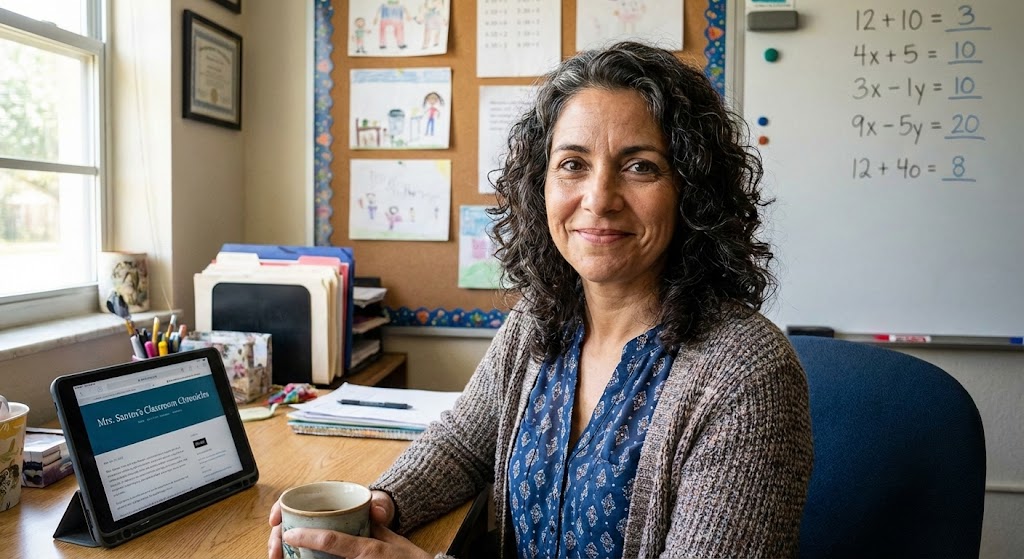
Maria Santos
Maria has been teaching 4th grade in Tampa, Florida for 22 years. Known as "the math whisperer" among her colleagues, she writes about the real challenges and victories of teaching in Florida's public schools.
When she's not grading papers or creating lesson plans, you can find Maria at her local teacher supply store (with coupons in hand) or sharing teaching tips over cafecito with her teacher friends.
View Full Profile →Related Articles
The Calm Corner: Worth the Classroom Real Estate
Classroom management tip: Last Tuesday, I watched Miguel transform from a hurricane of frustration i...
The January Struggle is Real: Getting Your Classroom Back on Track After Winter Break
Classroom management tip: Last Tuesday, little Marcus (not my son, my student Marcus) raised his han...
Ready to Improve Your FAST Scores?
Upload your class data and get personalized IXL success plans in seconds.
Try It Free