B.E.S.T. Standards: What Actually Changed (And What It Means for Your Classroom Tomorrow)
I still remember sitting in a professional development session back when Common Core rolled out, staring at a slide deck that was approximately 47 pages long, thinking, "Okay but what do I actually DO on Monday?"
If that's where you are right now with B.E.S.T., you are not alone. Pull up a chair. Let me tell you what I've figured out after living through this transition with my fourth graders, and I'll try to skip the parts that made my head hurt.
First, Let's Be Honest About Where We Came From
We spent years with the old NGSSS (Next Generation Sunshine State Standards), and a lot of us got pretty comfortable there. I had my units dialed in, my centers organized, my whole year mapped out.
Then Florida said, "Great, but we're doing B.E.S.T. now." And yes, I cried a little. Just a little.
The Florida Benchmarks for Excellent Student Thinking launched officially for ELA and math in the 2022-2023 school year. If you're still fuzzy on what actually changed versus what just got renamed, that's incredibly common. The rollout was, let's say, a lot.
So What Actually Changed? The Real Version
Here's the thing nobody told me clearly in those PD sessions: B.E.S.T. isn't just old standards with a new coat of paint. There are some genuine, meaningful shifts. But there are also things that look different on paper and feel almost identical in practice.
Let me break it down.
In ELA, the big shift is toward complexity and knowledge-building.
B.E.S.T. ELA puts a much heavier emphasis on text complexity and building background knowledge across content areas. We're not just teaching reading skills in isolation anymore. The standards want us connecting literacy to science, social studies, art, all of it.
My student Jaylen used to shut down the moment I put a nonfiction text in front of him. What I've noticed since really leaning into the B.E.S.T. approach is that when I front-load vocabulary and connect texts to things we've already studied, he stays in the game longer. The knowledge-building piece is real, mija.
In math, the focus is on fewer things done deeper.
This one was actually a relief once I stopped panicking about it. B.E.S.T. math narrows the focus at each grade level so we can go deeper instead of racing through a mile-wide, inch-deep curriculum.
For fourth grade, that means a serious emphasis on multi-digit multiplication and division, fractions, and understanding place value at a deeper level. We're not supposed to be skimming the surface. We're supposed to be building real understanding.
I'll be honest, my first year with this I still tried to cover everything like I always had. Old habits. It took me a full semester to trust the narrower focus and slow down.
The Progression Piece Nobody Talks About Enough
One of the things I genuinely appreciate about B.E.S.T. is that it was designed with vertical alignment in mind. The standards are supposed to build on each other in a logical progression from grade to grade.
In practice, this means we need to know what our kids learned in third grade and what they're heading toward in fifth. I know, I know. We barely have time to learn our own standards, let alone everyone else's.
But even spending thirty minutes with a third grade teacher at the start of the year asking "what did they really master and what are they shaky on" has changed how I plan my first units. It's worth it.
What About FAST Testing?
Okay, this is where a lot of us get tangled up, porque the standards changed AND the assessment changed at the same time. That's a lot of change at once.
FAST (Florida Assessment of Student Thinking) replaced FSA and is now aligned to B.E.S.T. standards. It's given in three progress monitoring windows throughout the year, not just one high-stakes test at the end. That part I actually like. Getting data in the fall and winter means I can do something with it while there's still time.
The challenge is figuring out what to do with that data once you have it. When my FAST scores come back, I used to spend hours trying to manually connect each student's results to specific skills I could target. A colleague of mine, Yolanda, showed me a tool called FastIXL that maps FAST scores to IXL skill recommendations automatically. Huge time saver. I mention it because if you're drowning in data like I was, it's worth looking at.
Three Things You Can Do Right Now
Enough context. Here's what I want you to walk away with.
1. Pull up the B.E.S.T. standards for your grade and highlight the "benchmark clarifications."
These are the little explanations underneath each standard that tell you what the standard actually means and what it doesn't mean. They are gold. I ignored them for too long. Don't be me.
2. Find your grade-level standards and the grade above and below.
Just read them. You don't have to memorize anything. Just get a feel for the progression. It will change how you think about your pacing.
3. Stop trying to cover everything equally.
B.E.S.T. is intentionally prioritized. Some benchmarks are major and some are supporting. Florida's own resources tell you which is which. Lean into the major work of your grade level. That's not taking shortcuts, that's doing it right.
The Part Where I Tell You It Gets Better
I know transitions like this are exhausting. I've been through NCLB, I survived the Common Core rollout (barely), and here we are again. Carlos always asks me why I'm still up at 11pm rereading standards documents, and honestly sometimes I ask myself the same question.
But here's what 22 years has taught me: we always figure it out. Not all at once, not perfectly, but we figure it out. And the teachers who are reading blog posts on their own time, trying to understand the why behind what they're teaching, those are exactly the teachers whose students are going to be okay.
You're already doing the work. Give yourself some credit for that.
If you have questions about B.E.S.T. at the elementary level, especially in math, drop them in the comments. I'm no expert, pero I've made enough mistakes at this point that I might be able to save you from at least a few of them.
Ay, and if you're heading into FAST testing season soon, take a breath. You've got this.
Maria Elena Santos teaches 4th grade in Tampa, Florida. She has been in the classroom for 22 years and writes about practical strategies for Florida teachers.
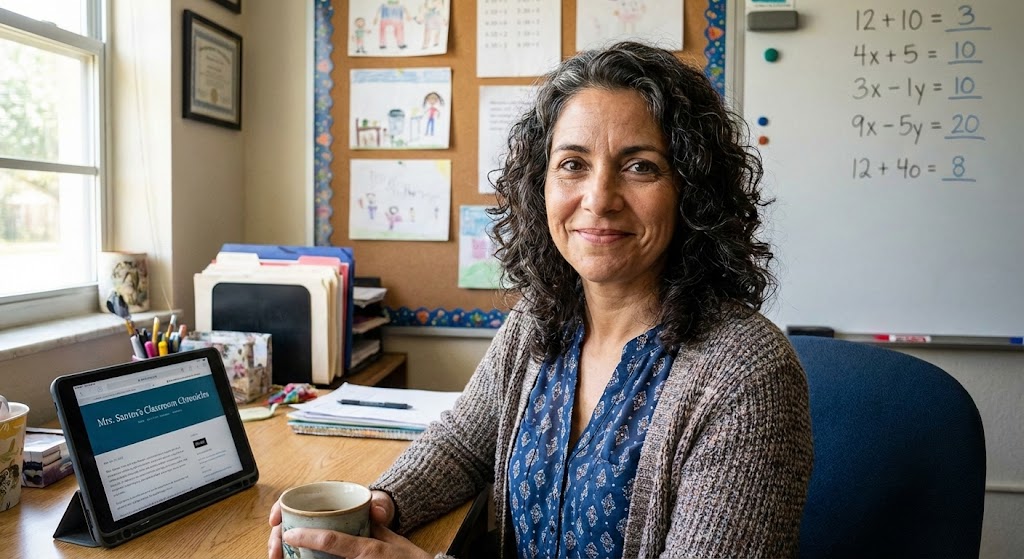
Maria Santos
Maria has been teaching 4th grade in Tampa, Florida for 22 years. Known as "the math whisperer" among her colleagues, she writes about the real challenges and victories of teaching in Florida's public schools.
When she's not grading papers or creating lesson plans, you can find Maria at her local teacher supply store (with coupons in hand) or sharing teaching tips over cafecito with her teacher friends.
View Full Profile →Related Articles
Hurricane Days Are Coming: What Every Florida Teacher Needs to Do Before and After the Storm
Florida teacher tip: I still think about Hurricane Irma. It was 2017, and I had just finished settin...
Dear First-Year Florida Teacher, Nobody Warned You About This
Florida teacher tip: I remember standing in my classroom in late August, sweating through my cardiga...
Ready to Improve Your FAST Scores?
Upload your class data and get personalized IXL success plans in seconds.
Try It Free