Hurricane Days Are Coming: What Every Florida Teacher Needs to Do Before and After the Storm
I still think about Hurricane Irma.
It was 2017, and I had just finished setting up my classroom for the new school year. New anchor charts, fresh bulletin boards, that perfect little reading corner I had spent three weekends building. Then Irma came through and we were out of school for almost two weeks. When we finally came back, half my students looked at me like we had never met. One little guy, I'll call him Darius, sat down at his desk and asked me, "Miss Santos, are we starting school today?"
We had already been in school for three weeks, baby.
That experience changed how I approach hurricane season entirely. And since we are officially in the thick of it here in Florida, I want to talk about what we can actually do to prepare, survive, and recover. Not the stuff your district sends in a generic email. The real stuff, from a teacher who has been through more than a few of these.
Before the Storm: Do This While You Still Have Time
Here is the thing about hurricane prep at school. We spend so much energy on our personal homes and families (which is absolutely right) that we sometimes forget our classrooms need a plan too.
Back up everything digitally, right now.
Not when the storm is three days out and you are panic-buying water at Publix. Right now. Export your gradebook, save your lesson plans to Google Drive, photograph your classroom setup and your supply inventory. If your school floods or loses power for weeks, you will be so grateful you did this.
I keep a shared folder in Google Drive called "Start Over Kit." It has my class roster, parent contact info, current unit plans, and a photo of every anchor chart I have made. It takes about 30 minutes to update at the start of each school year and it has saved me so much heartache.
Send home a "we might be out a while" family letter before hurricane season peaks.
August and September are our danger months here in Florida. I send a letter home in early August that explains what families can do to support learning at home during a prolonged closure. I include free resources like Khan Academy and Storyline Online. I remind parents that reading together counts. I give them a few simple math games they can play with a deck of cards.
This sounds small but it matters. My families at a Title I school are dealing with a lot during a storm. They are not always thinking about academics. A gentle, warm letter from their child's teacher gives them something to hold onto.
Prepare a paper packet, just in case.
Ay, I know. Paper packets feel very 1987. But not every family has reliable internet after a storm, and not every student has a device at home. I put together a simple two-week packet of review activities that I can send home before a storm if we get enough warning. Nothing fancy. Mostly review of previous skills so we are not losing ground.
During the Closure: Take Care of Yourself First
This is the part nobody talks about enough.
We are caregivers by nature. The moment school closes, a lot of us immediately start worrying about our students. Are they safe? Are they eating? Are they falling behind? I have literally lost sleep over this.
But here is what I have learned after 22 years. You cannot pour from an empty cup, and a hurricane is not the time to try. Take care of your family. Check on your neighbors. Rest if you can.
Your students need you healthy and present when you come back. That is the best thing you can do for them right now.
Stay connected to your colleagues if you can.
My team has a group chat we use during closures. We check in on each other, share updates about the school, and sometimes just send pictures of our kids or pets to make each other laugh. Carlos always rolls his eyes when I am on my phone during a storm but honestly, my teacher friends are my people. That connection matters.
Coming Back: The Recovery Week Nobody Prepares Us For
This is where I see teachers make the biggest mistake, and I made it myself for years.
We come back from a hurricane closure and immediately try to pick up exactly where we left off. We jump back into our unit, we stress about lost instructional days, we start talking about FAST testing timelines. And our students are sitting there still processing what they just went through.
Give them time to talk about it.
The first morning back, I always do what I call a "storm circle." We sit together and I ask three questions. What was the scariest part? What was something you did to help your family? What is one thing you are glad about right now?
Some kids share funny stories about playing board games by candlelight. Some kids share things that break your heart. One year, a little girl I will call Yolanda told our circle that her family had stayed in their car during the storm because they had nowhere to go. She said it so matter-of-factly that the room went quiet.
You cannot teach fractions to a child who is still carrying that. You just cannot.
Audit what they actually remember before you move forward.
After a two-week closure, assume some things have evaporated from their little brains. Do a quick informal assessment before you dive back in. I usually do a fun review game, something like a whiteboard quiz or a simple partner activity, just to see where we are. It takes one class period and it saves you from teaching a lesson that half the class is not ready for.
Adjust your pacing and forgive yourself for it.
Every year I watch teachers (including past-me) spiral because a hurricane knocked them off their pacing guide. Pero listen, the pacing guide is a tool, not a law. Talk to your instructional coach. Talk to your team. Figure out what is essential and what can be trimmed. Florida teachers are the most resourceful people I know. We will figure it out.
Check in on your most vulnerable students first.
When we come back, I do a quiet individual check-in with the students I know are in unstable home situations. I am not a counselor, but I can look a child in the eye and say, "Hey, I am really glad you are here. How are you doing?" Sometimes that is all they need to hear.
If you see warning signs, document them and loop in your school counselor immediately. Do not wait.
A Few Practical Things Worth Keeping at School
Before the season gets serious, I keep a small bin in my classroom with:
- A printed copy of my class roster with parent phone numbers
- A USB drive with digital copies of important documents
- A few days worth of activities that do not require technology
- A personal note to myself about where I left off in each subject
This takes maybe an hour to put together and it has saved me so much stress.
We Are Florida Teachers. We Know How to Do Hard Things.
Dios mio, we have been through a lot. NCLB, Common Core, a global pandemic, and now we are navigating B.E.S.T. standards while also watching the weather radar every August. We are not delicate.
But we are also human. And our students are human. And hurricanes are genuinely hard, even when they do not hit us directly.
So this season, I want you to give yourself permission to prepare thoughtfully, rest when you need to, and come back with grace instead of pressure. Your students do not need you to have made up every lost minute. They need you to be steady.
And if you ever need to vent about your pacing guide or your bulletin boards that got ruined by a roof leak, you know where to find me.
Stay safe out there, Florida friends. We have got this.
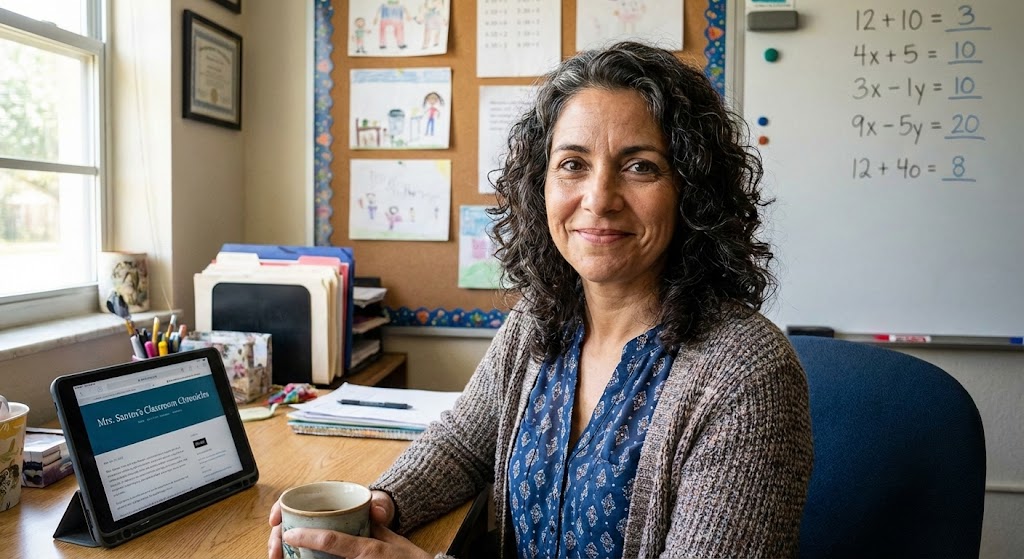
Maria Santos
Maria has been teaching 4th grade in Tampa, Florida for 22 years. Known as "the math whisperer" among her colleagues, she writes about the real challenges and victories of teaching in Florida's public schools.
When she's not grading papers or creating lesson plans, you can find Maria at her local teacher supply store (with coupons in hand) or sharing teaching tips over cafecito with her teacher friends.
View Full Profile →Related Articles
Dear First-Year Florida Teacher, Nobody Warned You About This
Florida teacher tip: I remember standing in my classroom in late August, sweating through my cardiga...
B.E.S.T. Standards: What Actually Changed (And What It Means for Your Classroom Tomorrow)
Florida teacher tip: I still remember sitting in a professional development session back when Common...
Ready to Improve Your FAST Scores?
Upload your class data and get personalized IXL success plans in seconds.
Try It Free