Dear First-Year Florida Teacher, Nobody Warned You About Any of This
It was September, my first year teaching, and I was absolutely certain a hurricane was going to cancel school for at least a week. I had big plans. I was going to catch up on grading, reorganize my classroom library, maybe even get ahead on lesson plans.
School was not canceled.
We got a little rain and some gusty winds, and by 7:45 AM I was standing at my classroom door greeting 22 very awake third graders while running on four hours of sleep and a gas station coffee. Welcome to Florida, mija.
If you are brand new to teaching in this state, whether you just moved here from somewhere else or you just finished your credential program, I want you to know something. This job is hard everywhere. But Florida has its own particular flavor of hard, and nobody puts that in the orientation packet.
So let me be the colleague I wish I had back then.
The Heat Is Not a Joke (And Neither Is the Humidity)
I grew up in Miami, so I thought I understood Florida heat. But standing outside for morning duty at 7:30 AM in August, in dress clothes, with a walkie-talkie that keeps sliding out of your sweaty hand, is a different kind of experience.
Buy a small personal fan for your desk. Keep a spare shirt in your car if you have outdoor duties. Invest in good deodorant. I am completely serious about all of this.
Also, your laminated materials will curl. Your anchor charts will peel off the wall. Humidity is the enemy of everything in your classroom, and you will learn to make peace with it.
FAST Testing Will Consume Your Soul If You Let It
Florida uses the FAST (Florida Assessment of Student Thinking) system now, and if you are coming from another state, the testing culture here can feel overwhelming. We have Progress Monitoring windows, we have the PM3 that actually counts, we have data meetings and data walls and data conversations.
Here is what I want you to hear. The data is a tool, not a verdict. On you or on your kids.
Your first year, focus on understanding the timeline. Know when your testing windows open and close. Mark them in your personal calendar before the school year starts, not after your assistant principal sends the third reminder email.
Talk to a veteran teacher at your school and ask them to walk you through how data is used at your specific campus. Every school has its own culture around this, and learning that culture early will save you a lot of anxiety.
The B.E.S.T. Standards Are Not as Scary as They Look
When I first heard "B.E.S.T. standards," I thought, oh good, another complete overhaul of everything I know how to do. And yes, there was a learning curve.
But here is the honest truth. If you are a thoughtful teacher who pays attention to your students, you will figure it out. The standards are available on the FDOE website and they are actually written in fairly plain language compared to some things we have survived (Common Core, anyone?).
Print out the standards for your grade level and your subject. Read through them before school starts. Highlight the ones that feel unfamiliar. Then find a colleague who has been teaching with them for a year or two and buy that person a coffee. Their practical knowledge is worth more than any training module.
Title I Schools Are Not a Punishment, They Are a Gift
A lot of new teachers, especially those who did not do their student teaching at a Title I campus, come in with some fear or some pity. I understand it. I had some of both when I started.
But I want to tell you what 22 years at a Title I school in Tampa has taught me. These kids are not behind because they are less capable. They are behind because life has been harder and resources have been fewer. When you reach one of them, when something clicks for a kid who has been told in a hundred different ways that school is not for them, there is nothing else like it.
I had a student named Tomás a few years ago. Fourth grade, could not get through a word problem without shutting down completely. By March, he was explaining his math thinking to the whole class. His mom cried at conferences. I still think about that kid all the time.
If you are at a Title I school, lean in. Learn your students' stories. Build relationships before you build rigor. The rigor will come, pero the relationship has to come first.
Find Your People Before You Burn Out
Teacher burnout is real and it is fast. I have watched talented, passionate people leave this profession in their second or third year because they tried to do everything alone.
Your first year, your main job outside of teaching is finding your people. Find the teacher down the hall who will let you vent without judgment. Find the veteran who remembers what it felt like to be new and is willing to share their resources. Find the colleague who makes you laugh at lunch because some days that is the only thing that gets you through.
If your school has a new teacher support program or a mentor assignment, take it seriously. Show up to those meetings. Ask real questions. Do not perform having it together when you do not.
And please, please protect your personal time as much as you can. Carlos, my husband, used to say that our dining room table had become my second classroom because of all the papers spread across it. He was not wrong. Set a time when you stop working for the night, even if the work is not done. It is never done. That is just the truth of this job.
A Few Practical Things Nobody Tells You
Keep a folder (physical or digital, your choice) of parent communication. Every email, every note home, every phone log. Florida parents have rights and your administration will back you up much more easily when you have documentation.
Learn your school's ESE (Exceptional Student Education) processes early. Accommodation plans have legal weight and missing a deadline or skipping a required step can create real problems. Ask your ESE specialist to sit down with you in August before the year gets wild.
Keep snacks in your desk. Not for the kids. For you. There will be days when you do not get a real lunch break and a granola bar at 2 PM is the difference between a patient teacher and a version of yourself you are not proud of.
You Are Going to Be Okay
I know it does not feel that way right now. If you are in the middle of your first year, you are probably exhausted and second-guessing yourself and wondering if you made the right choice.
You made the right choice.
Teaching is not a job you master in a year. It is a craft you develop over a career. I am still learning things after 22 years in this classroom, and that is what makes it interesting.
Florida is a wild place to teach. The weather is dramatic, the testing calendar is intense, and the policy landscape changes faster than we can sometimes keep up with. But the kids here are incredible, and the teachers here are some of the toughest, most resourceful people I have ever met.
You are one of us now. Welcome.
If you are a first-year teacher in Florida, drop a comment below and tell me where you are teaching. I would love to cheer you on. And if you are a veteran teacher reading this, share it with a new colleague who might need to hear it today. We take care of each other. That is how we survive.
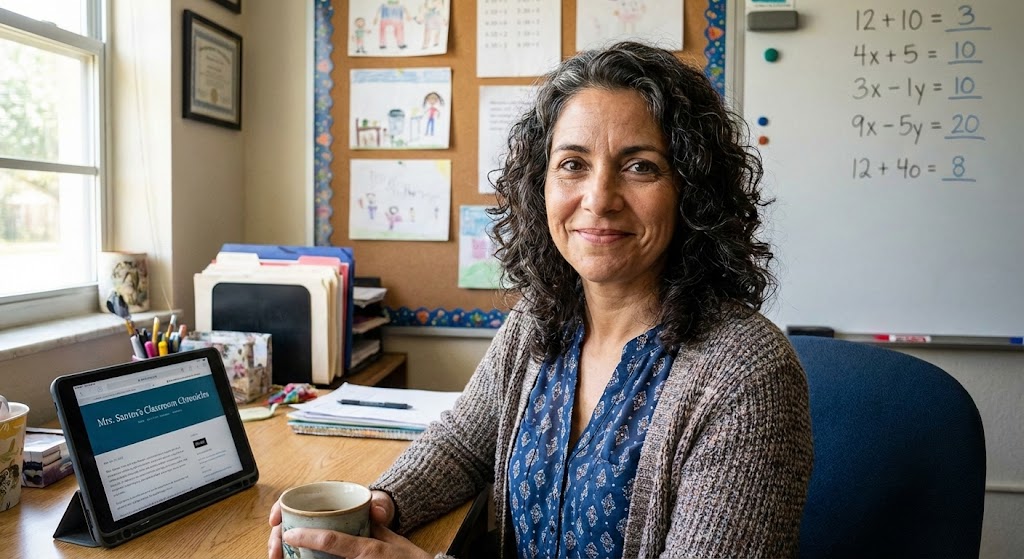
Maria Santos
Maria has been teaching 4th grade in Tampa, Florida for 22 years. Known as "the math whisperer" among her colleagues, she writes about the real challenges and victories of teaching in Florida's public schools.
When she's not grading papers or creating lesson plans, you can find Maria at her local teacher supply store (with coupons in hand) or sharing teaching tips over cafecito with her teacher friends.
View Full Profile →Related Articles
Hurricane Days Are Coming: What Every Florida Teacher Needs to Do Before and After the Storm
Florida teacher tip: I still think about Hurricane Irma. It was 2017, and I had just finished settin...
Dear First-Year Florida Teacher, Nobody Warned You About This
Florida teacher tip: I remember standing in my classroom in late August, sweating through my cardiga...
Ready to Improve Your FAST Scores?
Upload your class data and get personalized IXL success plans in seconds.
Try It Free