How to Talk to Parents About Test Scores Without Making Everyone Cry
Last week, I watched a parent's face crumple as I explained her daughter's FAST scores. Sofia's mom started apologizing, saying she was a terrible parent, and I realized I had completely botched the conversation. After 22 years of teaching, you'd think I'd have this figured out by now, pero apparently I'm still learning.
Here's the thing about test scores: they're just numbers on a page until we give them meaning. And unfortunately, we teachers sometimes give them the wrong meaning entirely.
Start With the Child, Not the Numbers
I used to dive straight into percentiles and scale scores because, well, that's what the data sheets show us. Big mistake. Parents don't see data points when they look at their kids. They see the little person who still asks for one more bedtime story.
Now I always start with something positive about their child. Always. Even if Marcus struggled with every single math concept this quarter, I can tell his parents how he helped a classmate tie their shoes or made everyone laugh during morning meeting.
"Let me tell you what I love about Emma," I'll say. "She never gives up. Even when fractions make her want to throw her pencil across the room, she takes a deep breath and tries again."
Then we talk about the scores.
Translate the Jargon
Remember, parents don't speak education. When we say "below basic" or "approaching grade level," they hear "your child is failing" or "you're a bad parent." Neither is true, but that's what lands in their hearts.
Instead, I explain it like this: "Think of grade level like the speed limit. Some kids are naturally going 55, some are at 45, and some are cruising at 65. Our job is to help each child move forward from wherever they are right now."
I keep a simple chart that shows what the score ranges actually mean in plain English. Level 1 becomes "needs extra support." Level 3 becomes "right on track." It's amazing how much less scary that sounds.
Show Them the Growth
This is where having good records saves your sanity. I keep a simple folder for each student with their scores from the beginning of the year, middle, and end. Even if a child is still below grade level, I can usually show parents that they've grown.
"Look here," I'll say, pointing to September's assessment. "Jayden could add single digits in the fall. Now he's tackling two-digit addition. That's huge growth, even if he's not quite at grade level yet."
Sometimes the growth is in effort, not just scores. I document everything because parents need to hear about the victories, even the small ones.
Make It About Next Steps, Not Blame
The worst parent conferences I've ever had were the ones where I made parents feel like their child's struggles were somehow their fault. Ay, dios mio, I cringe thinking about my early years.
Now I focus on what we're going to do together. I pull out specific skills their child needs to work on and show parents exactly how we'll tackle them. When I get my FAST data back, the first thing I do is run it through FastIXL to get specific skill recommendations that match exactly what each student needs to work on.
"Here's our action plan," I'll tell them. "At school, I'm going to focus on these three skills with Emma. At home, you can help by practicing counting coins while you're doing laundry together."
Give Them Homework They Can Actually Do
Speaking of home support, let's be real about what we're asking parents to do. Not every parent can help with long division, and that's okay. Carlos, my husband, is brilliant with electrical work but breaks out in hives when Marcus asks for help with algebra.
I give parents simple, concrete ways to support learning at home. Read together for 15 minutes. Count things while you cook. Play card games. Ask your child to explain what they learned at school today.
The goal isn't to turn parents into teachers. It's to show them they're already doing important things to support their child's learning.
Address the Emotions
Parents bring a lot of baggage to these conversations. Maybe they struggled in school themselves. Maybe they're worried about their child's future. Maybe they're comparing their kid to their neighbor's honor roll student.
I acknowledge those feelings. "I can see you're worried about Isabella," I might say. "That tells me what a caring parent you are. Let's figure out how to help her together."
Sometimes parents need to hear that one test score doesn't define their child's future. I remind them that kids develop at different rates, and our job is to meet each child where they are.
When the News Is Really Hard
Some conversations are just plain difficult. When a child is significantly behind, when there might be a learning difference, when retention is a possibility. These talks require extra care.
I've learned to be direct but gentle. I use phrases like "I'm concerned about..." instead of "Your child can't..." I focus on what we're seeing and what we can do about it.
And I always, always end with hope and a plan.
The Follow-Up Matters
The conversation doesn't end when parents walk out of your classroom. I send home updates when their child has a breakthrough. I email quick wins. I make positive phone calls.
Building trust with parents is like tending a garden. You can't just plant the seeds during conferences and expect everything to bloom.
Remember Why We're Here
At the end of the day, we're all on the same team. We all want what's best for these kids. Sometimes test scores help us figure out how to support them better. Sometimes they just stress everyone out.
Our job isn't to defend the scores or make excuses for them. Our job is to use them as one piece of information to help each child grow.
The next time you're sitting across from worried parents, remember that they're trusting you with their most precious gift. Handle that trust carefully, speak plainly, and focus on moving forward together.
Trust me, everyone will leave the conference feeling better, and isn't that what we're really after?
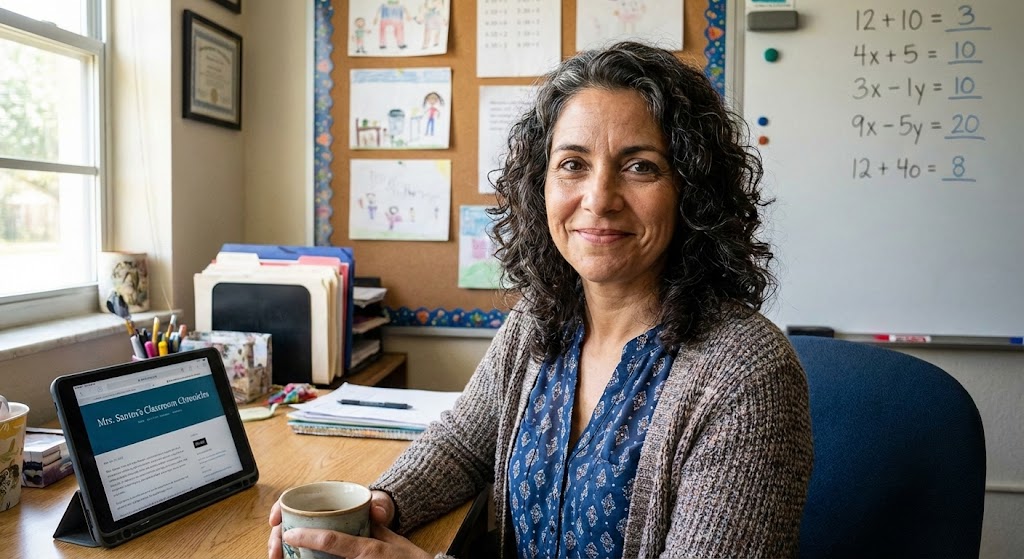
Maria Santos
Maria has been teaching 4th grade in Tampa, Florida for 22 years. Known as "the math whisperer" among her colleagues, she writes about the real challenges and victories of teaching in Florida's public schools.
When she's not grading papers or creating lesson plans, you can find Maria at her local teacher supply store (with coupons in hand) or sharing teaching tips over cafecito with her teacher friends.
View Full Profile →Related Articles
When Parents Say "My Child Would Never" (And What We Do Next)
Parent communication tip: Last Tuesday, I called Mrs. Rodriguez to discuss her son Miguel's behavior...
When Parents Ask "What Do These Numbers Even Mean?" - A Teacher's Guide to Explaining Test Scores
Parent communication tip: Last Tuesday, I had three parent conferences in a row where the conversati...
Ready to Improve Your FAST Scores?
Upload your class data and get personalized IXL success plans in seconds.
Try It Free