Hurricane Days: What 22 Years of Florida Teaching Taught Me About Prep and Recovery
It was September 2004 and I was in my third year of teaching. Hurricane Charley had just torn through Florida, and I showed up to school two weeks later with a brand new unit plan, freshly laminated anchor charts, and absolutely zero awareness that half my students had been sleeping in their cars.
I spent that first day back confused about why nobody could focus. Why were kids crying over nothing? Why did Marcus (not my son, a student) throw his pencil across the room during a simple math warm-up?
I was so focused on my lesson that I missed the whole room.
I will never make that mistake again.
First Things First: This Is Not a Normal Week
When we come back after a hurricane, whether it was a direct hit or just a week of anxiety and sheltering with relatives in Georgia, our students are not okay. And honestly, neither are we.
Before you think about standards or FAST scores or any of that, give yourself and your kids permission to be human for a few days.
I know that sounds soft. I know we have pacing guides and administrators who are already panicking about lost instructional days. But here is the truth I have learned the hard way: a child who is dysregulated cannot learn. Full stop. You can have the most beautifully aligned B.E.S.T. lesson in the world and it will bounce right off them.
Start with connection. Every single time.
Before the Storm: The Prep That Actually Matters
Let me back up, because hurricane prep for teachers starts long before the clouds roll in.
Send home the right information early.
The moment a storm enters the Gulf or starts threatening the peninsula, send a simple note home. Not a scary one, a calm one. Let families know your communication plan. Will you post updates on Class Dojo? Email? The school website? Parents are stressed too, and knowing their child's teacher has a plan helps more than you think.
Pack your classroom like you mean it.
I keep a mental checklist now. Anything irreplaceable goes in a cabinet or off the floor. My student work portfolios, my teacher binder, my class roster with parent contacts, all of it gets tucked away or taken home. One teacher I know lost three years of student data files when her classroom flooded. Three years, gone.
Take photos of your classroom setup before you leave. Insurance purposes, yes, but also so you remember where everything goes when you come back.
Print your class roster and parent numbers. On paper.
Ay, I cannot stress this enough. When the power is out and your phone is at 4% battery and you need to reach a family, you will be so grateful for that paper list. Keep it in your car, your purse, your go-bag. Wherever you will actually have it.
Prep a "soft landing" sub folder.
This one is for the optimists who think they might actually evacuate and come back to a normal week. Put together a folder of calm, low-stakes activities that any adult could run. Puzzles, read-alouds, review games. Nothing that requires teaching. Just something to keep kids engaged if you are delayed coming back and a sub is holding down the fort.
During the Storm: You Are a Person, Not Just a Teacher
Carlos always jokes that I grade papers during hurricanes. He is not entirely wrong.
But seriously, give yourself grace during this time. Check in with your school's communication channels when you can, but please do not feel obligated to be "on" for parents during an active storm. Your first job is your own family's safety.
If you are sheltering with students (which happens, especially in our Title I communities where families don't always have options), you already know that you become a teacher again the moment you see a child you recognize. That is just who we are. But even then, your safety comes first.
The Return: What the First Week Back Really Looks Like
Here is my actual framework for the first week back after a hurricane. I have refined this over many storms and it works.
Day 1: Just be together.
Community circle. Let kids talk. Let them draw. Let them tell you what happened. One year, a student named Destiny told the class she had stayed in a shelter with 200 strangers and her dog had to stay outside. The whole class listened to her for ten minutes. That was the most important learning that happened all day.
Do not rush this. It is not wasted time.
Day 2 and 3: Ease back in with review and routine.
Kids need the comfort of familiar routines after chaos. Pull out activities they already know how to do. Math games they have played before. Reading passages on topics they enjoy. The goal is to rebuild the feeling of "school is safe and predictable" before you introduce anything new.
Day 4 and 5: Assess quietly and informally.
Walk around. Have conversations. Give a low-stakes exit ticket. You need to know where the gaps are, but a formal assessment in week one after a hurricane is going to give you garbage data anyway. A kid who just lost everything he owns is not going to show you his best work on a multiple choice test.
The Practical Stuff Nobody Tells You
Some real talk from the trenches.
Your classroom might smell like mildew when you return. Keep a small bottle of Febreze in your desk. I am not joking. Florida humidity plus closed-up buildings equals a very specific aroma that does not exactly inspire learning.
Expect absences to be high for a week or two. Families are dealing with insurance adjusters, FEMA paperwork, contractors, and sometimes just the emotional weight of damage. Be flexible with makeup work. Be human about it.
Some of your students will be staying with relatives in other counties or states. Work with your administration early on a plan for those kids. Can they access assignments digitally? Will they be counted absent? Get clarity so you are not making it up as you go.
And per favor, communicate with your families even when you do not have answers. "I don't know yet, but I will let you know as soon as I do" is a complete and acceptable message.
For Your Own Heart
This part is for us, not the kids.
Teaching after a hurricane is exhausting in a way that is hard to explain to people outside the profession. Carlos comes home, sees me slumped on the couch at 7pm, and says "rough day?" And I think, how do I explain that I spent the day holding space for 22 children who are all carrying invisible backpacks full of fear and loss, while also trying to make sure they don't fall behind on their FAST benchmarks?
You cannot pour from an empty cup. I know that is on approximately 4,000 teacher mugs and it is still true.
Find your people. Text your team. Sit together at lunch even when you have a hundred things to do. We are better at this when we do it together.
You Already Know How to Do This
Here is the thing about Florida teachers: we are built different. We have been navigating hurricane seasons, intense heat, FCAT to FSA to FAST transitions, and everything in between for years. We are resilient because we have had to be.
But resilience does not mean pretending everything is fine. It means knowing how to take care of yourself and your students when things are hard.
So when the next storm comes, and it will come, take a breath. Pack your classroom. Print your roster. And when you come back, start with connection first.
Your kids need you present more than they need you perfect.
You have got this, mija. We all do.
Have a hurricane prep tip that has saved you? Share it in the comments. We learn best from each other.
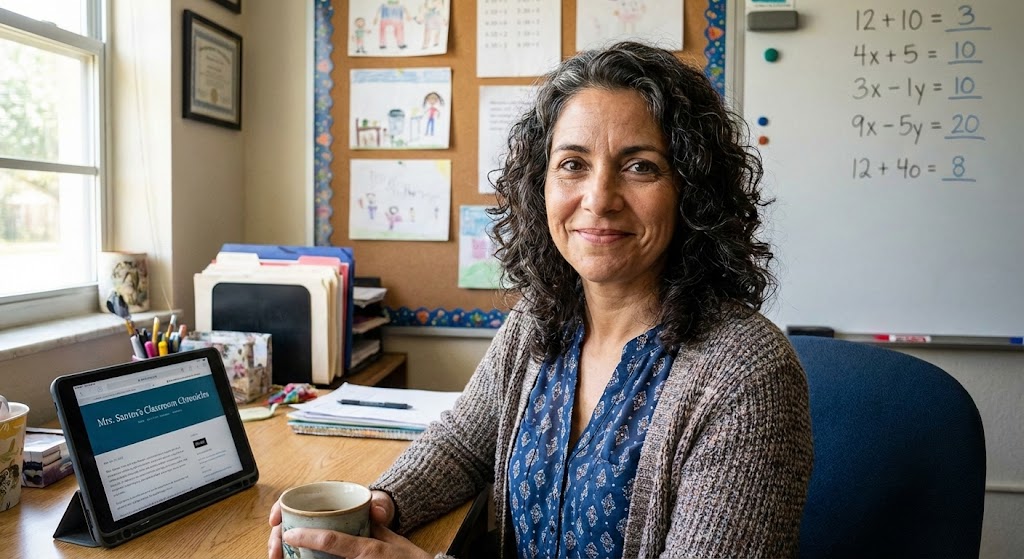
Maria Santos
Maria has been teaching 4th grade in Tampa, Florida for 22 years. Known as "the math whisperer" among her colleagues, she writes about the real challenges and victories of teaching in Florida's public schools.
When she's not grading papers or creating lesson plans, you can find Maria at her local teacher supply store (with coupons in hand) or sharing teaching tips over cafecito with her teacher friends.
View Full Profile →Related Articles
Hurricane Days Are Coming: What Every Florida Teacher Needs to Do Before and After the Storm
Florida teacher tip: I still think about Hurricane Irma. It was 2017, and I had just finished settin...
Dear First-Year Florida Teacher, Nobody Warned You About This
Florida teacher tip: I remember standing in my classroom in late August, sweating through my cardiga...
Ready to Improve Your FAST Scores?
Upload your class data and get personalized IXL success plans in seconds.
Try It Free