Surviving the Florida Heat When Your Classroom AC Decides to Take a Personal Day
Last September, I walked into my classroom at 7:15 in the morning and it was already 84 degrees inside.
Eighty-four degrees. Before the kids even arrived. I stood there holding my coffee, staring at the thermostat like it had personally offended me, and thought, "Today is going to be something else."
By 10 AM, with 22 fourth graders packed into that room, we were somewhere around 89 degrees. The front office sent a fan. One fan. For 22 children and one very tired Cuban-American woman who grew up in Miami and still cannot handle this kind of heat.
If you teach in Florida, you have lived this story. Maybe not that exact version, but something close. Because here in the Sunshine State, "back to school" means "back to feeling like you're teaching inside a hair dryer." And our school buildings, bless their hearts, are not always up to the challenge.
So let me share what I've learned after 22 years of sweaty Septembers and questionable HVAC systems.
First, Let's Acknowledge That This Is Hard
We don't talk enough about how genuinely difficult it is to teach when everyone is physically uncomfortable.
Kids cannot focus when they're hot. That is not a discipline problem or a motivation problem. That is basic human biology. When I finally understood that, I stopped fighting my students and started working with the situation instead.
Your patience will also be shorter when you're hot. Mine absolutely is. Giving yourself grace on those days matters just as much as giving it to your kids.
The Morning Is Your Best Friend
On hot days, I restructure everything to front-load the hardest thinking work.
Math instruction, close reading, anything that requires real cognitive heavy lifting, I do it in the first 90 minutes of the day. The room is cooler, the kids are fresher, and we can actually get somewhere.
By 1 PM when the room feels like Tampa in July (which, if you've been here in July, you understand), I shift to review games, partner reading, art projects, or anything that doesn't require my students to produce their best analytical thinking. This is not lowering standards. This is being smart about when and how we use our resources, and our kids' brains are a resource.
Cold Water Is a Classroom Management Tool
I am completely serious about this.
I started keeping a small cooler with ice water in my classroom during the first months of school. I asked parents at Open House if anyone could donate a bag of ice once a week, and I had four volunteers before I finished the sentence. Parents understand the heat problem. They live here too.
When kids have cold water available and I remind them to drink it regularly, the room just runs better. Less squirming, less complaining, fewer meltdowns (theirs and mine).
One year, my student Tomás, sweet kid but high energy on a good day, was completely dysregulated by 11 AM every hot day. I started making sure he had a cold water bottle on his desk every morning. Ay, the difference was real. His mom told me he started asking to bring his water bottle to school every day after that.
Get Them Up and Moving (Strategically)
This sounds counterintuitive when it's hot, pero hear me out.
Sitting still in a hot room actually makes kids feel worse. A little movement, done strategically, can reset their nervous systems and bring them back to focus. I'm not talking about running laps. I mean standing up to do a quick math stretch, walking to a partner across the room, doing a gallery walk instead of sitting at desks.
I also started doing "brain breaks" outside in the shade during hot spells, just five minutes under the covered walkway. Yes, it takes time. But I get more out of the next 30 minutes of instruction than I would have if we'd stayed inside stewing.
Dress Code for Teachers: Let's Be Real
Nobody is going to say this in a professional development session, so I will say it here.
Wear the breathable fabrics. Wear the layers you can peel off. Leave the blazer in the car from September through October, at minimum. I spent my first few years trying to look "professional" in ways that had me sweating through my clothes by 9 AM, and it helped exactly no one.
I keep a small personal fan at my kidney table. I keep deodorant in my desk drawer (no judgment, we all know). I wear my hair up every single day until November. These are not small things. When you are physically more comfortable, you teach better. Period.
Communicate With Your Administration Early and Often
Here is a mistake I made for too many years. I would suffer through a broken AC situation and just cope, thinking I was being a team player.
Pero no. Document it. Email your AP or principal every single day that the temperature in your room is above a certain point. Keep a record. Not to be difficult, but because facilities requests get prioritized when there is a paper trail, and because your students deserve a learning environment that is physically appropriate.
I also cc my union rep now when things go on more than two days. I say this gently but clearly, we have to advocate for our students and ourselves. Nobody else is going to do it for us.
What to Do When Kids Are Already Over It
Some days you walk in and you can tell by 8:30 that the heat has already won. The kids are sluggish, irritable, or both. You have a full lesson plan and zero cooperation.
On those days, I pivot hard.
I pull out what I call my "hot day toolkit," which is just a folder of activities I've pre-selected for exactly this situation. Partner games that review skills. Read-alouds where I do the heavy lifting and kids just listen. Hands-on activities that feel more like play but are actually practicing standards.
Dios mio, the number of times a simple card sort saved a lesson that was going sideways. When kids can touch things and move things around, they engage even when their brains are fried from the heat.
A Note on the Bigger Picture
I want to be honest with you. The fact that we are regularly teaching in conditions that would shut down most office buildings is not okay.
It is not something we should just accept as "part of the job." Our students, many of whom already face significant challenges, deserve better. We deserve better.
But until things change, we adapt. Because that is what Florida teachers do. We have survived hurricanes and pandemics and seventeen different versions of state testing standards. We will survive another hot September.
You've Got This, Mija
If you are reading this from a classroom that is currently 86 degrees, first of all, I see you. Second, close some blinds if you have them, get some water in those kids, and move your hardest lesson to first thing tomorrow morning.
You are doing an incredibly hard job in genuinely hard conditions. The fact that you are out here looking for tips instead of giving up says everything about who you are as a teacher.
Stay cool out there. Or at least, stay cool-ish. This is Florida. We do what we can.
Drop a comment below and tell me your best hot classroom survival tip. I am always looking to add to my toolkit, and honestly, we all need each other right now.
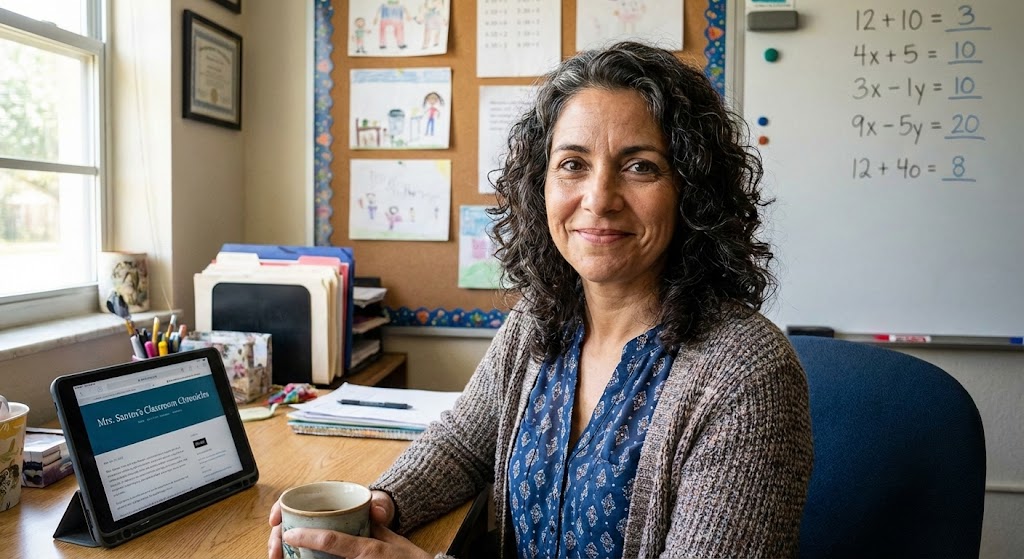
Maria Santos
Maria has been teaching 4th grade in Tampa, Florida for 22 years. Known as "the math whisperer" among her colleagues, she writes about the real challenges and victories of teaching in Florida's public schools.
When she's not grading papers or creating lesson plans, you can find Maria at her local teacher supply store (with coupons in hand) or sharing teaching tips over cafecito with her teacher friends.
View Full Profile →Related Articles
Hurricane Days Are Coming: What Every Florida Teacher Needs to Do Before and After the Storm
Florida teacher tip: I still think about Hurricane Irma. It was 2017, and I had just finished settin...
Dear First-Year Florida Teacher, Nobody Warned You About This
Florida teacher tip: I remember standing in my classroom in late August, sweating through my cardiga...
Ready to Improve Your FAST Scores?
Upload your class data and get personalized IXL success plans in seconds.
Try It Free