The End-of-Year Honest Look in the Mirror Every Teacher Needs to Take
Last June, I was cleaning out my desk and found a sticky note I had written to myself back in September. It said, "This year, no more chaotic morning transitions. You have a PLAN."
I laughed out loud. Alone. In my empty classroom.
Because by October, my morning transitions looked like a Tampa rush hour during a thunderstorm. Absolute chaos. Same as every other year.
We do this, don't we? We finish a school year exhausted, we vow to do better, and then we kind of just... collapse into summer and hope for the best. But here's the thing. June is actually the most valuable planning time we have, if we're willing to sit with some uncomfortable truths before we close that classroom door.
So let's do this together. The real reflection. Not the one for your evaluation folder.
Start With What Actually Worked (Yes, Start There)
I know it feels more productive to jump straight to what went wrong. Pero, trust me on this. Start with the wins.
This year, the thing that genuinely worked in my classroom was my small group rotation system. I rebuilt it completely after winter break because the first version was, honestly, a disaster. The new version gave me 20 minutes with my lowest readers every single day without the rest of the class falling apart. That was a win worth naming.
When we start with what worked, we remember that we are not starting from zero next year. We are building on something. That matters for your mental health in August when you're setting up your classroom and wondering why you chose this profession.
Write down three things that worked this year. Be specific. "My behavior system" is not specific. "The class points chart tied to Friday free choice time" is specific. Specific wins are ones you can actually replicate.
Now the Hard Part: What Didn't Work (And Why)
Okay, mija, here's where we have to be honest with ourselves.
For years, I blamed my struggling math students on their lack of foundational skills, their home situations, their everything except my instruction. And some of that was real, don't get me wrong. But when I finally sat down and looked at my data honestly, I had to admit that my math block was not structured well. I was spending too much time on whole group and not enough time on intervention.
That was a hard thing to write down. But it changed everything about how I teach now.
Ask yourself these questions:
Which students did I not reach this year? Not the ones who struggled despite your best efforts. The ones you kind of gave up on by February. We all have them. Be honest.
What did I avoid because it was hard to manage? For me it was partner work for a long time. Too loud, too chaotic. But I was avoiding it because I hadn't taught the routines well enough, not because it was a bad strategy.
Where did I feel like I was just surviving? That feeling is data. It tells you where the systems broke down.
The Data Conversation You Need to Have With Yourself
I know we are all tired of data. I have been teaching through NCLB, Common Core, and now B.E.S.T., and sometimes it feels like we are drowning in numbers that don't actually help us teach better.
But end-of-year data, when you look at it right, tells a story.
Pull up your FAST scores one more time before you close everything out. Look at the students who surprised you, the ones who grew more than you expected. What did you do differently for them? And look at the ones who didn't move much. What got in the way?
This is actually where I find FastIXL really helpful. When I get my FAST data back, I run it through FastIXL and it maps those scores to specific IXL skills so I can see exactly where each student needs to start. It saves me hours of guessing and gives me a concrete plan to hand off to next year's teacher or carry into my own planning.
The goal isn't to feel bad about the numbers. The goal is to let the numbers point you somewhere useful.
The Stuff Nobody Talks About in Reflection Posts
Let's talk about the things that are harder to measure.
Your relationships with students. Was there a kid this year you just didn't connect with? I had a student, I'll call him Darius, who I struggled with all year. Smart kid, but we just never clicked. I kept waiting for the moment it would turn around and it never really did. That's on me to think about. What could I have done differently in September when there was still time?
Your own energy management. Carlos asks me every single year why I come home looking like I ran a marathon. And every year I have the same answer: because I spent all day giving everything I had and saved nothing for the drive home. That is not sustainable. If you ran out of gas by March this year, that is worth reflecting on. What drained you most? What actually refilled you?
Your relationship with your team. Did you collaborate or did you mostly go it alone? I spent too many years reinventing the wheel because I was too proud to ask for help. My teammate Yolanda has saved me more times than I can count because I finally started actually working with her instead of just existing near her.
How to Actually Use This Reflection (Instead of Letting It Collect Dust)
Here is my practical suggestion. Do not write a long reflection document that you will never look at again.
Instead, write yourself a letter. One page, handwritten if you can. Address it to September-You. Tell September-You the three things to do differently and the three things to keep doing. Seal it in an envelope and tape it to your plan book.
When you open your classroom in August, read it before you do anything else.
I started doing this four years ago and it is the single best planning habit I have ever built. September-Me is always grateful. She needs the reminder.
You Made It Through Another Year
Ay, I don't say that lightly. Teaching in Florida right now is not for the faint of heart. We are navigating new standards, new assessments, difficult conversations, and classrooms full of kids who need more than we sometimes feel equipped to give.
And you did it. You showed up, probably more days than you felt like it, and you taught.
Reflection isn't about beating yourself up. It's about honoring the work enough to do it better. Your students next year deserve the version of you that learned something from this year.
Take the rest you need this summer. But before you completely shut it all down, spend one hour with that honest mirror.
Future-You, and a whole classroom full of kids, will be glad you did.
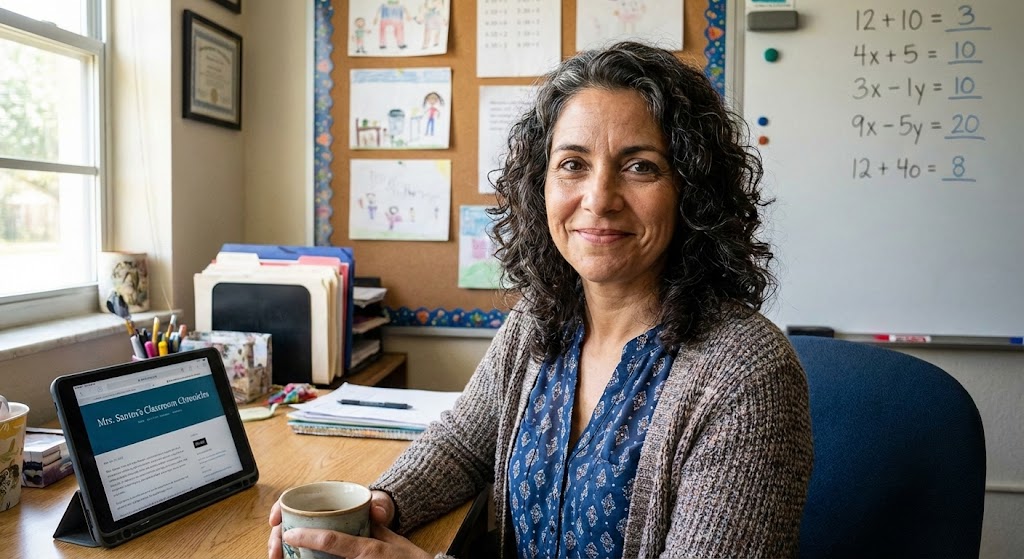
Maria Santos
Maria has been teaching 4th grade in Tampa, Florida for 22 years. Known as "the math whisperer" among her colleagues, she writes about the real challenges and victories of teaching in Florida's public schools.
When she's not grading papers or creating lesson plans, you can find Maria at her local teacher supply store (with coupons in hand) or sharing teaching tips over cafecito with her teacher friends.
View Full Profile →Related Articles
How I Finally Stopped Taking Work Home Every Night (And You Can Too)
Teacher advice: Last Tuesday, Carlos looked at me across the dinner table and said, "Mija, is that a...
The Honest End-of-Year Reflection Every Teacher Needs (But Nobody Wants to Do)
Teacher advice: Last June, I sat in my classroom at 4:30 in the afternoon, surrounded by 24 years wo...
Ready to Improve Your FAST Scores?
Upload your class data and get personalized IXL success plans in seconds.
Try It Free