The Honest End-of-Year Reflection Every Teacher Needs (But Nobody Wants to Do)
Last June, I sat in my classroom at 4:30 in the afternoon, surrounded by 24 years worth of accumulated stuff, and I made a list. Not a packing list or a to-do list. I made a list of everything that had gone wrong that year.
It was a long list.
My husband Carlos peeked his head in around 6 PM and found me still sitting there, staring at it. He said, "Mija, the kids are gone. Why are you still here?" And I told him I was doing my reflection. He nodded like he understood and then asked if I wanted Publix subs for dinner.
He did not understand.
But here's the thing. That list, the uncomfortable one, the one that made me cringe a little? It became the roadmap for one of my best years of teaching. So today I want to talk about how we actually do end-of-year reflection in a way that's useful and not just another thing that makes us feel bad about ourselves.
Why We Skip the Hard Questions
We are tired. I know. You know. We all know.
By the time June rolls around in Florida, we have survived FAST testing season, a hundred and twelve "it's too hot to focus" days, and at least three rounds of something going around the classroom that you definitely caught too.
So when someone says "reflect on your practice," our brains hear "find more ways to feel inadequate." And we shut down.
But that's not what real reflection is. Real reflection is just being honest with yourself so you can do better next time. That's it. No rubric. No formal evaluation. Just you and the truth.
Start With What Actually Worked
I always start here, and I mean it, start here before you touch anything else.
Think about your students first. Not the whole class as a blur, but specific kids. Think about Marcus T. in my class this year (not my son, different Marcus, I promise). He came in reading two grade levels below and hating every second of math. By March he was helping other students with place value. What did I do that helped him get there?
Write it down. Be specific.
For me this year, what worked was my small group rotation schedule. I finally, finally, got it to run smoothly. It took me three years of tweaking and one particularly chaotic Tuesday in October where two groups were at the wrong station and someone spilled an entire water bottle on a math journal. But this year it clicked.
Also working: my morning meeting check-ins. I started asking students to rate their readiness to learn on a scale of one to five every morning. It sounds small, pero it changed everything. I stopped being surprised by who was struggling emotionally before I even started a lesson.
Now the Harder Part
Okay. Here we go.
What did not work? And I mean really did not work, not "I could have done that five percent better." I mean the things that, if you're honest, you knew weren't working by October but you kept doing anyway because changing them felt like too much.
For me this year, it was my homework policy. Ay, dios mio. I assigned homework every night because that's what I've always done. And I watched my students, many of whom are going home to chaos, to jobs they're helping their families with, to apartments with six people and no quiet space, struggle to complete it. And then I spent time every morning managing the fallout of missing homework instead of teaching.
I knew by November. I kept the policy until April.
That's the kind of thing I'm talking about. The thing you already know.
A Simple Framework That Doesn't Require a Whole Saturday
I'm not going to give you a 47-question reflection survey. You're welcome.
Here's what I actually do, and it takes about 45 minutes if you're not interrupted (so maybe do it at home because your school's 45 minutes will become 20 after the front office calls twice).
The Three Lists:
First list: What did I do this year that I want to keep doing exactly as is? No changes. It worked. Write it down so you don't accidentally "improve" it into something worse next year. We've all done that.
Second list: What did I start this year that has real potential but needs work? These are your projects. The things worth investing time in over the summer if you have the energy, or at least in September before you forget why you started them.
Third list: What am I doing out of habit that isn't serving my students anymore? This is the hardest list. Be gentle with yourself here but be honest. These are the things to let go of.
That's it. Three lists.
Ask Your Students (Yes, Really)
I started doing anonymous end-of-year surveys with my fourth graders about eight years ago, and it humbled me in the best way.
I ask them things like: What helped you learn this year? What made learning harder? What do you wish we had done more of? What do you wish we had done less of?
Kids are honest. Sometimes brutally honest. One of my students this year, I'll call her Valentina, wrote that she wished I didn't get frustrated when we didn't understand something the first time. That one sat with me.
She wasn't wrong.
I thought I was patient. She experienced something different. That gap between what I thought I was doing and what my students actually experienced? That's where the real growth lives.
Don't Forget the Logistical Stuff
Reflection isn't only about your teaching philosophy and your emotional presence. Some of it is just practical.
What systems broke down this year? How was your classroom setup? Did your schedule actually give you enough time for what mattered? Were your lesson plans realistic or were you constantly running out of time on Fridays?
For those of us navigating B.E.S.T. standards and trying to figure out the pacing, this is especially important. Look back at your pacing guide and your actual calendar. Where did you fall behind? Where did you rush? What does that tell you about next year's plan?
These are not glamorous questions but they are the ones that will save you in September.
Give Yourself Some Credit
Here is something I had to learn the hard way after years of being my own harshest critic. We are doing incredibly difficult work in incredibly complicated circumstances.
My school is Title I. My students come in with gaps that are not their fault and not mine either. They come in with trauma and hunger and worry and still, still, they show up. And we show up for them.
That matters. The fact that you're reading a blog post about reflection in the first place means you care about getting better. Not every teacher does. You do.
So when you make your lists, make sure the first one, the "what worked" list, is actually long. Fight the instinct to rush through it. Sit with what you did well this year. You earned that.
Before You Close That Laptop
Here's your one action item before summer really starts.
Grab a notebook, a notes app, a napkin, whatever you have. Write down the one thing from this year that you are most proud of. Not the one thing you want to change. The one thing you are proud of.
Put it somewhere you'll see it in August when you're setting up your classroom and the anxiety is creeping back in.
You're going to need the reminder.
We all do.
See you on the other side, teachers. Enjoy your summer. You absolutely earned it.
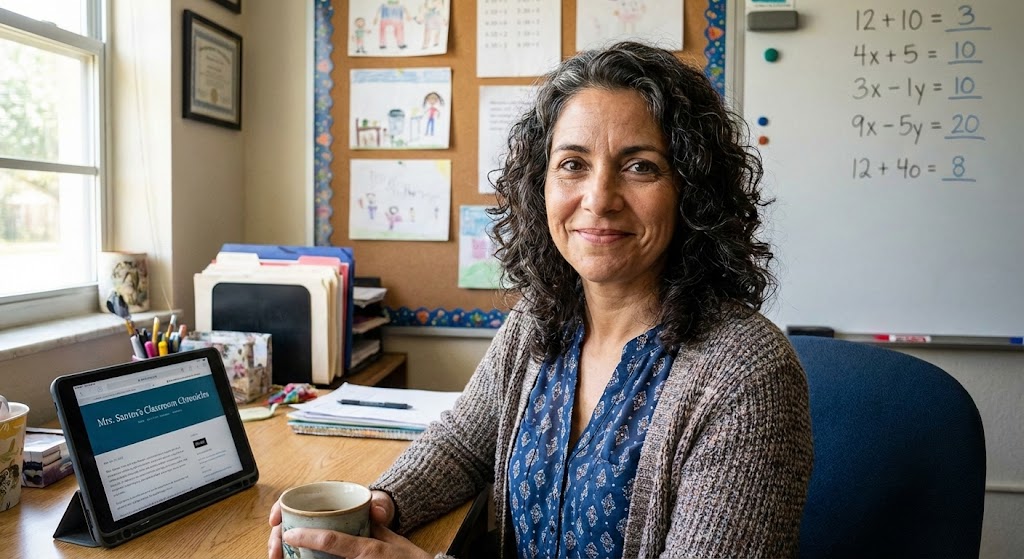
Maria Santos
Maria has been teaching 4th grade in Tampa, Florida for 22 years. Known as "the math whisperer" among her colleagues, she writes about the real challenges and victories of teaching in Florida's public schools.
When she's not grading papers or creating lesson plans, you can find Maria at her local teacher supply store (with coupons in hand) or sharing teaching tips over cafecito with her teacher friends.
View Full Profile →Related Articles
How I Finally Stopped Taking Work Home Every Night (And You Can Too)
Teacher advice: Last Tuesday, Carlos looked at me across the dinner table and said, "Mija, is that a...
The End-of-Year Honest Look in the Mirror Every Teacher Needs to Take
Teacher advice: Last June, I was cleaning out my desk and found a sticky note I had written to mysel...
Ready to Improve Your FAST Scores?
Upload your class data and get personalized IXL success plans in seconds.
Try It Free