The Real Story Behind Those Fall Assessment Numbers
Last Tuesday, I was staring at my fall assessment results when my teammate Rosa peeked over my shoulder. "Ay, Maria, these numbers are depressing," she sighed. I get it. Those first data reports can feel like a punch to the gut, especially when you're looking at where your kids are after a long summer.
But here's what I've learned after 22 years of fall assessments: the numbers don't tell the whole story. They're just the beginning of a much bigger conversation.
What Fall Data Actually Measures
Let's be real about what we're looking at here. Fall assessments aren't measuring your teaching ability. They're not even measuring your students' full potential. They're taking a snapshot of where kids are right now, in September, after three months away from school.
When I see that Marcus (not his real name) scored below grade level in math, I don't panic anymore. Instead, I ask myself: What does this tell me about what he needs? What skills are missing? Where do I start?
That shift in thinking changed everything for me. The data isn't a judgment. It's a roadmap.
The Summer Slide Is Real (But Not Permanent)
Every year, I have parents ask me why their child "forgot everything" over the summer. The research is clear: students can lose 1-3 months of learning during summer break, and it hits our Title I kids the hardest.
But here's the good news. What's lost can be recovered. I've seen it happen hundreds of times.
Last year, Sofia came back reading two grade levels below where she ended in June. By December, she was back on track. By May, she was exceeding expectations. The fall assessment didn't predict her future. It just told us where to start.
Reading Between the Numbers
When I look at assessment data now, I'm looking for patterns, not just scores. Here's what I pay attention to:
Which skills are completely missing versus which ones are shaky? There's a big difference between a child who's never learned something and one who just needs a refresher.
Are there gaps in foundational skills? Sometimes what looks like a 4th grade problem is actually a 2nd grade gap that never got filled.
How did they approach the problems? The wrong answer with solid reasoning tells me something very different than a random guess.
I remember my first year teaching, I looked at the data and immediately started panicking about test prep. Veteran teacher Mrs. Rodriguez pulled me aside and said, "Mija, teach the child, not the test." Best advice I ever got.
What the Data Can't Tell You
Fall assessments can't measure growth mindset. They can't capture creativity, persistence, or the breakthrough moment when a concept finally clicks.
They can't tell you that Jayden struggles with reading assessments because he gets anxious with timed tests, but he can discuss complex ideas beautifully when we talk one-on-one.
They can't show you that Aaliyah's math scores don't reflect her deep understanding because she's still learning academic English.
This is why we can't make decisions based on data alone. We need the whole picture.
Making Data Work for You (Not Against You)
Here's how I use fall assessment data without letting it overwhelm me:
Start with celebrations. I always look for what students CAN do first. Even if the overall score is low, there are usually bright spots to build on.
Group by need, not by score. Two students might have the same overall score but need completely different support. Look at the skill breakdown.
Set realistic timelines. If a student is significantly below grade level, they're not going to jump to proficient in six weeks. Plan for steady, sustainable growth.
Use it to guide instruction, not to label kids. The moment we start thinking of students as "low" or "high" based on one assessment, we've lost sight of what matters.
The Comparison Trap
Can we talk about the elephant in the room? It's so tempting to compare your class data to the teacher next door, or to your own class from last year. Don't do it.
Every group of kids is different. Every year brings new challenges. I had a class three years ago that came in with the strongest fall scores I'd ever seen. I also had a class two years ago that came in with significant gaps but grew more than any group I'd ever taught.
Both experiences taught me something valuable. Starting point doesn't determine ending point.
Moving Forward with Purpose
So what do we do with all this data? We use it as a starting point, not a destination.
This week, I'm meeting with my intervention specialist to talk about which students need extra support. I'm planning small groups based on specific skill gaps. I'm reaching out to families to share what I'm seeing and how we can work together.
But I'm also planning art projects and science experiments and read-alouds that will make my students fall in love with learning. Because engagement matters just as much as data points.
A Reality Check for Administrators
If you're a principal or coach reading this, please remember that teachers need time to turn data into action. We can't analyze results, plan interventions, and implement new strategies all in the same week we get the scores back.
Give us time to dig deep. Trust us to know our students. And please, por favor, don't make us feel like failures because our fall numbers aren't where we want them to be yet.
The Long View
After two decades in the classroom, I've learned that September data is just the prologue. The real story happens between October and May, in the daily moments when we meet kids where they are and help them grow.
Those fall assessment numbers? They're not a verdict. They're an invitation to get to work.
Your students are lucky to have you. Now let's show them what growth looks like.
What patterns are you seeing in your fall data? How are you using it to plan instruction? I'd love to hear what's working in your classroom.
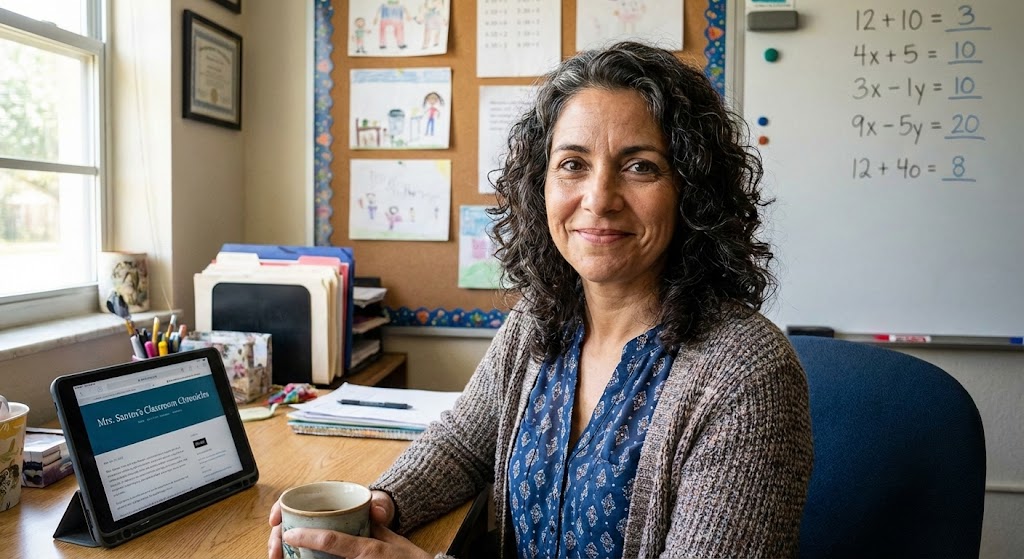
Maria Santos
Maria has been teaching 4th grade in Tampa, Florida for 22 years. Known as "the math whisperer" among her colleagues, she writes about the real challenges and victories of teaching in Florida's public schools.
When she's not grading papers or creating lesson plans, you can find Maria at her local teacher supply store (with coupons in hand) or sharing teaching tips over cafecito with her teacher friends.
View Full Profile →Related Articles
What I Tell Parents Before Testing Week
FAST test prep tip: Last Tuesday, little Sofia came to school with dark circles under her eyes. When...
The Parent Meeting That Changed How I Talk About Testing Week
FAST test prep tip: Last Tuesday, I had a parent practically in tears during our conference. "Mrs. S...
Ready to Improve Your FAST Scores?
Upload your class data and get personalized IXL success plans in seconds.
Try It Free