When Your Poker Face Cracks: Staying Calm So Your Kids Can Too
Last Tuesday, I completely lost it in front of my fourth graders. And I mean completely.
We were in the middle of our morning routine when the copier broke down (again), my laptop decided to update itself without permission, and then I got an email about yet another data meeting. When little Sofia asked me for the third time if she could sharpen her pencil, I snapped.
"Sofia, por favor, just sit down and use a pen!"
The whole room went silent. Twenty-four pairs of eyes stared at me like I'd grown a second head. Sofia's lip started to quiver, and I realized I'd become that teacher. You know the one.
We're Human Too (And That's Actually Okay)
Here's what nobody tells you in education school: your stress is contagious. When we're wound tighter than a spring, our kids feel it immediately. They might not understand why the grown-up seems different, but they absolutely pick up on our energy.
The thing is, we can't just flip a switch and become zen masters. Trust me, I've tried. After 22 years in the classroom, I've learned that managing my stress isn't about becoming perfect. It's about having a plan for when things go sideways.
And during testing season? Things always go sideways.
The Domino Effect of Teacher Stress
When I'm stressed, here's what happens in my classroom:
My voice gets sharper. The kids start walking on eggshells. Behavior issues multiply because they're feeding off my anxious energy. Then I get more stressed because the class is falling apart, and round and round we go.
Sound familiar?
After my Tuesday meltdown, I had to get real with myself. These kids are already dealing with enough. They don't need their safe space to feel chaotic because I can't handle my own stuff.
What Actually Works (Learned the Hard Way)
Start With Your Body
This sounds too simple, but hear me out. When I feel that familiar tightness in my chest, I do three deep breaths. Not the fake kind where you're still thinking about your to-do list, but real ones where you actually feel your shoulders drop.
I keep a small bottle of peppermint oil in my desk drawer. One tiny dab under my nose, and it forces me to breathe differently. My kids have started asking for "teacher's magic smell" when they're upset too.
Create Your Reset Ritual
Mine is washing my hands. Sounds weird, pero it works. When I feel myself getting wound up, I excuse myself for thirty seconds and go wash my hands slowly. The cool water, the routine of it, the brief moment away from little eyes watching my every move.
Find your version. Maybe it's straightening your desk, maybe it's looking out the window, maybe it's touching the photo of your family. Just something that signals to your brain: pause, reset, breathe.
Be Honest (Age-Appropriately)
After my Sofia incident, I gathered my kids on the carpet and said, "You know what? Mrs. Santos was feeling really overwhelmed this morning, and I didn't handle it well. That's not your fault, and I'm sorry."
The relief on their faces was immediate. Kids know when something's off. Acknowledging it (without dumping on them) actually makes them feel safer, not more worried.
Building Calm Into Your Day
Morning Mantras That Don't Make You Roll Your Eyes
I'm not talking about standing in front of a mirror saying affirmations. I mean the little things you tell yourself while you're unlocking your classroom door.
Mine is: "Whatever happens today, we'll figure it out together."
Some days I believe it, some days I don't. But saying it reminds me that I don't have to have all the answers right this second.
The Two-Minute Rule
When I'm feeling that familiar stress spiral starting, I set a timer for two minutes and do something completely unrelated to teaching. I might organize my pen cup, water my classroom plant, or just sit and watch my kids work.
It's amazing how much perspective you can gain in 120 seconds.
Stress Signals for Your Students
I taught my kids that when I put my hand on my heart, it means I need a moment to breathe. They've learned to give me that space without taking it personally.
Some of them have started using the same signal when they need a moment too. We're modeling emotional regulation in real time.
When the Pressure Cooker Explodes
Because let's be real, sometimes it will. You'll snap at a kid who doesn't deserve it, or you'll feel your voice getting sharp, or you'll realize you've been holding your breath for the past hour.
Here's your game plan:
Take responsibility quickly. Kids forgive faster than we think they will, but they need to hear that it wasn't their fault.
Reset the room energy. I might put on some quiet music, dim the lights, or just say, "Okay everyone, let's all take a deep breath together."
Remember that one bad moment doesn't erase all your good ones. My kids didn't suddenly think I was a terrible teacher because I had a rough morning. They just needed to see that I could bounce back.
The Ripple Effect of Calm
Here's what I've noticed: when I'm more intentional about managing my stress, my whole classroom shifts. The kids are more settled, behavior issues decrease, and somehow even math lessons go more smoothly.
It's not about being perfect. It's about being aware.
Carlos always tells me, "Mija, you can't control the storm, but you can control how you sail through it." (He's full of electrician wisdom like that.)
Your Turn
We're heading into the thick of testing season, and the pressure is only going to increase. But remember, you're not just managing your own stress. You're teaching 20-something little humans how to handle pressure, disappointment, and overwhelm.
They're watching how you breathe through the hard moments. They're learning from how you reset after a mistake. They're absorbing your coping strategies whether you realize it or not.
So be gentle with yourself, have a plan for the rough days, and remember that staying calm isn't about being perfect. It's about being present.
Your kids need you steady, not superhuman.
What's your go-to strategy when stress starts taking over your classroom? Drop a comment and let's help each other through this season.
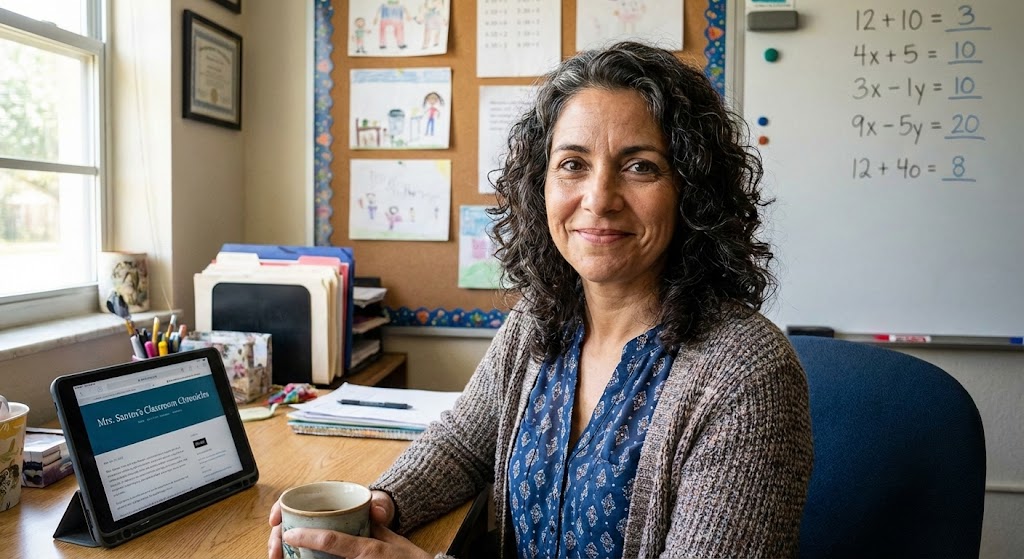
Maria Santos
Maria has been teaching 4th grade in Tampa, Florida for 22 years. Known as "the math whisperer" among her colleagues, she writes about the real challenges and victories of teaching in Florida's public schools.
When she's not grading papers or creating lesson plans, you can find Maria at her local teacher supply store (with coupons in hand) or sharing teaching tips over cafecito with her teacher friends.
View Full Profile →Related Articles
How I Actually Recover After Testing Season (And Help My Kids Do the Same)
FAST test prep tip: Last April, about three days after our final round of FAST testing wrapped up, I...
How I Help My Students (and Myself) Bounce Back After FAST Testing
FAST test prep tip: Last week, I watched little Sofia slump into her seat after our final FAST sessi...
Ready to Improve Your FAST Scores?
Upload your class data and get personalized IXL success plans in seconds.
Try It Free