Why I Stopped Taking Behavior Personally (And You Should Too)
Last Tuesday, little Marcus (not my son, different Marcus) looked me dead in the eye and said, "I hate math and I hate you too." Then he swept his pencil box off his desk and stormed to the corner.
Five years ago, that would have ruined my entire week. I would have gone home to Carlos complaining about how disrespectful kids are these days. I probably would have lost sleep wondering what I did wrong.
But you know what I did instead? I took a deep breath and said, "Wow, sounds like you're having a really tough day. Want to tell me what's going on?"
The Day Everything Changed
I wish I could say I've always been this zen about student behavior, pero that would be a lie. For the first fifteen years of my career, I took every eye roll, every "this is stupid," every defiant moment as a personal attack on my teaching.
The turning point came during a particularly rough year when I had three students who seemed determined to make my life miserable. One day, after yet another blowup, I was venting to our school counselor, Mrs. Rodriguez.
"Maria," she said gently, "when your own Marcus was going through his difficult phase at home, was it because he didn't love you?"
That hit me like a ton of bricks. My son had gone through a phase around age 12 where everything I said was wrong, everything I asked him to do was unfair, and he seemed angry at the world. But I never once thought it was about me personally. I knew he was struggling with growing up, with figuring out who he was.
So why was I taking my students' behavior so personally?
The Truth About Challenging Behavior
Here's what I've learned after 22 years in Title I schools: when kids act out, it's almost never about us. It's about what they're carrying.
That kid who refuses to do math? Maybe numbers feel impossible because nobody ever taught them it's okay to struggle. The one who talks back every time you give directions? They might be the one person in their family who feels like they have any control at all.
I started looking at behavior differently. Instead of thinking "Why is this student doing this TO me?" I began asking "Why is this student doing this FOR themselves?"
What Changed When I Stopped Taking It Personally
The shift didn't happen overnight, but when it did, everything got easier.
First, I stopped getting defensive. When a student said my lesson was boring, instead of explaining why it wasn't, I'd ask what would make it more interesting. When someone refused to work, instead of insisting they follow my rules, I'd try to understand what was really going on.
Second, I started responding instead of reacting. There's a huge difference. Reacting comes from emotion and ego. Responding comes from understanding and strategy.
Third, my relationships with challenging students improved dramatically. Once I stopped seeing their behavior as an attack on me, I could see them as kids who needed help, not kids who needed to be controlled.
Practical Strategies That Actually Work
The Two-Minute Rule: When a student has a behavioral moment, give yourself two minutes before responding. I literally count to 120 sometimes. This prevents me from saying something I'll regret and gives the student time to calm down too.
The Curiosity Approach: Instead of immediately correcting behavior, get curious about it. "I notice you're having trouble staying in your seat today. What's going on?" This simple shift from judgment to curiosity changes everything.
The Broken Record Method: Pick one calm phrase and stick with it. Mine is "I can see you're upset. Let's figure this out together." I say it the same way every time, no matter how the student responds. It keeps me centered and gives them consistency.
The Fresh Start Protocol: Every day is a new day. I greet every student the same way each morning, regardless of what happened yesterday. Kids need to know they can start over.
When It's Really Hard
Let me be honest. Some days this is easier said than done. When you're dealing with your twentieth interruption before lunch, when a student says something that hits your triggers, when the behavior is affecting other kids' learning, it's hard not to take it personally.
I have a few tricks for those moments:
I keep a photo of myself at age 9 on my desk. When I'm frustrated with a student, I look at that photo and remember what I was like at that age. What I needed from adults. How scared I sometimes was underneath my behavior.
I also remind myself that this student chose to be in my room today. Even the ones who complain about school, who say they hate everything, who seem determined to make trouble. They showed up. That means something.
The Parent Conference That Changed Everything
Last year, I had a student named Sofia who was constantly disrupting class. She'd make jokes during lessons, refuse to work, and seemed to take pride in getting other kids off task.
During our parent conference, her mom started crying. "She's been like this at home too, ever since the divorce. She's so angry, and I don't know what to do."
In that moment, I realized Sofia wasn't trying to make my job harder. She was trying to make sense of her world falling apart. Her behavior wasn't about my teaching or my classroom management. It was about a little girl who felt powerless and was trying to find some control.
We worked together to give Sofia appropriate ways to have control in the classroom. She became my special helper for certain tasks. We gave her choices whenever possible. The disruptive behavior didn't disappear overnight, but it became manageable because we were addressing the real need underneath it.
Why This Matters for All of Us
When we take student behavior personally, we make it about us instead of about them. And when it's about us, we can't help them effectively.
But when we remember that behavior is communication, that kids are doing the best they can with the tools they have, that their actions come from their experiences and not from a desire to hurt us, we can be the adults they need us to be.
This doesn't mean we don't have boundaries. It doesn't mean we accept disrespectful behavior or let kids run wild. It means we respond to behavior from a place of strength and understanding instead of hurt and defensiveness.
Your Challenge This Week
Pick one student whose behavior has been pushing your buttons. For the next week, try responding to their challenging moments with curiosity instead of correction. Ask yourself what need their behavior might be trying to meet.
I promise you, it will change how you see that student. And more importantly, it will change how they see themselves in your classroom.
Remember, we're not just teaching math and reading and science. We're teaching kids how to be human. And sometimes the most important lesson we can give them is that they're worth understanding, even on their worst days.
Especially on their worst days.
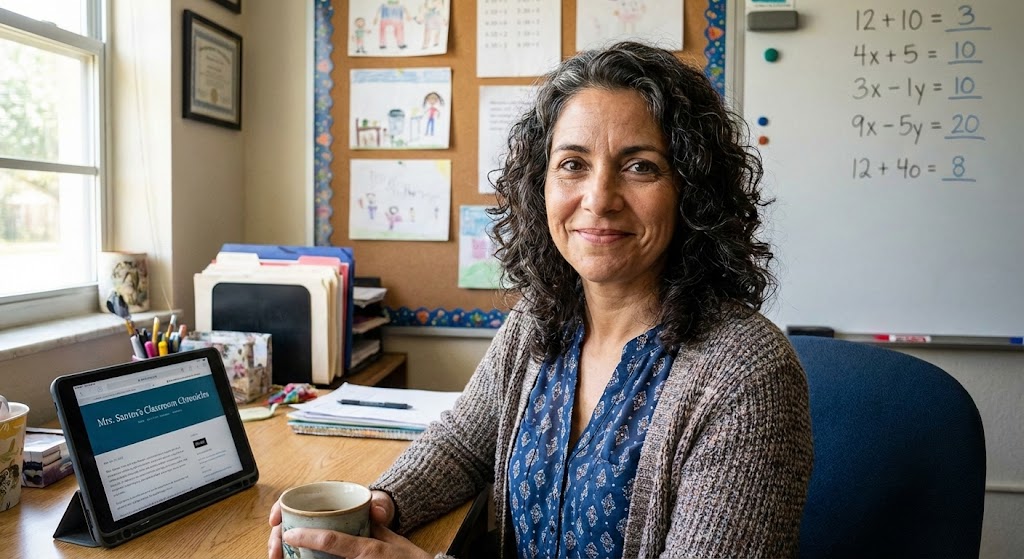
Maria Santos
Maria has been teaching 4th grade in Tampa, Florida for 22 years. Known as "the math whisperer" among her colleagues, she writes about the real challenges and victories of teaching in Florida's public schools.
When she's not grading papers or creating lesson plans, you can find Maria at her local teacher supply store (with coupons in hand) or sharing teaching tips over cafecito with her teacher friends.
View Full Profile →Related Articles
The One Transition Trick That Finally Stopped My Classroom Chaos
Classroom management tip: Last Tuesday, I watched a veteran teacher at my school lose ten full minut...
When Everyone's Brain is Already at the Beach (Including Yours)
Classroom management tip: Last Tuesday, I caught myself staring out the window during math, watching...
Ready to Improve Your FAST Scores?
Upload your class data and get personalized IXL success plans in seconds.
Try It Free